
Northern Red-shouldered Macaw
The Northern Red-shouldered Macaw is a small, green South American parrot, notable for being the smallest species within the macaw family. It inhabits tropical lowlands and savannas across several South American countries and is distinguished by the red coverts on its wings, which develop at puberty. These macaws are frequently bred in captivity and are known for their vocalizations and ability to mimic speech.
Key Facts
- ›It is the smallest species of macaw, measuring approximately 30 cm (12 in) in length.
- ›The species is characterized by bright green body plumage and red wing coverts that appear at puberty.
- ›Native to tropical lowlands, savannas, and swamplands of Brazil, Guianas, Bolivia, Venezuela, and southeastern Peru.
- ›Has a lifespan of 25–40 years in captivity.
- ›Known for its natural vocalizations described as screeches, and its ability to be taught to talk.
- ›Listed as Least Concern by the IUCN, though trade is restricted under CITES Appendix II.
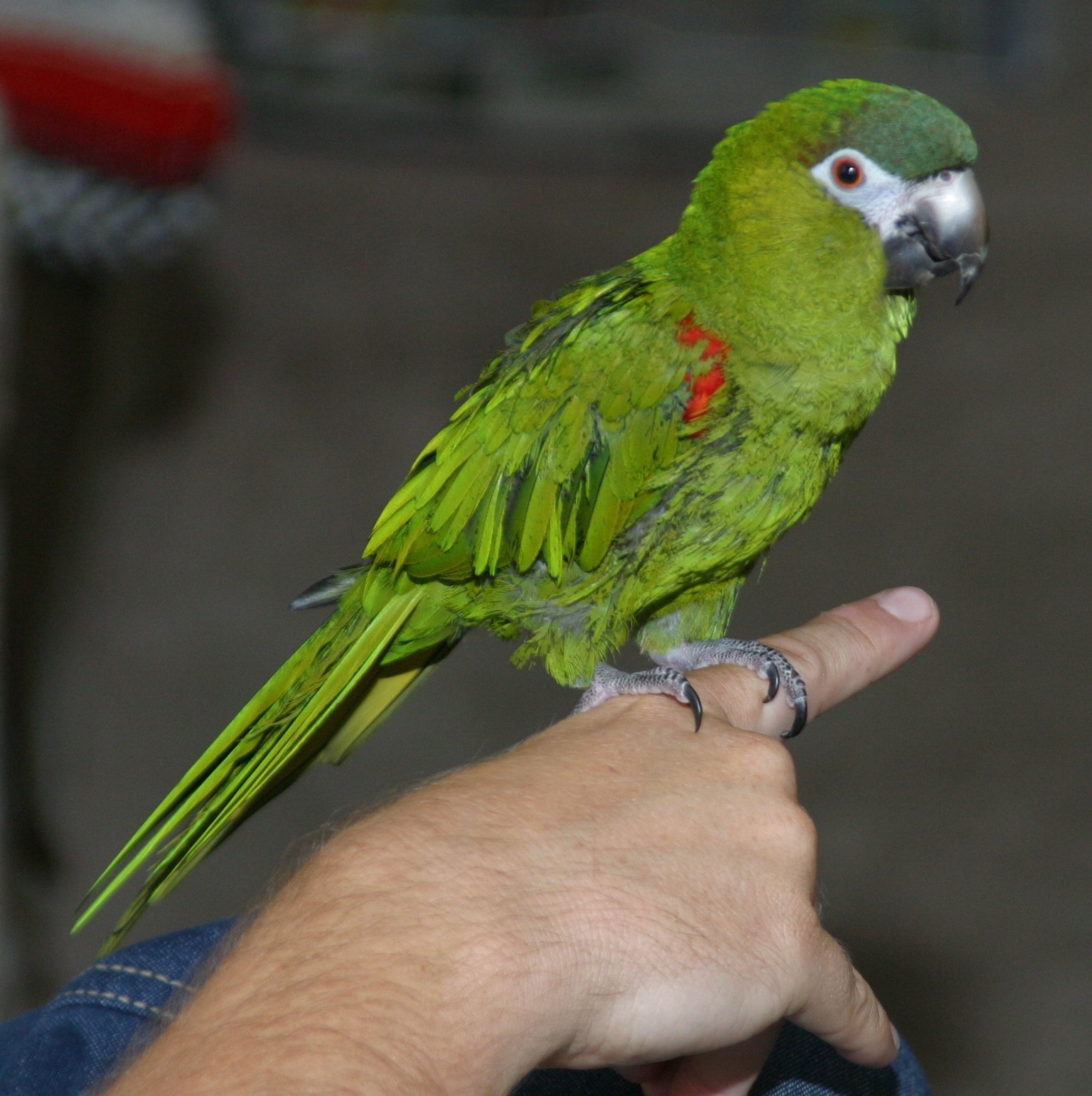
Red-Shouldered Macaw, Noble Macaw, Hahn's Macaw, Mini-Macaw
South America
Tropical Lowlands, Savannas, Swamplands
Green, Red, Blue, Olive-Green
Red Wing Coverts, Smallest Macaw Species, Bare White Facial Skin Patch
Kind-Natured, Gentle, Intelligent, Bonds Well With Humans
Screeches, Can Be Taught To Mimic Speech, Excellent Talker
Nests in a hole in a tree
About Northern Red-shouldered Macaw
The Northern Red-shouldered Macaw, scientifically known as Diopsittaca nobilis, is a distinctively small parrot species that holds the title of the smallest macaw. Its plumage is predominantly bright green, highlighted by striking red coverts on its wings, a feature that develops as the bird reaches sexual maturity. This characteristic gives the species its common name.
Habitat and Distribution
This captivating macaw is native to the tropical lowlands, savannas, and swamplands of South America. Its natural range includes countries such as Brazil, the Guianas, Bolivia, Venezuela, and extends to far southeastern Peru. The species is well-adapted to these warm, often humid environments.
Physical Characteristics and Subspecies
Measuring approximately 30 cm (12 inches) in length and weighing around 165 grams, the Northern Red-shouldered Macaw possesses the typical macaw build with a long, narrow tail and a proportionally large head. Distinctive features include bright green body feathers, darker blue on the head just above the beak, and orange eyes. The skin around the eyes is white and bare, though the patch is smaller relative to the head size compared to larger macaws. There are recognized subspecies, including Hahn's macaw (D. n. nobilis) and the noble macaw (D. n. cumanensis), with some variations in wing length noted in the poorly differentiated long-winged macaw (D. n. longipennis).
Behavior and Vocalizations
In terms of temperament, the Northern Red-shouldered Macaw is often described as kind-natured, gentle, and intelligent, similar to its larger relatives. They are known to form strong bonds with humans, making them popular in captivity. Their natural vocalizations are more akin to screeches than whistles, but they are also recognized for their excellent ability to mimic human speech and learn tricks, earning them the nickname 'mini-macaw' in the pet trade.
Breeding and Lifespan
Breeding in the wild typically involves nesting in tree cavities. A clutch usually consists of three to four white eggs, with the female incubating them for about 24 to 26 days. Chicks fledge from the nest approximately 54 days after hatching. In captivity, these macaws can live for a considerable time, with lifespans ranging from 25 to 40 years.
Conservation and Aviculture
While wild populations have faced local declines due to habitat loss, the Northern Red-shouldered Macaw is classified as Least Concern by the IUCN. Their trade is regulated under CITES Appendix II. In aviculture, they are considered excellent pets for those who can provide adequate space and daily exercise, though their noisy nature makes them less suitable for apartment living. They require access to an outside enclosure for optimal well-being.
Source: Wikipedia ↗
Frequently Asked Questions
What is the Northern Red-shouldered Macaw?
The Northern Red-shouldered Macaw is a small parrot species native to South America, belonging to the macaw group. It is distinguished by its green plumage and red wing coverts, and is the smallest of all macaws.
Where do Northern Red-shouldered Macaws live?
These macaws are found in the tropical lowlands, savannas, and swamplands of Brazil, the Guianas, Bolivia, Venezuela, and far southeastern Peru.
What does a Northern Red-shouldered Macaw look like?
They have bright green body feathers, with dark blue on the head above the beak. Their wings and tail are bright green above and olive-green below, and the leading edges of the wings are red. They also have orange eyes and a bare white patch of skin around them.
Are Northern Red-shouldered Macaws good pets?
When properly socialized, they can be excellent pets, described as gentle, intelligent, and good at bonding with humans. They are also known as excellent talkers and can learn many tricks, though they are a noisy bird.
What is the conservation status of the Northern Red-shouldered Macaw?
Despite local declines due to habitat loss, the red-shouldered macaw is listed as Least Concern by the IUCN. However, they are listed on Appendix II of CITES, meaning their trade is restricted.
How long do Northern Red-shouldered Macaws live?
In captivity, the Northern Red-shouldered Macaw can have a lifespan of 25 to 40 years.
What are the different subspecies of the red-shouldered macaw?
There are typically recognized subspecies: the noble macaw (Diopsittaca nobilis cumanensis) and Hahn's macaw (Diopsittaca nobilis nobilis). A third, the long-winged macaw (Diopsittaca nobilis longipennis), is sometimes mentioned as a poorly distinct subspecies.
Related Parrot species

Barred parakeet
The barred parakeet, also known as the lineolated parakeet or "linnie," is a small bird native to the highland forests of tropical Latin America. It is characterized by its predominantly green plumage with distinctive black or dark green stripes and bars, and a pale peach-colored bill. Becoming a popular pet due to its calm disposition and ability to mimic speech, this species exhibits unique resting postures and a fondness for bathing.

Ochre-marked parakeet
The ochre-marked parakeet is a vibrantly colored species of parrot native to Brazil. It is distinguished by its predominantly green plumage, accented with striking red patches, a dark crown, and a bright blue bib on its chest. This parakeet primarily inhabits the canopy of lowland humid forests and forest edges, and is currently listed as Vulnerable due to habitat loss.

Blue-winged parrot
The blue-winged parrot is a small parrot native to Tasmania and southeastern mainland Australia. It is known for its predominantly olive-green plumage with distinctive blue markings on the wings and a blue frontal band on the head, which differs between males and females. This species primarily feeds on grass seeds on the ground and is partly migratory, traveling between Tasmania for breeding and the mainland for winter.