
Barred parakeet
Bolborhynchus lineola·Psittacidae·16·42-52
The barred parakeet, also known as the lineolated parakeet or "linnie," is a small bird native to the highland forests of tropical Latin America. It is characterized by its predominantly green plumage with distinctive black or dark green stripes and bars, and a pale peach-colored bill. Becoming a popular pet due to its calm disposition and ability to mimic speech, this species exhibits unique resting postures and a fondness for bathing.
Key Facts
- ›Found in highland forests from southern Mexico to Bolivia.
- ›Plumage is primarily green with black or dark green stripes and bars.
- ›Adults measure approximately 16 cm (6.5 in) and weigh 42-52 grams.
- ›Known for their calm and quiet disposition, making them suitable apartment pets.
- ›Can be talented mimics of human speech and other noises.
- ›Wild populations live in groups of 6-30, sometimes larger.

Lineolated Parakeet, Linnie, Catherine Parakeet
Latin America
Highland Forests, Mountains
- Black or dark green stripes and bars on upper-parts
- Pale, peach-colored bill
- Unusual near-horizontal resting posture
Fruit, Dried Seeds, Germinated Seeds, Insect Larvae
Calm, Quiet, Even-Tempered, Confident, Deeply Bonded Companions
- Mumble Quietly
- Calls Are Not High-Pitched Or Piercing
- Soft Chatter
- Low Noise Levels
- Can Make Louder Noises When Distressed
- Talented Mimics of Human Speech and Other Noises
About Barred parakeet
The barred parakeet, scientifically known as Bolborhynchus lineola, is a small bird native to the highland forests of tropical Latin America. It is also commonly referred to as the lineolated parakeet or affectionately nicknamed the "linnie." This species is characterized by its predominantly green plumage, marked with distinctive black or dark green stripes and bars across its upper parts, and a pale, peach-colored bill. The intensity of these markings can vary between the two recognized subspecies.
Habitat and Distribution
Barred parakeets are found in a disjunct distribution stretching from southern Mexico southward through Panama. In South America, their range includes the Santa Marta Mountains of Colombia, the Venezuelan Coastal Range, and the forests of the Andean foothills, extending from western Venezuela south to Peru and Bolivia. Their preferred habitat consists of forests and mountains, often up to an elevation of roughly 3,300 meters (2.1 miles) above sea level. They are known to be tolerant of cold and have been observed taking snow baths.
Behavior and Social Structure
In the wild, barred parakeets are typically observed in groups ranging from 6 to 30 individuals, though larger flocks of up to 150 birds have been documented. Their diet in the wild consists of fruit, dried and germinated seeds, and insect larvae. A peculiar characteristic of this species is their resting posture, where they often assume a near-horizontal position. They are generally very calm birds with quiet, low-pitched vocalizations that are not piercing to the ear.
Aviculture and Temperament
The barred parakeet has become a popular captive bird species due to its quiet and even-tempered disposition. They are known for their ability to mimic human speech and other noises, with males often being more vocal. When properly raised, they can develop into calm, confident, and deeply bonded companions. They also exhibit a notable enjoyment of bathing and misting with water, often hanging upside down with wings spread. Pet linnies are also known for their habit of burrowing or hiding in clothing.
Physical Characteristics
Adult barred parakeets measure approximately 16 cm (6.5 inches) in length and weigh between 42 and 52 grams. Their plumage is mostly green, with black stripes on the upper parts (except the top of the head) and olive-green lower parts featuring dark green stripes on the sides. The wings have black shoulders and a touch of blue on the underside, with a dark green tail. Their irises are dark brown, the beak is horn-colored, and their legs are pink. Juveniles display less prominent stripes that darken with age. While males and females are externally similar, males may sometimes have more defined black stripes, but sex is typically determined through surgical or blood tests.
Breeding
In captivity, barred parakeets typically lay clutches of two to four eggs, which hatch after an incubation period of about 18–21 days. The chicks usually leave the nest approximately five weeks after hatching.
Source: Wikipedia ↗
Frequently Asked Questions
What are the different subspecies of barred parakeets?
There are two recognized subspecies: B. l. lineola and B. l. tigrinus. The tigrinus subspecies is distinguished by having more prominent dark striping, giving it a 'tiger-like' appearance.
What is the natural habitat of the barred parakeet?
Barred parakeets inhabit forests and mountains up to an elevation of approximately 3,300 meters (2.1 miles). They are found in areas from southern Mexico through Panama and in the Andean foothills of South America.
How can I tell if a barred parakeet is male or female?
Males and females generally appear similar externally. While males may sometimes exhibit more pronounced black stripes, there are usually no discernible visual traits to differentiate sex. Sex determination typically requires surgical examination or blood tests.
What do barred parakeets eat in the wild?
In their natural environment, barred parakeets consume a diet consisting of fruit, dried and germinated seeds, and insect larvae. They are known to spend some time foraging on the ground.
Are barred parakeets good pets?
Yes, barred parakeets are popular pets due to their quiet and even-tempered disposition. They are also appealing because of the availability of many color mutations and their ability to mimic speech.
What are some unique behaviors of pet barred parakeets?
Pet barred parakeets enjoy bathing and being misted with water, often hanging upside down with wings spread. They also have a tendency to burrow or hide under clothing for extended periods, sometimes falling asleep in these spots.
How do barred parakeets communicate?
Barred parakeets are known for their soft chatter and low noise levels, making them suitable for apartments. While generally quiet, they can produce louder noises when distressed or if their food dish is low.
Can barred parakeets learn to talk?
Many barred parakeets are capable of imitating human speech and other noises. While not all individuals will speak, males are often more vocal. Factors like starting training when young and consistent imitation can increase their learning potential.
Related Parrot species

Blue-winged racket-tail
The blue-winged racket-tail is a critically endangered parrot species endemic to Tawi-Tawi island in the Philippines. Its plumage is predominantly dark green with blue primary feathers and distinctive racquet-shaped tail feathers. The species faces severe threats from habitat loss and poaching for the illegal pet trade, leading to a drastically reduced population.

Imperial amazon
The Imperial Amazon, also known as the sisserou parrot, is a critically endangered parrot endemic to the Caribbean island of Dominica. It is distinguished by its striking plumage, with males and females sharing identical dark purple chests and dark green upper parts, and its designation as Dominica's national bird, featured on its flag. Sadly, its population has dwindled significantly, facing threats from hurricanes, habitat loss, and illegal trade.
Maroon-fronted parrot
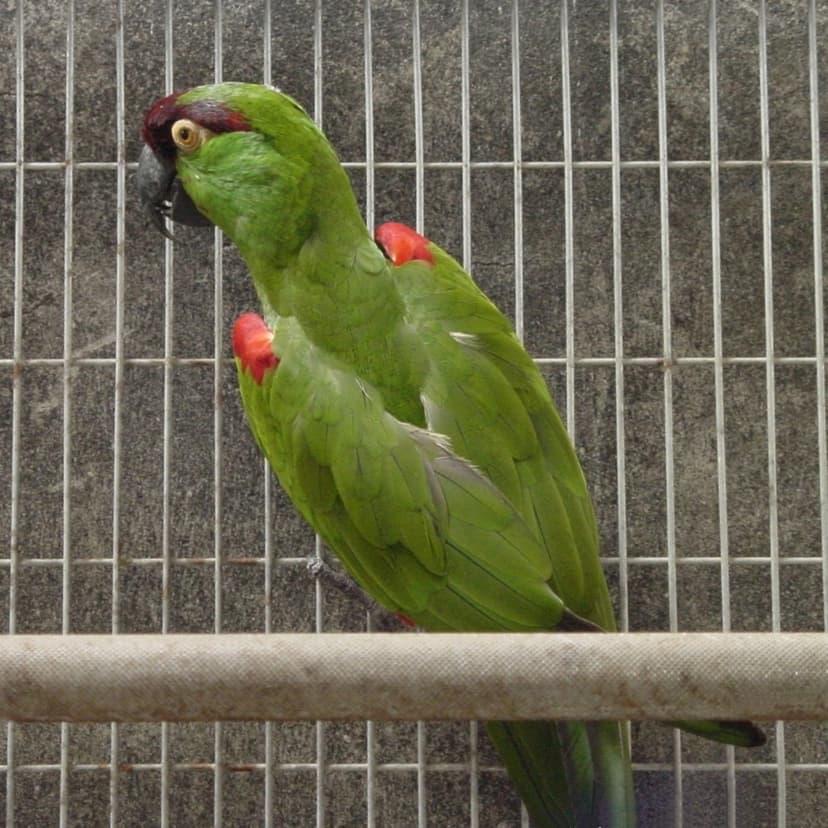
The maroon-fronted parrot is a large, macaw-like parrot native to northeastern Mexico. It is distinguished by its dark green plumage, maroon forehead, and red shoulder patches. These parrots are known for their distinctive "cr-a ak" vocalizations and their tendency to nest in large cliffside colonies.