
Olive-headed lorikeet
Trichoglossus euteles·Psittaculidae·24·November to February
The olive-headed lorikeet, also known as the perfect lorikeet, is a species of parrot found in forest and woodland habitats on Timor and adjacent islands. This primarily green parrot is distinguished by its olive-colored head, bordered by a green collar, and an orange-red beak. They are known for their aggressive behavior, particularly around resources, and possess a distinctive vocalization characterized by wheezy and buzzy trills.
Key Facts
- ›The olive-headed lorikeet is primarily green with an olive-colored head and a green collar.
- ›They are found in forest, woodland, and cultivated areas on Timor and nearby islands.
- ›Their diet in the wild includes pollen, nectar, fruits, seeds, and insects.
- ›In captivity, a significant portion of their diet should be nectar-based.
- ›Both males and females have identical external appearances.
- ›They are known for aggressive behavior, especially concerning food and nesting sites.

Perfect Lorikeet
Indonesia, Lesser Sundas
Rainforests, Closed Canopy Forests, Primary Montane Forest, Secondary Growth, Savanna Woodland
Olive-Colored Head, Green Collar, Orange-Red Beak
Pollen, Nectar, Fruits, Seeds, Insects, Larvae
Extremely Aggressive
- Repetitive, Long, Wheezy Calls
- Rapid, Buzzy Trilling Notes
- Muted Series of Harsh, Longer Squeaks, Twitters, and Whistles
- Sharp, High-Pitched Sounds Like "Kreet!" Or "Kurrk"
- Softer, Lisping "Tsleet!"
About Olive-headed lorikeet
The olive-headed lorikeet (Trichoglossus euteles), also referred to as the perfect lorikeet, is a species of parrot belonging to the family Psittaculidae. This distinctively colored bird is native to the Lesser Sundas, with its range encompassing Timor and smaller adjacent islands.
Description and Identification
This lorikeet is predominantly green, measuring approximately 24 centimeters in length. Its most recognizable feature is its olive-colored head, which is sharply defined by a green collar. Complementing its plumage, the beak is a vibrant orange-red, its irises are red, and its legs are grey. A notable characteristic is that the male and female olive-headed lorikeets exhibit identical external appearances, making them monomorphic in this regard. Juveniles can be distinguished by a slightly greener head coloration, a brown beak, and brown irises.
Habitat and Distribution
The olive-headed lorikeet is endemic to the Lesser Sundas, indicating a restricted natural range. Its preferred habitats include rainforests and closed canopy forests. They are typically found in primary montane forests, secondary growth areas, and savanna woodlands, often at elevations between 1,000 and 2,300 meters.
Behavior and Diet
Lorikeets, including the olive-headed variety, are known for their highly aggressive nature, both towards their own species and other birds. This assertiveness is particularly evident when competing for essential resources such as food, perches, and nesting sites. During aggressive encounters, they engage in elaborate visual threat displays, a behavior common among parrots of the genus Trichoglossus.
In their natural environment, their diet consists of pollen, nectar, fruits, seeds, and insects, including their larvae. For those kept in aviculture, a significant portion of their diet, at least forty percent, should comprise commercial or homemade nectar. This can be prepared using lactose-free baby cereal, honey, malt extract, or molasses mixed with filtered water and should be provided fresh daily. Additional dietary options in captivity include various fruits and vegetables like carrots, corn, Swiss chard, lettuce, dandelion, sowthistle, chickweed, soaked dried figs, spray millet, and a small amount of soaked or sprouted sunflower seeds and oats.
Vocalizations
The vocalizations of the olive-headed lorikeet are described as repetitive, long, and wheezy. They also produce rapid, buzzy trilling notes, as well as muted series of harsh, longer squeaks, twitters, and whistles. Common calls include sharp, high-pitched sounds like "kreet!" or "kurrk," and a softer, lisping "tsleet!" alongside various muted, grating tones.
Reproduction
Information regarding the reproductive habits of the olive-headed lorikeet in the wild is not extensively documented. However, in captivity, they typically lay a clutch of three eggs, measuring approximately 24.5–25.3 mm by 22.5–23 mm. The incubation period for these eggs is around 23 days. The breeding season for this species generally spans from November to February.
Aviculture
Similar to other lorikeet species, the olive-headed lorikeet is a popular choice in aviculture. It has been noted in inventories of exotic bird species known to be present in Australia.
Source: Wikipedia ↗
Frequently Asked Questions
What does the olive-headed lorikeet look like?
The olive-headed lorikeet is a mainly green parrot, approximately 24 cm long. It features an olive-colored head demarcated by a green collar, an orange-red beak, red irises, and grey legs. Males and females appear externally identical.
Where are olive-headed lorikeets found?
These lorikeets are endemic to the Lesser Sundas, specifically found on Timor and smaller nearby islands. They inhabit rainforests, closed canopy forests, primary montane forests, secondary growth, and savanna woodlands.
What do olive-headed lorikeets eat?
In their natural habitat, they feed on pollen, nectar, fruits, seeds, and insects along with their larvae. In captivity, their diet should heavily feature nectar, supplemented with various fruits and vegetables.
What is the behavior of the olive-headed lorikeet?
Olive-headed lorikeets are notably aggressive towards both their own species and others, particularly when competing for food, perches, or nest sites. They exhibit elaborate visual threat displays during conflicts.
What sounds do olive-headed lorikeets make?
Their vocalizations are described as repetitive, long, and wheezy, with rapid, buzzy trilling notes. They also produce muted series of harsh squeaks, twitters, and whistles, often expressed as sharp, high-pitched sounds like "kreet!" or "kurrk."
Related Parrot species
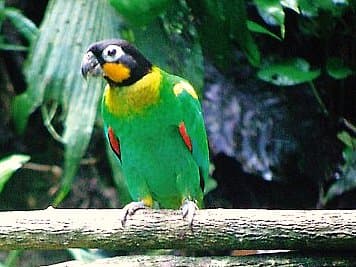
Orange-cheeked parrot
The orange-cheeked parrot, also known as Barraband's parrot, is a species of parrot native to the Amazonian Andes and humid lowland forests of the Amazon Basin in South America. Its distinctive features include an olive throat and breast, yellow thighs, and varying shades of orange on its wings and cheeks, with a notable white eye-ring. This species faces threats from habitat loss due to deforestation in its native range.

Madarasz's tiger parrot
Madarasz's tiger parrot is a small parrot species native to New Guinea, found in subtropical and tropical moist montane forests. It is distinguished by its speckled yellow and olive plumage, with males and females sharing an olive/brown head and yellow crown feathers. The species is named in honor of the Hungarian ornithologist Gyula von Madarász.

Australian king parrot
The Australian king parrot is a striking parrot species native to the humid, forested eastern regions of Australia. It is distinguished by the vibrant red plumage of the adult male, contrasting with the predominantly green female. These parrots are known for their relatively quiet nature and devotion to their human companions when kept as pets.