
Madarasz's tiger parrot
Psittacella madaraszi·Psittaculidae·14·34-44
Madarasz's tiger parrot is a small parrot species native to New Guinea, found in subtropical and tropical moist montane forests. It is distinguished by its speckled yellow and olive plumage, with males and females sharing an olive/brown head and yellow crown feathers. The species is named in honor of the Hungarian ornithologist Gyula von Madarász.
Key Facts
- ›Native to New Guinea.
- ›Inhabits subtropical or tropical moist montane forests.
- ›Measures approximately 14 cm in length.
- ›Weighs between 34-44 grams.
- ›Features speckled yellow and olive plumage with distinct markings on the head and breast.
- ›Named after ornithologist Gyula von Madarász.

New Guinea
Subtropical Moist Montane Forests, Tropical Moist Montane Forests
- Speckled yellow feathers on head from crown to hindneck
- Blue wash on forehead
- Orange wash on nape and hindneck
About Madarasz's tiger parrot
Madarasz's tiger parrot, scientifically known as Psittacella madaraszi, is a species of parrot native to the island of New Guinea. This parrot is found in the subtropical and tropical moist montane forests of the region. Its common name and scientific designation honor Gyula von Madarász, a Hungarian ornithologist.
Description
This species is a relatively small parrot, measuring approximately 14 centimeters in length. Its average weight ranges between 34 and 44 grams. Both male and female Madarasz's tiger parrots possess an olive or brown-colored head. From the crown to the hindneck, they are adorned with yellow feathers, which create a speckled appearance. The throat area displays a more subdued yellow hue. The upper breast is typically olive in coloration. Their tail feathers are green, and they have red undertail coverts. The beak is a light blue-grey color, tipped with white.
Distinguishing features between the sexes include a blue wash on the forehead and an orange wash on the nape and hindneck of the female. These subtle differences contribute to sexual dimorphism within the species.
Source: Wikipedia ↗
Frequently Asked Questions
What is the scientific name for Madarasz's tiger parrot?
The scientific name for Madarasz's tiger parrot is Psittacella madaraszi. This binomial name is used in scientific classification to uniquely identify the species.
Where does Madarasz's tiger parrot live?
Madarasz's tiger parrot is native to New Guinea. Its natural habitat includes subtropical or tropical moist montane forests.
What does Madarasz's tiger parrot look like?
This parrot is relatively small, about 14 cm long and weighing 34-44 grams. Both sexes have an olive/brown head with speckled yellow feathers from crown to hindneck. They have green tail feathers and red undertail coverts.
Are there differences between male and female Madarasz's tiger parrots?
Yes, there are some differences. While both sexes have an olive/brown head and yellow crown feathers, females exhibit a blue wash on the forehead and an orange wash on the nape and hindneck.
What is the origin of the name Madarasz's tiger parrot?
The common name and Latin binomial commemorate the Hungarian ornithologist Gyula von Madarász. He is recognized for his contributions to the study of birds.
Related Parrot species
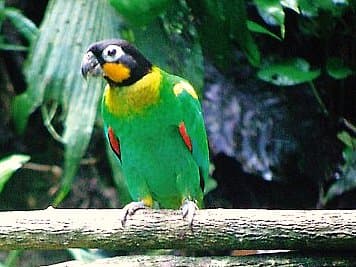
Orange-cheeked parrot
The orange-cheeked parrot, also known as Barraband's parrot, is a species of parrot native to the Amazonian Andes and humid lowland forests of the Amazon Basin in South America. Its distinctive features include an olive throat and breast, yellow thighs, and varying shades of orange on its wings and cheeks, with a notable white eye-ring. This species faces threats from habitat loss due to deforestation in its native range.

Olive-headed lorikeet
The olive-headed lorikeet, also known as the perfect lorikeet, is a species of parrot found in forest and woodland habitats on Timor and adjacent islands. This primarily green parrot is distinguished by its olive-colored head, bordered by a green collar, and an orange-red beak. They are known for their aggressive behavior, particularly around resources, and possess a distinctive vocalization characterized by wheezy and buzzy trills.
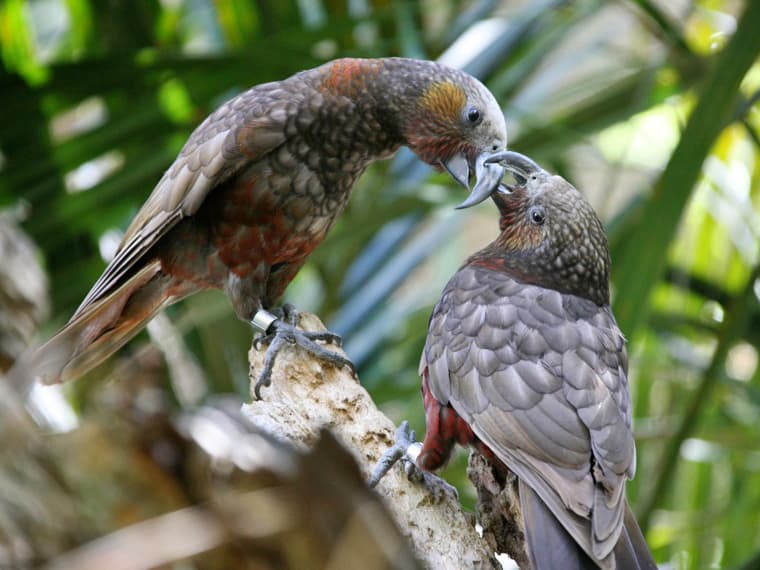
New Zealand kākā
The New Zealand kākā (Nestor meridionalis) is a large, endangered parrot native to the forests of New Zealand. Known for its distinctive brown and green plumage with scarlet flashes, it is an arboreal species that plays a vital role in its ecosystem through its varied diet, which includes fruits, seeds, nectar, and sap. Its conservation is a priority due to significant population declines caused by habitat loss and introduced predators.