
Orange-cheeked parrot
The orange-cheeked parrot, also known as Barraband's parrot, is a species of parrot native to the Amazonian Andes and humid lowland forests of the Amazon Basin in South America. Its distinctive features include an olive throat and breast, yellow thighs, and varying shades of orange on its wings and cheeks, with a notable white eye-ring. This species faces threats from habitat loss due to deforestation in its native range.
Key Facts
- ›Found in humid lowland forests across the Amazon Basin.
- ›Adults have a distinctive olive throat and breast with yellow and orange markings on their wings and thighs.
- ›They feed on seeds, fruit, and wasp larvae, and visit clay banks for nutrient-rich soil.
- ›Often observed singly, in pairs, or in small groups of up to 10 individuals.
- ›Listed as Least Concern on the IUCN Red List but is susceptible to deforestation.
- ›Uncommonly kept as pets, particularly in Brazil.
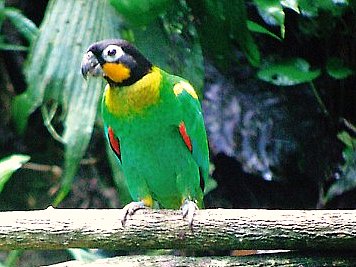
Barraband's Parrot
South America
Humid Lowland Forests, Amazonian Andes, Terra Firme Forest, Varzea Stands, Forest Edges, Partly Disturbed Forests
- White eye-ring
- Orange to yellow cheeks
- Yellow thighs
- Yellow to orange bend of wing and lesser wing coverts
- Orange to red carpal edge and underwing coverts
Seeds, Fruit, Wasp Larvae, Clay Soil
Not Specified
Reedy and Slurred Calls In Flight, Guttural Alarm Calls
Not Specified
About Orange-cheeked parrot
The orange-cheeked parrot, scientifically known as Pyrilia barrabandi and also referred to as Barraband's parrot, is a species of parrot native to the Amazonian Andes and the humid lowland forests of the Amazon Basin in South America. This species is characterized by its olive throat and breast, yellow thighs, and striking orange or yellow cheeks, complemented by a distinctive white eye-ring surrounding a brown eye. Adults also display a range of yellow to orange coloration on their wings and underwings.
Ecology and Behavior
Orange-cheeked parrots are active in the early morning, and are typically observed alone, in pairs, or in small social groups of up to ten individuals. Their diet is varied, including seeds, fruits, and wasp larvae found within galls. A notable feeding habit is their visit to clay banks, where they consume soil believed to act as an antacid, neutralizing potentially harmful acids in their food. Foraging usually occurs high in or just below the forest canopy.
Distribution and Habitat
This parrot inhabits a range that includes northwestern Brazil, western Ecuador and Peru, southern Venezuela and Colombia, and extreme northern Bolivia. They are found at elevations up to 400 meters (1,300 feet) in lowland terra firme forests and occasionally in varzea stands. Forest edges and partially disturbed forests also serve as habitats for the species.
Conservation
Globally, the orange-cheeked parrot is classified as Least Concern by the IUCN Red List. However, its populations are susceptible to the ongoing deforestation of the Amazon rainforest, which poses a significant threat to its habitat and is projected to lead to a considerable population decrease. The species is considered naturally rare within its geographical distribution.
Breeding
While detailed information on breeding is limited, the breeding season is thought to possibly occur between September and October. Specifics regarding clutch size, incubation, and fledging periods are not extensively documented in available records.
As Pets
Orange-cheeked parrots are uncommonly kept as pets, though they are known to be kept as such in Brazil. Their distinctive appearance and vocalizations make them of interest, but their status as a pet species is not widespread.
Source: Wikipedia ↗
Frequently Asked Questions
What are the distinguishing physical characteristics of the orange-cheeked parrot?
Adult orange-cheeked parrots have an olive throat and breast, with yellow thighs. Their wings and underwings display yellow to orange coloration, and they possess distinctive orange or yellow cheeks. A prominent white eye-ring around a brown eye further aids in identification.
Where is the orange-cheeked parrot found geographically?
The orange-cheeked parrot is found in the Amazonian Andes and humid lowland forests of the Amazon Basin, specifically in northwestern Brazil, western Ecuador and Peru, southern Venezuela and Colombia, and northern Bolivia.
What do orange-cheeked parrots eat?
Their diet consists of seeds, fruit, and wasp larvae found in galls. They also exhibit a unique behavior of visiting clay banks to consume soil, which is believed to neutralize acids in their food.
What is the conservation status of the orange-cheeked parrot?
The orange-cheeked parrot is listed as Least Concern on the IUCN Red List. However, it is vulnerable to habitat loss due to the increasing deforestation of the Amazon rainforest, which is expected to cause a population decline.
What are the vocalizations of the orange-cheeked parrot like?
In flight, they produce distinctive calls that are described as reedy and slurred. They also possess guttural alarm calls.
Are orange-cheeked parrots social birds?
Yes, orange-cheeked parrots are social and are often seen singly, in pairs, or in small groups of up to 10 individuals, particularly when visiting clay banks.
Related Parrot species

Madarasz's tiger parrot
Madarasz's tiger parrot is a small parrot species native to New Guinea, found in subtropical and tropical moist montane forests. It is distinguished by its speckled yellow and olive plumage, with males and females sharing an olive/brown head and yellow crown feathers. The species is named in honor of the Hungarian ornithologist Gyula von Madarász.

Olive-headed lorikeet
The olive-headed lorikeet, also known as the perfect lorikeet, is a species of parrot found in forest and woodland habitats on Timor and adjacent islands. This primarily green parrot is distinguished by its olive-colored head, bordered by a green collar, and an orange-red beak. They are known for their aggressive behavior, particularly around resources, and possess a distinctive vocalization characterized by wheezy and buzzy trills.
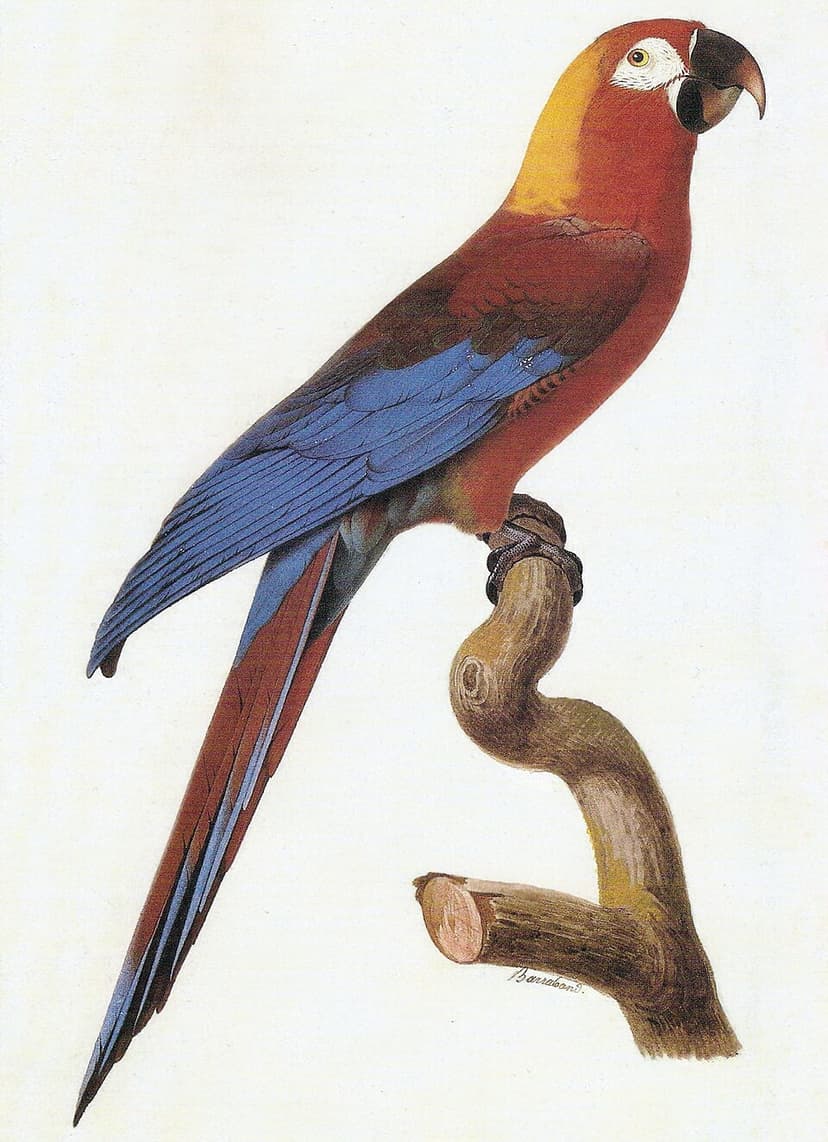
Cuban macaw
The Cuban macaw (Ara tricolor) was a species of macaw native to Cuba and Isla de la Juventud, becoming extinct in the late 19th century. It was one of the smallest macaws, characterized by a vibrant plumage of red, orange, yellow, green, brown, and blue. Its demise was attributed to hunting, habitat destruction, and possibly hurricanes, despite limited knowledge of its behavior.