
Orange-winged amazon
Amazona amazonica·Psittacidae·33·340
The Orange-winged Amazon is a large, primarily green parrot native to tropical South America, found in forests and semi-open country. It is distinguished by the orange feathers in its wings and tail, which are visible in flight, and blue and yellow markings on its head that vary individually. This species is known for its noisy vocalizations and is common in its natural range, though it faces threats from persecution as an agricultural pest and capture for the pet trade.
Key Facts
- ›Primarily green plumage with blue and yellow on the head.
- ›Distinctive orange feathers on wings and tail, visible during flight.
- ›Inhabits forests and semi-open country in tropical South America.
- ›Feeds on fruits, seeds, nuts, blossoms, and berries.
- ›Nests in tree cavities, typically laying 3-4 white eggs.
- ›Males and females are visually identical.

Orange-Winged Parrot, Loro Guaro
South America
Forest, Semi-Open Country
- Orange feathers in wings and tail visible in flight
- Blue and yellow feathers on head
Fruit, Seeds, Nuts, Blossoms, Leaf Buds, Berries, Palm Tree Fruit, Cocoa, Mangoes, Oranges
Noisy, Loud, High-Pitched Screams
Tree Cavities
About Orange-winged amazon
The Orange-winged Amazon (Amazona amazonica), also known as the Orange-winged parrot and loro guaro, is a large parrot species found in tropical South America. Its natural habitat includes forests and semi-open country, with populations resident from Colombia and Trinidad and Tobago south to Peru, Bolivia, and central Brazil. This species is primarily green, distinguished by striking orange feathers in its wings and tail that are visible during flight, and by variable blue and yellow markings on its head. Both males and females share the same external appearance.
Orange-winged Amazons are known for their noisy nature, emitting loud, high-pitched screams. Their diet is varied, consisting of fruits, seeds, nuts, blossoms, leaf buds, and berries, often including palm tree fruits and sometimes cultivated crops like cocoa, mangoes, and oranges. They exhibit social behavior, roosting communally in trees in large numbers at dawn and dusk. For nesting, they utilize tree cavities, where females incubate clutches of typically three or four white eggs for about 26 days. Chicks remain in the nest for approximately 60 days after hatching.
Despite being common within its native range, the Orange-winged Amazon faces significant pressures. It is often persecuted as an agricultural pest, and substantial numbers have been captured for the pet trade, with over 66,000 recorded between 1981 and 1985. The species is also hunted for food. Introduced breeding populations have been reported in areas such as Puerto Rico and Tenerife in the Canary Islands, where they have even been observed hybridizing with other parrot species.
Source: Wikipedia ↗
Frequently Asked Questions
What is the scientific name for the Orange-winged Amazon?
The scientific name for the Orange-winged Amazon is *Amazona amazonica*. It was first described by Carl Linnaeus in 1766.
Where does the Orange-winged Amazon naturally live?
The Orange-winged Amazon is a resident breeding bird in tropical South America. Its range extends from Colombia and Trinidad and Tobago south to Peru, Bolivia, and central Brazil.
What does the Orange-winged Amazon eat?
Their diet consists of a variety of plant matter, including fruits, seeds, nuts, blossoms, leaf buds, and berries. They are known to eat fruits from palm trees, and sometimes consume cocoa, mangoes, and oranges.
What are the distinctive physical features of the Orange-winged Amazon?
The most notable feature is the presence of orange feathers in its wings and tail, which are visible when the bird is in flight. They also have blue and yellow feathers on their head, with the extent of these markings varying among individuals.
How does the Orange-winged Amazon breed?
They nest in tree cavities and typically lay three or four white eggs. The female incubates the eggs for about 26 days, and the chicks fledge approximately 60 days after hatching.
Are male and female Orange-winged Amazons different in appearance?
No, the male and female Orange-winged Amazons are identical in their external appearance, making it difficult to distinguish them visually.
What are the conservation concerns for the Orange-winged Amazon?
The species is persecuted as an agricultural pest and is captured for the pet trade, with over 66,000 captured between 1981 and 1985. They are also hunted for food.
Related Parrot species
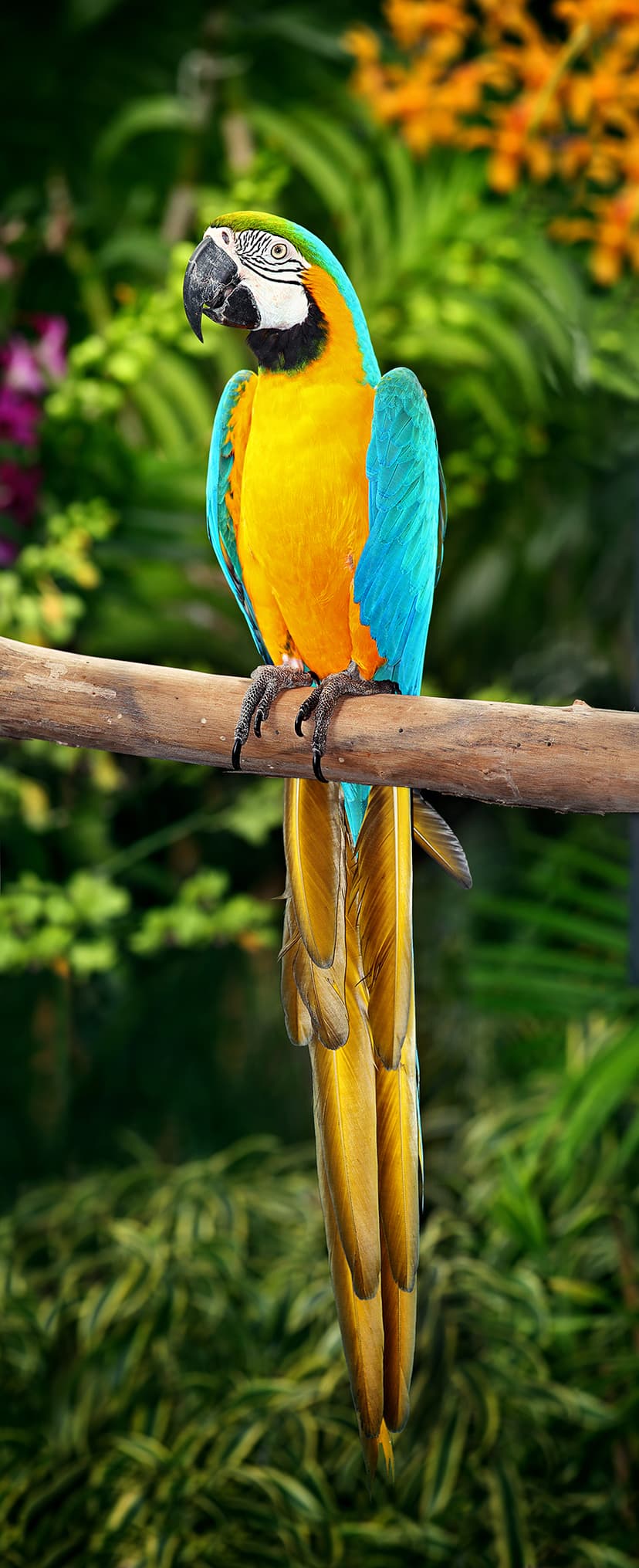
Arinae
The Arinae, commonly known as neotropical parrots or New World parrots, encompass approximately 150 species found across South and Central America, Mexico, the Caribbean, and the southern United States. These parrots are distinguished by their diverse forms, including iconic macaws, conures, and amazons, and have a long history of interaction with Europeans since their discovery in the late 15th century.

Australian king parrot
The Australian king parrot is a striking parrot species native to the humid, forested eastern regions of Australia. It is distinguished by the vibrant red plumage of the adult male, contrasting with the predominantly green female. These parrots are known for their relatively quiet nature and devotion to their human companions when kept as pets.
Blue-and-yellow macaw
The blue-and-yellow macaw, also known as the blue-and-gold macaw, is a large Neotropical parrot native to the forests, woodlands, and savannahs of tropical Central and South America, including Trinidad. It is distinguished by its vibrant blue upperparts, yellow to orange underparts, and a green crown, making it one of the most popular and commonly kept macaw species in aviculture due to its striking appearance and ability to bond with humans.