
Plum-headed parakeet
Psittacula cyanocephala·Psittacidae·33–37·55–85
The plum-headed parakeet is a species of parakeet native to the Indian subcontinent, known for its distinctive head coloration, which differs between males and females. These gregarious birds are found in forests and woodlands, and are recognized for their swift, twisting flight and raucous calls. They are also known for their ability to mimic sounds in captivity.
Key Facts
- ›Endemic to the Indian subcontinent, ranging from the Himalayas to Sri Lanka.
- ›Males have a striking pinkish-purple head, while females have a grey head.
- ›They are gregarious birds, often found in flocks, and exhibit swift, twisting flight patterns.
- ›Their diet consists of grains, fruits, and flower petals.
- ›Breeding seasons vary, occurring from December to April in India and July to August in Sri Lanka.
- ›In captivity, they are known for their ability to MIMIC sounds and talk.

Plum-Headed Parrot, Indian Plum-Headed Parakeet
Indian Subcontinent
Forest, Open Woodland, City Gardens
Green, Pinkish-Purple, Bluish-Grey, Red, Blueish-Green, White, Black
Head Coloration Differs Between Sexes, Red Shoulder Patch, Black Neck Collar and Chin Stripe
Grains, Fruits, Flower Petals
Gregarious, Noisy
Raucous calls, Distinctive flight and contact call 'Tuink?', Ability to mimic sounds and talk in captivity
Nests in holes in tree trunks, Holes are chiseled out by the pair
About Plum-headed parakeet
The Plum-Headed Parakeet
The plum-headed parakeet (Psittacula cyanocephala), also known historically by Latin names such as Psittacus cyanocephalus, is a distinctive species of parakeet native to the Indian subcontinent. It is characterized by its mostly green plumage, with notable differences in head coloration between the sexes. Males sport a vibrant pinkish-purple head that shades to blue-purple on the crown and cheeks, while females have a more subdued bluish-grey head. Both sexes typically have a red shoulder patch and a tail tipped with white or yellow.
These birds are found in a variety of habitats, including forests, open woodlands, and even urban gardens, ranging from the Himalayan foothills down to Sri Lanka. They are not present in the dry western regions of India. Plum-headed parakeets are gregarious and noisy, often seen flying swiftly with rapid twists and turns, accompanied by their characteristic calls. Their diet comprises grains, fruits, and flower petals, and they are known to raid agricultural areas. The species has also been noted for its ability to mimic sounds and talk when kept as pets.
Taxonomy and History
The plum-headed parakeet was first described in 1760 by Mathurin Jacques Brisson, who gave it the Latin name Psittaca cyanocephalos. Carl Linnaeus later included it in his Systema Naturae in 1766. The specific name cyanocephala is derived from Ancient Greek words meaning "dark-blue" and "-headed." The species is now classified within the genus Psittacula. Historically, early accounts of talking birds from India, such as those by Ctesias of Cnidus in the 5th century BC, are believed to refer to this species or a closely related one, highlighting its ancient association with human observation and interaction.
Behavior and Reproduction
Plum-headed parakeets are highly social birds, often found in flocks, and they roost communally. Their flight is swift and agile, marked by frequent twists and turns. The breeding season varies geographically, occurring mainly from December to April in India and from July to August in Sri Lanka. They nest in cavities within tree trunks, which they excavate themselves. Typically, a clutch consists of 4 to 6 white eggs, with the female appearing to be the primary caregiver for incubation and feeding the young.
Distinctive Features and Identification
The primary distinguishing feature of the plum-headed parakeet is the sexual dimorphism in head color. Males have the eponymous plum-like head, while females are grey-headed. A narrow black neck collar and a black chin stripe are present in males, along with a red shoulder patch. The tail is bluish-green and tipped white. The upper mandible is orangish-yellow, and the lower is dark. Females have a duller grey head and lack the distinct black collar and chin stripe, with a corn-yellow upper mandible. Immature birds have green heads and yellowish beaks, developing their adult coloration after about a year. The species is differentiated from the similar blossom-headed parakeet by its head color and white tail tip, as well as the maroon shoulder patch and shorter tail tipped yellow in the latter.
Source: Wikipedia ↗
Frequently Asked Questions
What is the difference between male and female plum-headed parakeets?
The most striking difference is head coloration: males possess a pinkish-purple head, while females have a bluish-grey head. Additionally, females lack the narrow black neck collar and black chin stripe found on males.
Where are plum-headed parakeets found naturally?
Plum-headed parakeets are endemic to the Indian subcontinent, inhabiting areas from the foothills of the Himalayas south to Sri Lanka. They are typically found in forests and open woodlands, and can even be observed in city gardens.
What do plum-headed parakeets eat?
Their diet is varied and includes grains, fruits, and the fleshy petals of flowers. They are also known to raid agricultural fields and orchards for food.
What is the typical lifespan of a plum-headed parakeet?
Information on the exact lifespan in the wild is not specified, but in captivity, they are known to be long-lived birds, capable of mimicking sounds and talking.
Are plum-headed parakeets social birds?
Yes, plum-headed parakeets are described as gregarious species. They are found in flocks and roost communally, indicating a strong social nature.
What sounds do plum-headed parakeets make?
They are a noisy species with a range of raucous calls. Their usual flight and contact call is described as 'tuink?' repeated periodically. In captivity, they can learn to mimic sounds and talk.
Related Parrot species

Layard's parakeet
Layard's parakeet, also known as the emerald-collared parakeet, is a parrot species endemic to Sri Lanka. It is distinguished by its green plumage, bluish-grey head and back separated by a green collar, and a black chin stripe. This species is typically found in forests and gardens and is known for its raucous chattering call.

Budgerigar
The budgerigar, also known as the common parakeet or budgie, is a small, seed-eating parrot native to Australia. Naturally green and yellow with black markings, captive breeding has produced a wide array of colors. These nomadic, social birds are highly popular pets worldwide due to their small size, affordability, and remarkable ability to mimic human speech.
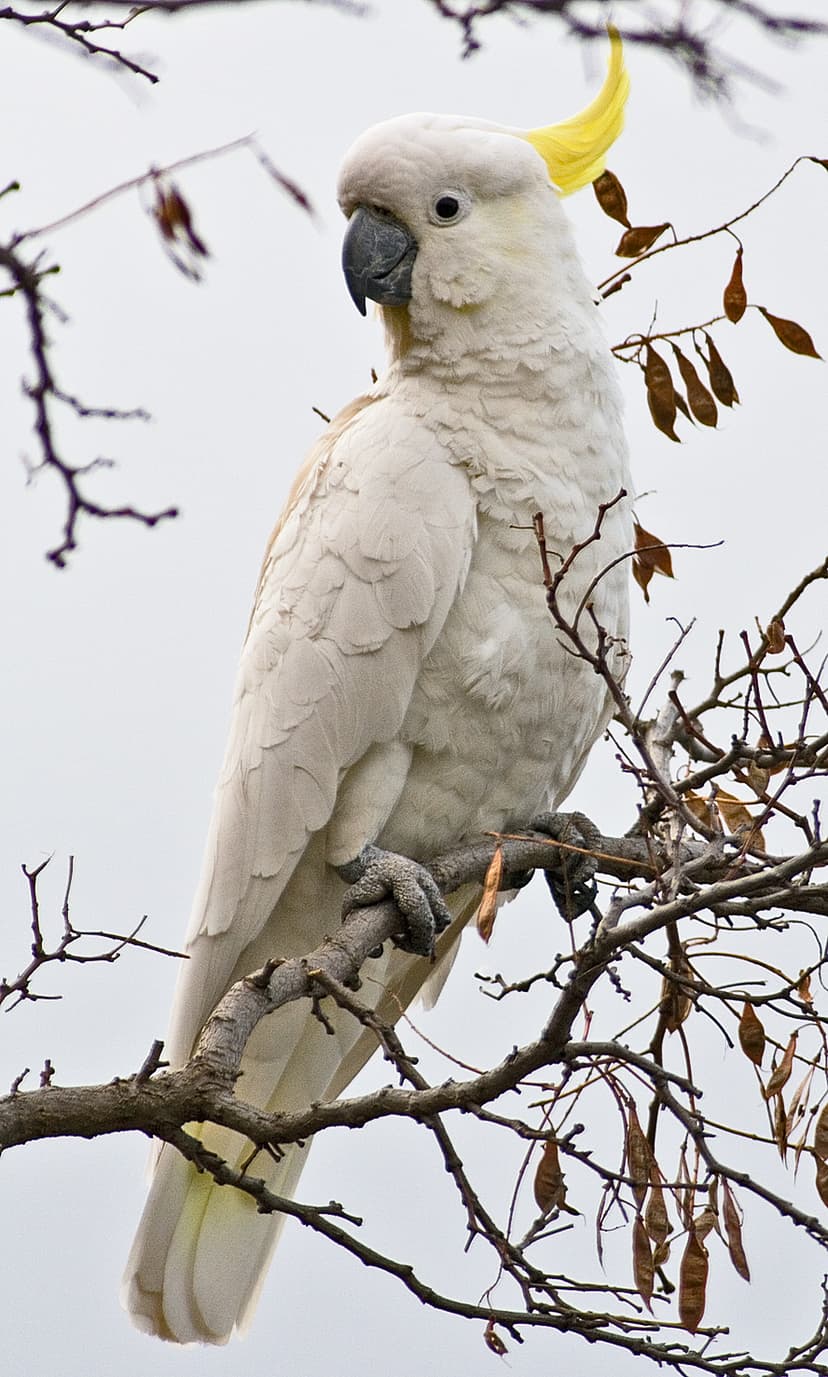
Cacatuidae
Cacatuidae, commonly known as cockatoos, are a family of parrots native to Australasia, characterized by their distinctive erectile crests and curved bills. While generally less colorful than other parrots, often displaying white, grey, or black plumage with colorful accents, they are typically larger and possess a striking appearance. Cockatoos are known for their social nature, monogamous breeding habits, and preference for nesting in tree hollows, feeding on a diet of seeds, tubers, fruits, and insects.