
Purple-naped lory
The purple-naped lory is a vibrant parrot species found exclusively on the Indonesian islands of Seram and Ambon, and potentially Haruku and Saparua. This forest-dwelling bird is distinguished by its predominantly red plumage, accented by a black cap fading to purple on its nape, green wings, blue thighs, and a distinctive yellow chest band. Sadly, its numbers are declining due to the threat of trapping for the cage-bird trade, leading to its endangered status.
Key Facts
- ›Native to the Indonesian islands of Seram, Ambon, and possibly Haruku and Saparua.
- ›Predominantly red plumage with a black cap that transitions to purple on the nape.
- ›Features green wings, blue thighs, and a variable yellow band across the chest.
- ›Possesses an orange beak, dark-grey eyerings, and orange-red irises.
- ›Classified as endangered, primarily due to capture for the cage-bird trade.
- ›Measures approximately 28 cm (11 inches) in length.

Purple-Naped Lory
Indonesia
Forest
Black cap fading to purple on the nape, Variable yellow band across the chest
About Purple-naped lory
The purple-naped lory (Lorius domicella), also known by its Latin binomial classification, is a species of parrot belonging to the family Psittaculidae. This striking bird is a forest-dweller and is endemic to a limited region within Indonesia, specifically found on the islands of Seram and Ambon, with possible occurrences on Haruku and Saparua in the South Maluku province. Its natural habitat is the forests of these islands.
Description and Appearance
Adult purple-naped lories are characterized by their striking plumage. They measure approximately 28 cm (11 inches) in length and are predominantly red, including an all-red tail that darkens towards the tip. The top of their head is black, transitioning to a distinct purple coloration on the back of the neck, giving the species its name. Their wings are green, their thighs are blue, and they possess a variable, approximately transverse yellow band across their chest. The beak is orange, complemented by dark-grey eyerings and orange-red irises.
Juveniles of the species exhibit some differences. They have a brown beak, grey-white eyerings, and brown irises. Furthermore, their yellow chest band is wider than in adults, and the purple patch on the back of their neck is more extensive.
Conservation and Threats
The purple-naped lory is currently classified as endangered. The primary factor contributing to its declining population is the threat from trapping activities, as these birds are captured for the cage-bird trade. This practice significantly impacts their numbers in the wild.
Taxonomy and Naming
The species was formally described by Carl Linnaeus in 1758 in the tenth edition of his Systema Naturae, under the binomial name Psittacus domicella. The specific epithet 'domicella' is derived from Medieval Latin, meaning 'damsel'. Linnaeus's description was based on a bird previously described and illustrated by the English naturalist George Edwards in 1751, which had been brought to London from the East Indies. While Linnaeus initially assigned the locality as 'Asia', it is now understood to refer to Ambon Island. The purple-naped lory is now placed in the genus Lorius, established in 1825 by Nicholas Aylward Vigors. The species is considered monotypic, meaning no subspecies are currently recognized.
Source: Wikipedia ↗
Frequently Asked Questions
What are the key physical characteristics of the purple-naped lory?
The purple-naped lory is primarily red with an all-red tail. It has a black head that fades to purple on the back of its neck, green wings, and blue thighs. A distinctive feature is a variable yellow band across its chest.
Where is the purple-naped lory found in the wild?
This parrot species is endemic to the islands of Seram and Ambon in South Maluku, Indonesia. It may also be found on the islands of Haruku and Saparua.
What is the conservation status of the purple-naped lory?
The purple-naped lory is considered endangered. The primary threat to its population is trapping for the cage-bird trade.
How can juvenile purple-naped lories be distinguished from adults?
Juveniles have a brown beak, grey-white eyerings, and brown irises, differing from the adult's orange beak and orange-red irises. They also exhibit a wider yellow chest band and a more extensive purple patch on the back of their neck.
Related Parrot species
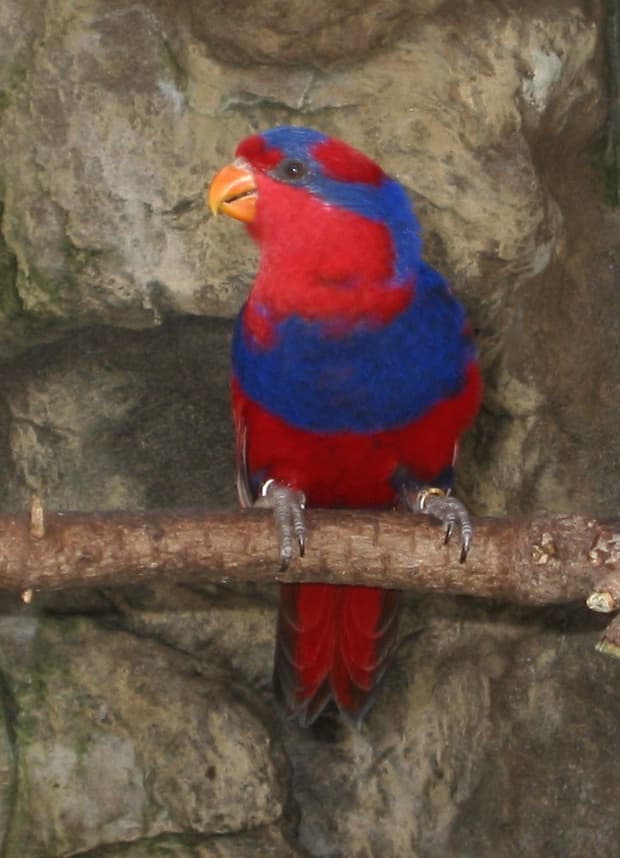
Red-and-blue lory
The red-and-blue lory is a small, vividly colored parrot endemic to Indonesia, specifically found on the island of Karakelong in the Talaud Islands. Its striking plumage features a mix of red, blue, purple, and black, making it easily recognizable. This species is primarily arboreal and feeds on nectar and pollen, with a significant population decline attributed to habitat loss and illegal trapping.

Red-browed amazon
The Red-browed amazon is a parrot species native to the Atlantic Forest of eastern Brazil. It is distinguished by its bright red crown, blue cheeks and throat, and green plumage with dark markings. This species is threatened by habitat loss and illegal capture for the pet trade, leading to its classification as Vulnerable.

Duchess lorikeet
The Duchess lorikeet (Vini margarethae) is a species of parrot native to the Solomon Islands archipelago. This vibrantly colored bird, primarily bright red with distinctive yellow and purple markings, inhabits lowland and montane forests, as well as plantations. It is currently listed as Least Concern but faces threats from habitat loss and potential large-scale pet trade.