
Red-chinned lorikeet
The red-chinned lorikeet (Vini rubrigularis) is a species of parrot belonging to the family Psittaculidae. It is found in the islands of Papua New Guinea, inhabiting moist lowland and montane forests. This species is distinguished by its specific coloration and its taxonomic history, having been moved to the genus Vini based on molecular phylogenetic studies.
Key Facts
- ›Native to New Britain, New Ireland, New Hannover, and Karkar Island in Papua New Guinea.
- ›Inhabits subtropical or tropical moist lowland and montane forests.
- ›Formerly assigned to the genus Charmosyna before being moved to Vini.
- ›The specific epithet 'rubrigularis' refers to its red throat.
- ›Generally recognized as monotypic, though some consider Karkar Island populations a distinct subspecies.

Red-Chinned Lory
Papua New Guinea
Subtropical Or Tropical Moist Lowland Forest, Subtropical Or Tropical Moist Montane Forest
Red Throat
Not Specified In Text
Not Specified In Text
Not Specified In Text
Not Specified In Text
About Red-chinned lorikeet
The red-chinned lorikeet, scientifically known as Vini rubrigularis, is a species of parrot that belongs to the family Psittaculidae. This vibrantly colored bird is native to the islands of Papua New Guinea, specifically found on New Britain, New Ireland, New Hannover, and Karkar Island.
Habitat and Distribution
The natural habitats of the red-chinned lorikeet are subtropical or tropical moist lowland forests and subtropical or tropical moist montane forests. These environments provide the necessary resources for the species' survival.
Taxonomy and Naming
Historically, the red-chinned lorikeet was placed in the genus Charmosyna. However, a molecular phylogenetic study conducted in 2020 led to its reassignment to the genus Vini. The species was first described by Philip Sclater in 1881 as Trichoglossus rubrigularis. The genus name Vini is derived from the Tahitian name for resident lorikeets. Its specific epithet, rubrigularis, originates from Latin, where 'ruber' means red and 'gularis' means throated, a direct reference to the prominent red coloration on its throat. It is also known by the common name red-chinned lory.
Subspecies
Generally, the red-chinned lorikeet is recognized as a monotypic species, meaning it has no recognized subspecies. However, there is some debate among authorities, with certain populations from Karkar Island being considered a distinct subspecies, V. r. krakari, by some.
Source: Wikipedia ↗
Frequently Asked Questions
What is the scientific name of the red-chinned lorikeet?
The scientific name of the red-chinned lorikeet is Vini rubrigularis. It was originally described as Trichoglossus rubrigularis.
Where are red-chinned lorikeets found?
Red-chinned lorikeets are native to several islands in Papua New Guinea, specifically New Britain, New Ireland, New Hannover, and Karkar Island.
What kind of habitat do red-chinned lorikeets prefer?
Their natural habitats include subtropical or tropical moist lowland forests and subtropical or tropical moist montane forests.
What does the name 'rubrigularis' mean?
The specific epithet 'rubrigularis' is derived from Latin, with 'ruber' meaning red and 'gularis' meaning throated, referring to the bird's red throat.
Are there different subspecies of red-chinned lorikeet?
The species is generally considered monotypic. However, some authorities recognize a distinct subspecies, V. r. krakari, for populations found on Karkar Island.
Related Parrot species

Mealy amazon
The mealy amazon, scientifically known as Amazona farinosa, is one of the largest parrots in the Amazona genus, predominantly found in tropical Central and South America. This species is distinguished by its primarily green plumage, often displaying a whitish tinge reminiscent of flour, and a distinctive bi-colored tail.
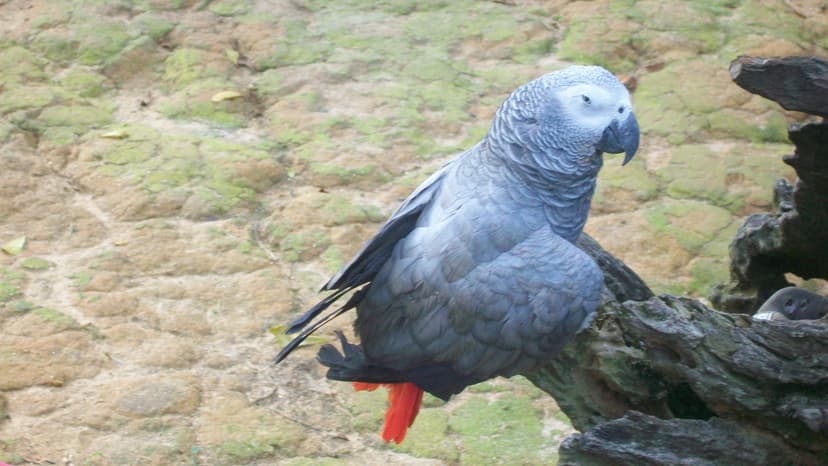
Grey parrot
The grey parrot (Psittacus erithacus), also known as the Congo grey parrot, is an African parrot recognized for its exceptional intelligence and remarkable ability to mimic human speech. Native to the equatorial rainforests and savannas of Africa, this predominantly grey bird with a red tail is highly sought after as a companion animal, though its wild populations are facing significant declines due to habitat loss and the pet trade.

Guadeloupe parakeet
The Guadeloupe parakeet is a hypothetical extinct species of parrot believed to have inhabited the Lesser Antillean island of Guadeloupe. Described as small, entirely green parrots with some red feathers on their heads and white bills, they were noted for their gentle nature and ability to learn speech. However, their existence as a distinct species is based on limited evidence, with no specimens or remains ever recovered.