
Mealy amazon
The mealy amazon, scientifically known as Amazona farinosa, is one of the largest parrots in the Amazona genus, predominantly found in tropical Central and South America. This species is distinguished by its primarily green plumage, often displaying a whitish tinge reminiscent of flour, and a distinctive bi-colored tail.
Key Facts
- ›Measures approximately 38–41 cm (15–16 in) in length with a weight of 540–700 g (19–25 oz).
- ›Native to humid to semi-humid forests and plantations across tropical Central and South America.
- ›Diet primarily consists of fruits, seeds, berries, nuts, blossoms, and leaf buds.
- ›Known for a calm and gentle temperament, making it a popular companion parrot.
- ›Breeds annually starting in early spring, laying three to four white eggs in tree cavities.
- ›Can be confused with the yellow-crowned amazon, but is larger and has a less yellow crown.

Mealy Parrot, Guatemalan Amazon, Blue-Crowned Mealy Amazon, Costa Rican Mealy Amazon, Green-Headed Amazon, Southern Mealy Amazon, Northern Mealy Amazon
Central America, South America
Humid Forest, Semi-Humid Forest, Plantations, Gallery Forest
Green, Whitish Tinge, Yellow, Blue-Black, Red
Whitish Tinge On Back and Nape, Bi-Colored Tail, Red Speculum In Flight, Broad White Eye-Ring
Fruits, Seeds, Berries, Nuts, Blossoms, Leaf Buds
Gentle, Calm, Docile, Affectionate
Usually quiet, Can be loud at dusk and dawn, Distinct voices
Tree-Cavity Nest
About Mealy amazon
The mealy amazon (Amazona farinosa), also known as the mealy parrot, is one of the largest members of the Amazona genus. This predominantly green parrot is native to the tropical regions of Central and South America, inhabiting humid to semi-humid forests and plantations. It is recognizable by its overall green plumage, which often features a whitish tinge on its back and nape, giving it a 'mealy' appearance, and a distinctly bi-colored tail.
Description and Identification
With a length of approximately 38–41 cm and a weight ranging from 540–700 g, the mealy amazon is a substantial parrot, often surpassed in size only by large macaws. Its tail is relatively short and square-shaped. While primarily green, the distal half of the tail is paler and more yellow than the basal half. In flight, a bluish-black trailing edge to the wing and a noticeable red speculum are visible. Occasionally, yellow feathers may appear on the top of the head. In South America, it can be confused with the yellow-crowned amazon, but the mealy amazon is generally larger, has less yellow on its crown, a broader white eye-ring, and the red of its wing leading edge is positioned differently.
Distribution and Habitat
The mealy amazon's range extends across tropical Central and South America. Its preferred habitat includes humid to semi-humid forests and plantations. In regions characterized by open or dry landscapes, the species is typically restricted to gallery forests or may be entirely absent.
Behavior and Diet
These parrots are social creatures, frequently observed in pairs or large flocks, and have been known to interact with other parrot species. While generally quiet, they can become vocal at dawn and dusk. Their diet is varied, consisting mainly of fruits, seeds, berries, nuts, blossoms, and leaf buds. In some areas, they are also known to feed on human crops, particularly corn.
Breeding
Mealy amazons typically form monogamous relationships after reaching sexual maturity. The breeding season usually commences in early spring, with the female laying three to four white eggs in a tree cavity. The incubation period lasts for about 26 days, during which the male regurgitates food for the female. After hatching, the chicks remain in the nest for approximately 60 days before fledging.
Conservation and Captivity
While fairly common across much of its range, the mealy amazon has experienced local declines due to habitat loss and trapping for the exotic pet trade. Despite being illegal in many nations, trafficking still occurs. The species is bred in captivity with some regularity and is kept as a companion parrot, often noted for its calm, gentle, docile, and affectionate temperament towards humans.
Source: Wikipedia ↗
Frequently Asked Questions
What are the different subspecies of the mealy amazon?
The mealy amazon has several recognized subspecies, including the southern mealy amazon (Amazona farinosa farinosa) found in tropical Central and South America, the northern mealy amazon (Amazona farinosa guatemalae) from southeastern Mexico to Honduras, and the green-headed amazon (Amazona farinosa virenticeps) in Nicaragua to western Panama.
What does the mealy amazon look like?
The mealy amazon is mainly green, with a total length of about 38–41 cm. Its back and nape often have a whitish tinge, and its tail is distinctly bi-colored, with the distal half being paler and more yellow. In flight, it displays a bluish-black trailing edge to the wing and a red speculum.
Where does the mealy amazon live?
This species is native to tropical Central and South America, frequenting humid to semi-humid forests and plantations. In areas with open or dry habitats, their presence is usually limited to gallery forests.
What is the diet of the mealy amazon?
The diet of the mealy amazon is varied, consisting mostly of fruits, seeds, berries, nuts, blossoms, and leaf buds. They have also been known to feed on human crops like corn.
What is the conservation status of the mealy amazon?
The mealy amazon is considered fairly common throughout most of its range. However, populations have experienced local declines due to habitat loss and trapping for the wild parrot trade, despite legal protections against trafficking in many nations.
How does a mealy amazon breed?
After reaching sexual maturity, mealy amazons typically form monogamous pairs. Courtship begins in early spring, with the female laying three to four white eggs in a tree cavity. The female incubates the eggs for about 26 days, and the male provides food for both the female and later the chicks.
Are mealy amazons social birds?
Yes, the mealy amazon is a social species, often observed in pairs or in large flocks. They are also known to interact with other parrot species, such as macaws.
Related Parrot species

Red-chinned lorikeet
The red-chinned lorikeet (Vini rubrigularis) is a species of parrot belonging to the family Psittaculidae. It is found in the islands of Papua New Guinea, inhabiting moist lowland and montane forests. This species is distinguished by its specific coloration and its taxonomic history, having been moved to the genus Vini based on molecular phylogenetic studies.
Coconut lorikeet
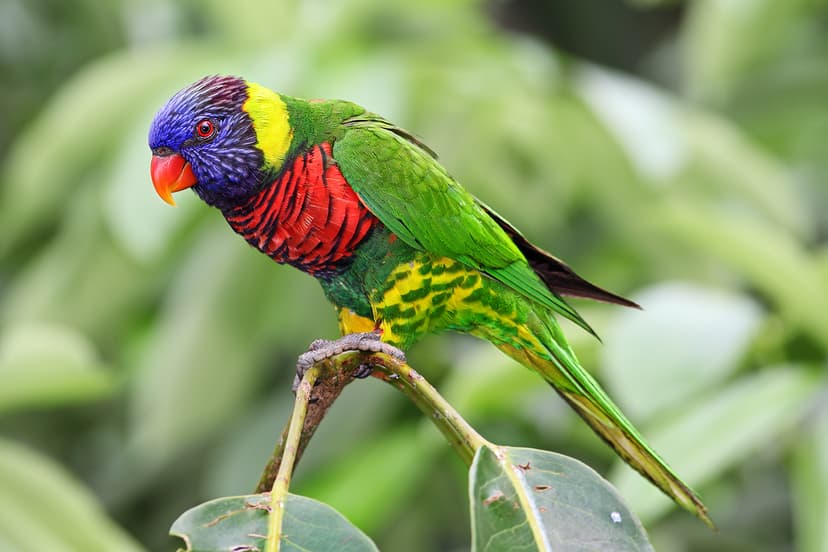
The coconut lorikeet is a vibrant parrot species primarily found in Melanesia and nearby regions, including New Guinea and the Solomon Islands. It is distinguished by its striking plumage, featuring a blue head, yellow collar, green upperparts, and a red breast, often with blue-black barring. This species plays a vital ecological role by feeding on nectar and pollen, utilizing a specialized brush-tipped tongue.
Edwards's fig parrot
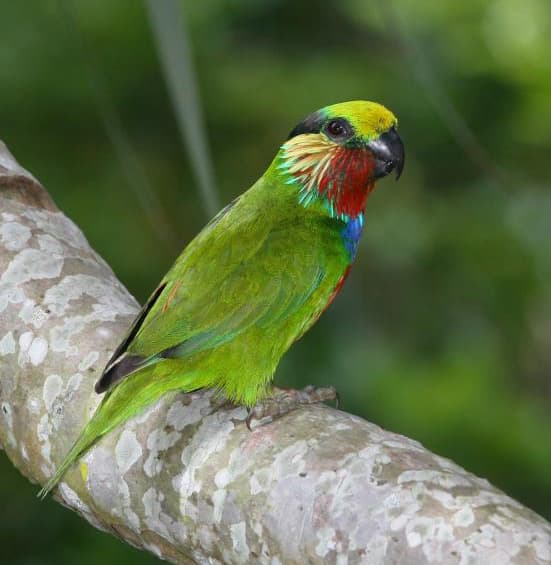
Edwards's fig parrot, also known as the scarlet-cheeked fig parrot, is a species of parrot native to the humid lowland forests of northeastern New Guinea. This medium-sized parrot is distinguished by its predominantly green plumage, with males featuring striking red cheeks and breast, and a distinctive blue-black band across the upper breast.