
Grey parrot
The grey parrot (Psittacus erithacus), also known as the Congo grey parrot, is an African parrot recognized for its exceptional intelligence and remarkable ability to mimic human speech. Native to the equatorial rainforests and savannas of Africa, this predominantly grey bird with a red tail is highly sought after as a companion animal, though its wild populations are facing significant declines due to habitat loss and the pet trade.
Key Facts
- ›Known for exceptional intelligence and vocal mimicry, often compared to a young child's cognitive abilities.
- ›Native to equatorial Africa, inhabiting dense forests, forest edges, and savanna woodlands.
- ›Primarily a frugivore, feeding on fruits, nuts, seeds, flowers, and occasionally insects.
- ›Wild populations are declining rapidly and are listed as endangered by the IUCN due to extensive trade and habitat loss.
- ›Lifespan in captivity can range from 40 to 60 years, with a shorter estimated lifespan of 23 years in the wild.
- ›Both sexes appear similar, with juveniles having darker eyes and tinged undertail coverts compared to adults.
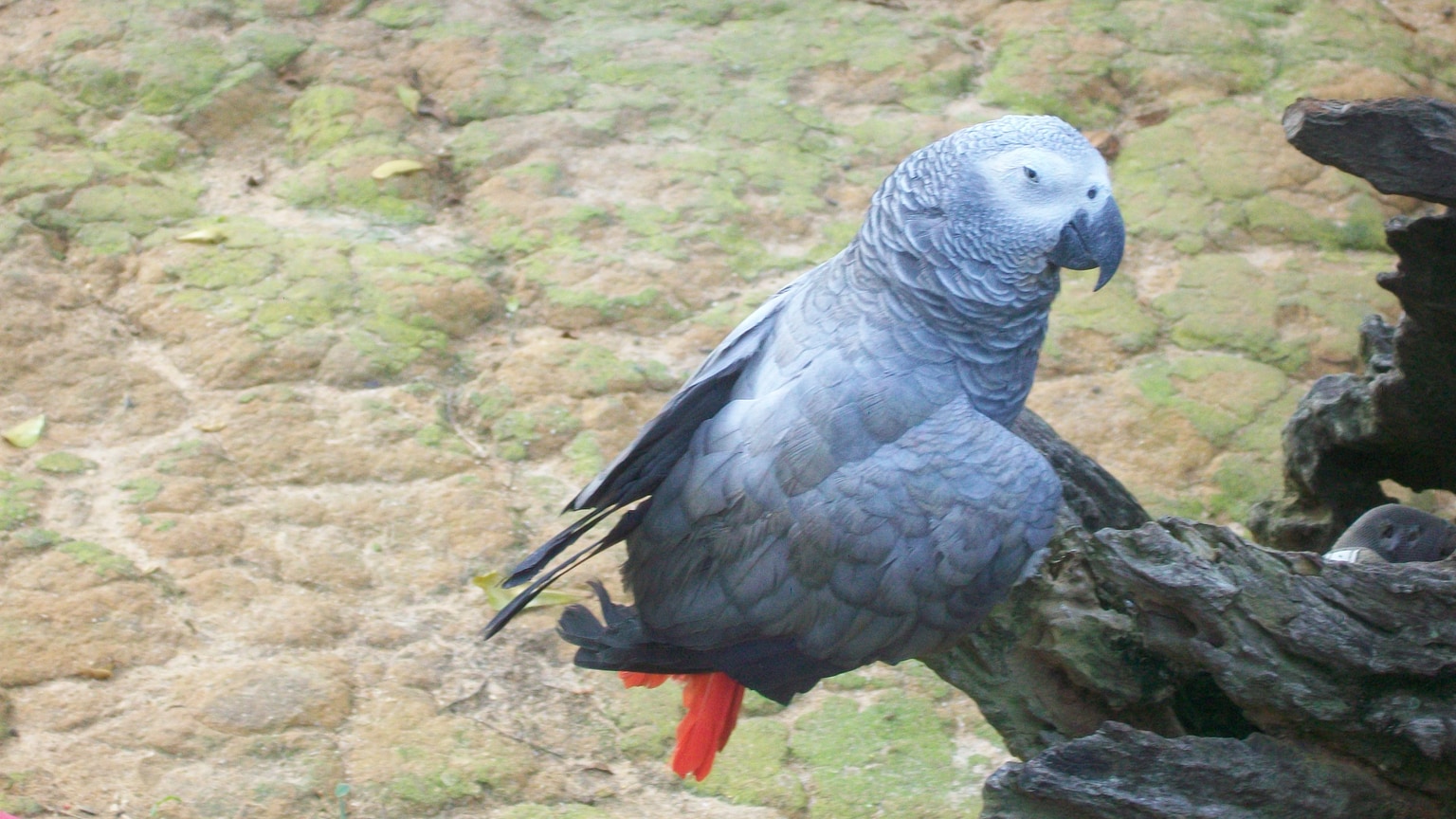
Congo Grey Parrot, African Grey Parrot
Africa
Dense Forests, Forest Edges, Gallery Forests, Savanna Forests
Predominantly Grey Plumage, Red Tail Feathers, Black Bill
Fruit, Nuts, Seeds, Flowers, Tree Bark, Insects, Snails
Highly Intelligent, Social, Sensitive, Secretive
- Remarkable ability to mimic human speech
- Can imitate over 200 different calls
- Use contact calls to communicate with flock mates
Nest In Tree Cavities, Each Pair Requires Their Own Tree
About Grey parrot
The Grey Parrot
The grey parrot, scientifically known as Psittacus erithacus and also referred to as the Congo grey parrot, is a medium to large-sized African parrot belonging to the family Psittacidae. It is distinguished by its predominantly grey plumage, a black bill, and vibrant red tail feathers. The species is celebrated for its exceptional intelligence and its remarkable capacity for vocal mimicry, making it one of the most popular avian companions worldwide.
Distribution and Habitat
Grey parrots are native to the equatorial regions of Africa, with their natural range spanning across countries such as Cameroon, Ghana, Ivory Coast, Kenya, and Uganda. They are typically found in dense forests, forest edges, and gallery and savanna woodlands, where they can find ample food and nesting sites. Despite their wide distribution, wild populations are facing significant declines.
Diet and Behavior
In the wild, grey parrots are primarily frugivorous, with their diet consisting mainly of fruits, nuts, and seeds. They also consume flowers and tree bark, and occasionally insects and snails. While research into their wild behavior is limited due to their secretive nature and status as prey animals, it is known that they can imitate a wide variety of sounds. In captivity, they are highly social and intelligent, requiring extensive social and behavioral enrichment to prevent distress, which can manifest as feather plucking.
Breeding and Lifespan
Grey parrots are monogamous breeders and nest in tree cavities, with each mated pair requiring their own tree. The female typically lays three to five eggs, which she incubates for approximately 30 days. Chicks require parental care for several weeks after fledging, which occurs around 12 weeks of age. In captivity, grey parrots can have a long lifespan, often ranging from 40 to 60 years, though their average lifespan in the wild is estimated to be around 23 years.
Conservation Status
The grey parrot is listed as Endangered by the International Union for Conservation of Nature (IUCN). This critical status is attributed to extensive harvesting for the international pet trade, which has led to a rapid decline in wild populations, alongside habitat loss. Conservation efforts and international trade regulations, such as CITES Appendix I listing, aim to protect the species from further exploitation.
Source: Wikipedia ↗
Frequently Asked Questions
What makes the grey parrot special?
Grey parrots are highly intelligent and renowned for their ability to mimic human speech and other sounds with remarkable accuracy. This, combined with their cognitive abilities and social nature, makes them one of the most popular companion birds.
Where do grey parrots come from?
The grey parrot is native to equatorial Africa, with its range extending across countries such as Cameroon, Ghana, Ivory Coast, Kenya, and Uganda. They are typically found in dense forests, forest edges, and savanna woodlands.
What do grey parrots eat in the wild?
In their natural habitat, grey parrots are primarily frugivorous, meaning their diet consists mainly of fruits. They also consume nuts, seeds, flowers, and tree bark, and occasionally supplement their diet with insects and snails.
How long do grey parrots live?
Grey parrots have a long lifespan, particularly in captivity, where they can live for 40 to 60 years. Their average lifespan in the wild is estimated to be shorter, around 23 years.
Are grey parrots endangered?
Yes, the grey parrot is listed as endangered by the International Union for Conservation of Nature (IUCN). This status is due to significant population declines caused by extensive harvesting for the pet trade and habitat loss.
Can grey parrots talk?
Grey parrots are exceptionally adept at mimicking sounds, including human speech. They can learn a large vocabulary and have demonstrated communicative competence, using words appropriately in social contexts.
Related Parrot species
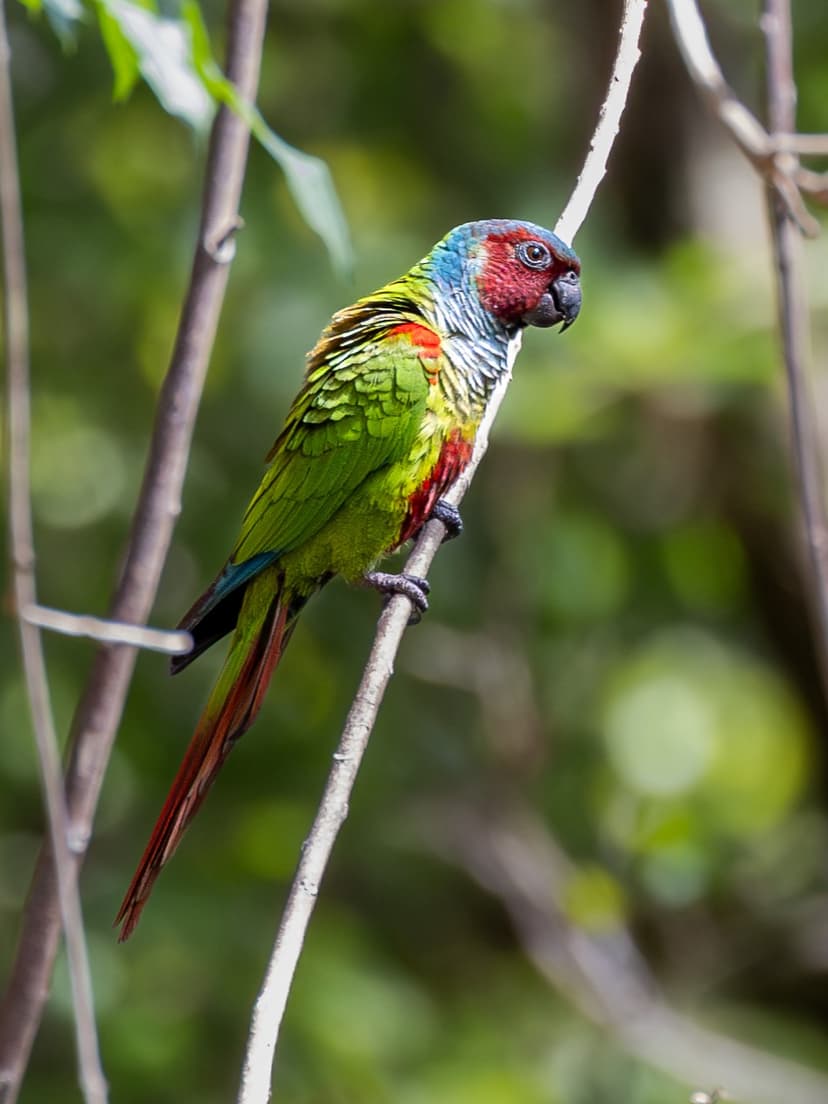
Pfrimer's parakeet
Pfrimer's parakeet, also known as Pfrimer's conure or maroon-faced conure, is a non-migratory parrot species endemic to the Caatinga forest of Brazil's Goiás and Tocantins regions. It is distinguished by its brown and red face, blue crown, and maroon tail, and is currently classified as endangered due to significant habitat loss from deforestation for agriculture.
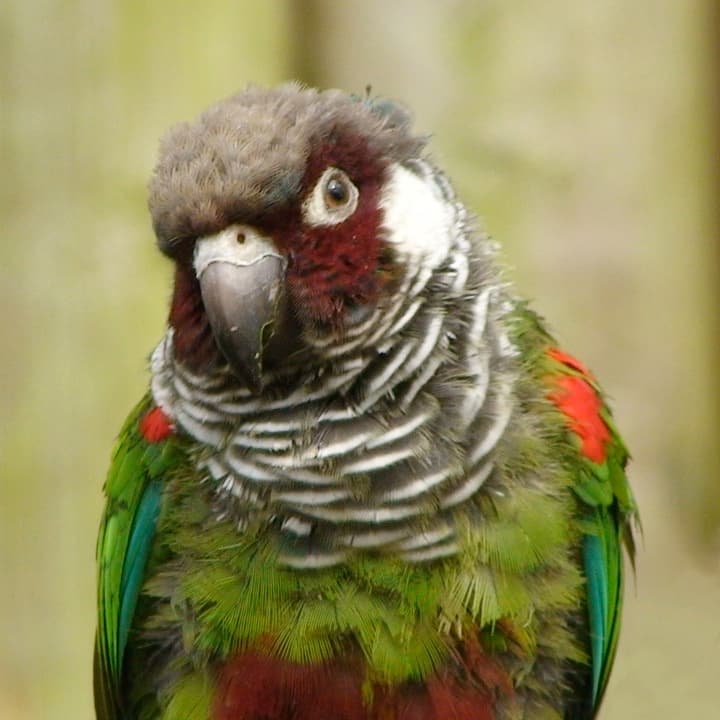
Grey-breasted parakeet
The grey-breasted parakeet is an Endangered species of bird native to northeastern Brazil, with recent documentation in Bahia. It is a small, vibrantly colored parrot distinguished by its scaly grey breast, plum-red face, and green plumage with red and blue accents. Historically considered a subspecies, it is now recognized as a distinct species facing significant threats from habitat loss and illegal trapping.
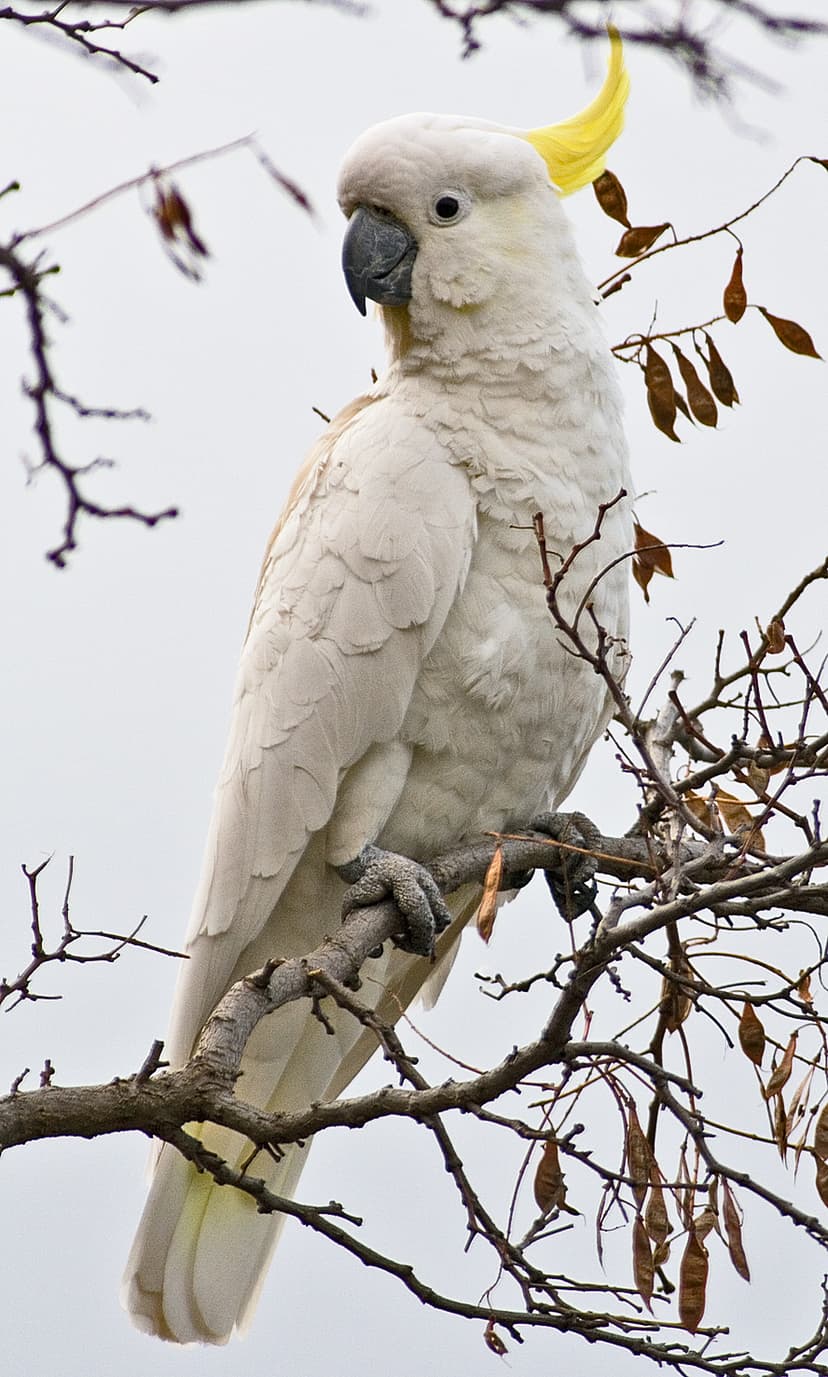
Cacatuidae
Cacatuidae, commonly known as cockatoos, are a family of parrots native to Australasia, characterized by their distinctive erectile crests and curved bills. While generally less colorful than other parrots, often displaying white, grey, or black plumage with colorful accents, they are typically larger and possess a striking appearance. Cockatoos are known for their social nature, monogamous breeding habits, and preference for nesting in tree hollows, feeding on a diet of seeds, tubers, fruits, and insects.