
Bunolagus
The riverine rabbit (Bunolagus monticularis), also known as the bushman rabbit, is a critically endangered species found in the Karoo region of South Africa. It is distinguished by its unique dark brown facial stripe, a white ring around its eyes, and its habit of digging its own burrows, a trait unusual for rabbits in Africa.
Key Facts
- ›Critically endangered species with an estimated population of 157-207 mature individuals.
- ›Native to dense vegetation along seasonal rivers in the Karoo of South Africa.
- ›Distinctive physical features include a dark brown facial stripe and a white eye ring.
- ›The only African rabbit known to dig its own burrows for protection and nesting.
- ›Produces a small litter size of one to two young per year, contributing to its endangered status.
- ›Diet consists primarily of grasses, flowers, and leaves, particularly dicotyledons.
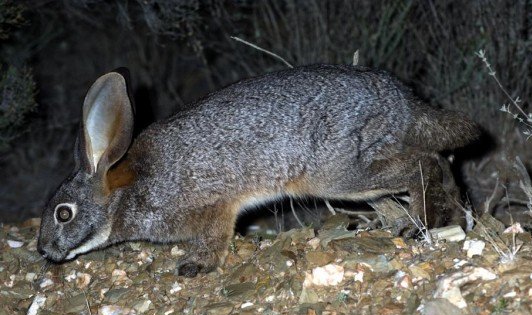
- Medium-Sized Rabbit, 33.7 To 47.0 cm In Length.
- Dark Brown Stripe From the Lower Jaw Over the Cheek To the Base of the Ears.
- White To Grey Ring Around Each Eye.
- Rufous-Colored Nuchal Patch, Limbs, and Lower Flanks.
- Cream-Colored Underside and Throat.
- Pale Brown Tail With A Tinge of Black Toward the Tip.
- Short, Heavily Furred Limbs; Hind Foot Measures 9–12 cm .
- Soft and Silky Coat, Reddish-Brown To Black Shade.
- Ears Measure 11–12 cm and Are Rounded At the Tips.
- Females Are Slightly Larger Than Males.
- Solitary and Nocturnal.
- Polygamous Mating System.
- Lives and Browses For Food Alone.
- Males Have Larger Home Ranges That Overlap Slightly With Females.
- Rest In Forms During the Day.
- Females Build Grass- and Fur-Lined Nests In Burrows, Blocking the Entrance.
About Bunolagus
Riverine Rabbit (Bunolagus monticularis)
The riverine rabbit, scientifically known as Bunolagus monticularis, is a highly distinctive and critically endangered species endemic to the Karoo region of South Africa. It is the sole member of the genus Bunolagus and is often referred to by common names such as the bushman rabbit or bushman hare.
Physical Characteristics
This medium-sized rabbit typically measures between 33.7 and 47.0 centimeters in length. Its most striking features include a dark brown stripe running from the corner of its mouth up towards the base of its ears, and a distinctive white to grey ring encircling each eye. The fur is soft and silky, varying in shade from reddish-brown to black, with rufous coloration on the nape, limbs, and lower flanks. Its underside and throat are cream-colored, and its tail is pale brown with a dark tip. The ears are rounded and measure 11–12 cm, while its short, heavily furred limbs contribute to its unique morphology. Females are generally slightly larger than males.
Habitat and Behavior
The riverine rabbit is exclusively found among patches of dense vegetation situated on alluvial soils near seasonal rivers in the Karoo. It is a solitary and nocturnal animal, spending its days resting in shallow depressions under shrubs. A unique characteristic among African rabbits is its ability to dig its own burrows, which it uses for protection from the heat and for raising its young. These burrows are typically 20–30 cm long with a nesting chamber 12–17 cm wide, lined with grass and fur, and camouflaged with soil and twigs. The riverine rabbit exhibits a polygamous mating system, with males maintaining home ranges that are approximately 60% larger than those of females.
Diet and Reproduction
As a herbivore, the riverine rabbit's diet consists primarily of grasses, flowers, and leaves, with a strong preference for dicotyledons, especially salt-loving plants found in its arid habitat. It also practices cecotrophy, consuming its own soft droppings. Unlike most rabbit species, female riverine rabbits are characterized by a low reproductive rate, producing only one to two young per year. The gestation period lasts between 35 and 36 days, and the young are born altricial, requiring significant parental care within the safety of the burrow.
Conservation Status and Threats
The riverine rabbit is classified as critically endangered by the IUCN, with estimated populations ranging from 157 to 207 mature individuals. Its precarious status is largely attributed to extensive habitat loss and fragmentation resulting from agricultural development, soil erosion, and overgrazing by domestic herbivores. Threats also include potential exposure to diseases like myxomatosis, and human activities such as hunting and habitat alteration from infrastructure development like wind farms and fracking. Conservation efforts are ongoing, focusing on habitat protection, managing remaining populations, and educating landowners, though challenges remain in effectively preserving interconnected habitats and understanding the species' complex genetics.
Source: Wikipedia ↗
Frequently Asked Questions
What is the scientific name for the riverine rabbit?
The scientific name for the riverine rabbit is Bunolagus monticularis. It was initially classified as Lepus monticularis but was later separated into its own genus, Bunolagus, due to distinct physical characteristics.
Where does the riverine rabbit live?
The riverine rabbit inhabits patches of thick vegetation found among alluvial soils adjacent to seasonal rivers in the Karoo region of South Africa's Western and Northern Cape provinces.
What makes the riverine rabbit unique among African rabbits?
The riverine rabbit is unique among African rabbits because it is known to dig its own burrows. These burrows are used for protection from heat and for females to nest and protect their young.
What is the conservation status of the riverine rabbit?
The riverine rabbit is classified as critically endangered by the International Union for Conservation of Nature (IUCN). Its population has significantly declined due to habitat loss and other human impacts.
What does the riverine rabbit eat?
The riverine rabbit is herbivorous and its diet primarily consists of grasses, flowers, and leaves, with a particular preference for dicotyledons. It also engages in cecotrophy, consuming soft droppings directly from the anus.
What are the main threats to the riverine rabbit population?
The primary threats include habitat loss due to agricultural development and soil erosion, fragmentation of its habitat by fences, and potential susceptibility to diseases like myxomatosis. Predation and human hunting also pose risks.
Related Rabbits, Hares & Pikas

Pentalagus
The Amami rabbit (Pentalagus furnessi), also known as the Ryukyu rabbit, is a unique, dark-furred species endemic to the Japanese islands of Amami Ōshima and Tokunoshima. Considered a "living fossil," it represents an ancient lineage of rabbits that once inhabited the Asian mainland. Its distinctiveness lies in its smaller ears, unique molar count, and specialized habitat requirements.
Poelagus
The Bunyoro rabbit (Poelagus marjorita), also known as the Uganda grass hare, is a medium-sized, greyish-brown, nocturnal, plant-eating mammal found in central Africa. It is the sole member of the genus Poelagus and is distinctive for its shorter ears and hind legs compared to other African leporids, as well as its coarser fur. While historically considered abundant, recent sightings have been infrequent, leading to concerns about its distribution.

Pronolagus
Pronolagus, commonly known as red rock hares, are a genus of lagomorphs found in rocky habitats across Africa. They are characterized by their reddish-brown or dark brown coloration, short ears, and a lack of an interparietal bone. All four extant species are classified by the IUCN as least concern, though habitat loss poses a threat.