
Pentalagus
Rabbit·Japan·Endangered·Medium
The Amami rabbit (Pentalagus furnessi), also known as the Ryukyu rabbit, is a unique, dark-furred species endemic to the Japanese islands of Amami Ōshima and Tokunoshima. Considered a "living fossil," it represents an ancient lineage of rabbits that once inhabited the Asian mainland. Its distinctiveness lies in its smaller ears, unique molar count, and specialized habitat requirements.
Key Facts
- ›Found only on Amami Ōshima and Tokunoshima islands in Japan.
- ›Considered a "living fossil," a remnant of ancient mainland rabbit species.
- ›Possesses 46 diploid chromosomes, a unique trait among rabbits.
- ›Has smaller ears and eyes compared to most other rabbits.
- ›Feeds on a varied diet including sprouts, acorns, nuts, and parasitic plants.
- ›Active at night and uses thumping with front paws to close its young's burrow.

- Short Feet and Hind Legs
- Somewhat Bulky Body
- Rather Large and Curved Claws Used For Digging and Climbing
- Significantly Smaller Ears Compared To Other Rabbits and Hares
- Thick, Wooly, Dark Brown Pelage, Reddish-Brown On the Sides
- Heavy, Long, and Very Strong Claws, Nearly Straight On Forefeet and Curved On Hindfeet
- Small Eyes Compared To More Common Rabbits and Hares
- Nocturnal Forest-Dweller
- Reproduces Twice Annually
- Mothers Dig Burrows For Young and Cover Them By Thumping With Front Paws
- Sleeps During the Day In Hidden Locations Like Caves
- Has A Call Similar To That of A Pika
About Pentalagus
The Amami Rabbit: A Living Fossil of Japan
The Amami rabbit, scientifically known as Pentalagus furnessi and often called the Ryukyu rabbit, is a remarkable and relict species found exclusively on the islands of Amami Ōshima and Tokunoshima in Japan. This species is distinguished by its dark, woolly fur, relatively small ears and eyes, and robust claws adapted for digging. It is considered a "living fossil" because it represents an ancient lineage of rabbits that once inhabited the Asian mainland, but has since vanished from there, surviving only in this isolated island habitat.
Biology and Behavior
The Amami rabbit possesses a unique set of physical characteristics, including 46 diploid chromosomes, which sets it apart from other rabbit species. Its diet is varied, consisting of over 29 plant species, including shrubs, herbaceous plants, acorns, nuts, and even the fruits of parasitic plants, for which it acts as a seed disperser. Behaviorally, the Amami rabbit is a nocturnal forest-dweller. During the day, it rests in hidden locations such as caves. At night, mothers create burrows for their young, covering the entrance with soil and plant material by thumping it with their front paws after nursing. Their vocalizations are noted to be similar to those of a pika.
Habitat and Distribution
The preferred habitat for the Amami rabbit is a mosaic of mature and young forests. They require access to both types of forest, utilizing the mature forests for shelter and food sources like acorns, and the young forests for their dense ground cover and grasses. This specific habitat requirement makes them vulnerable to fragmentation and destruction.
Conservation Challenges
Once hunted, the Amami rabbit gained protected status in Japan, first as a "natural monument" in 1921 and later as a "special natural monument" in 1963. However, significant threats persist, primarily habitat destruction through deforestation for logging, agriculture, and development, including plans for golf courses and resorts. Furthermore, invasive predators such as the small Indian mongoose, feral cats, and dogs have severely impacted populations. Conservation efforts, including research, population monitoring, habitat restoration, and predator eradication programs, are ongoing to protect this unique species.
Source: Wikipedia ↗
Frequently Asked Questions
What makes the Amami rabbit a "living fossil"?
The Amami rabbit is called a "living fossil" because it is thought to be a descendant of ancient rabbits that once lived on the Asian mainland and have since died out there. This species has survived and remained isolated on the two small Japanese islands where it is found today.
What is the scientific name for the Amami rabbit?
The scientific name for the Amami rabbit is Pentalagus furnessi. The generic name Pentalagus refers to its having five molars on each side of its upper jaw, a difference from other leporids. The specific name furnessi honors its discoverer, William Henry Furness III.
What is the typical habitat of the Amami rabbit?
The ideal habitat for Amami rabbits is an area that includes both mature and young forests. They utilize the dense mature forests for protection and food sources like pampas grass and acorns, and the high density of grasses and herbaceous ground cover in young forests for sustenance at different times of the year.
What are the primary threats to the Amami rabbit population?
Major threats include habitat destruction from forest clearing for commercial logging, agriculture, and residential development. Invasive predators such as the small Indian mongoose, feral cats, and dogs also pose a significant risk, outpreying the rabbits.
How does the Amami rabbit care for its young?
Amami rabbits are nocturnal and reproduce twice a year. During the day, the mother digs a burrow for her young to hide in. At night, she opens the burrow entrance to nurse them, then closes it with soil and plant material by thumping on it with her front paws.
What is the conservation status of the Amami rabbit?
The Amami rabbit was designated as endangered in Japan in 2004. Conservation efforts include habitat restoration, research, population monitoring, and predator population control, with a focus on eradicating invasive species like the small Indian mongoose.
Related Rabbits, Hares & Pikas

Romerolagus
The volcano rabbit, Romerolagus diazi, is a small, primitive rabbit species endemic to the volcanic slopes of central Mexico. It is distinguished by its short, rounded ears, short legs, and thick fur, and is known for its unique high-pitched alarm calls, a behavior more typical of pikas. Facing significant population declines due to habitat loss and human activities, it is classified as an endangered species.
Poelagus
The Bunyoro rabbit (Poelagus marjorita), also known as the Uganda grass hare, is a medium-sized, greyish-brown, nocturnal, plant-eating mammal found in central Africa. It is the sole member of the genus Poelagus and is distinctive for its shorter ears and hind legs compared to other African leporids, as well as its coarser fur. While historically considered abundant, recent sightings have been infrequent, leading to concerns about its distribution.
Bunolagus
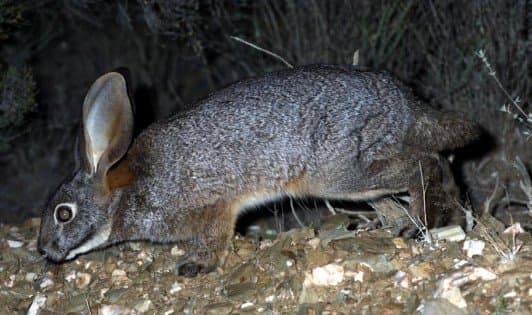
The riverine rabbit (Bunolagus monticularis), also known as the bushman rabbit, is a critically endangered species found in the Karoo region of South Africa. It is distinguished by its unique dark brown facial stripe, a white ring around its eyes, and its habit of digging its own burrows, a trait unusual for rabbits in Africa.