
Gyps fulvus
The Eurasian griffon vulture (Gyps fulvus) is a large Old World vulture belonging to the bird of prey family Accipitridae. Found across parts of Europe, Asia, and Africa, it is distinguished by its white head, broad wings, dark flight feathers, and a prominent white neck ruff. These scavengers play a crucial role in their ecosystems by consuming carcasses.
Key Facts
- ›The Eurasian griffon vulture has a wingspan ranging from 2.3 to 2.8 meters (7.5 to 9.2 feet).
- ›They possess a white head, broad wings, a short tail, a white neck ruff, and a yellow bill.
- ›The species is found in diverse habitats across the Iberian Peninsula, North Africa, the Middle East, and parts of Asia.
- ›Griffon vultures are primarily scavengers, feeding on carcasses of dead animals.
- ›Conservation efforts are underway to combat threats such as poisoned baits and changes in carcass availability.
- ›They are efficient flyers, utilizing soaring to conserve energy.
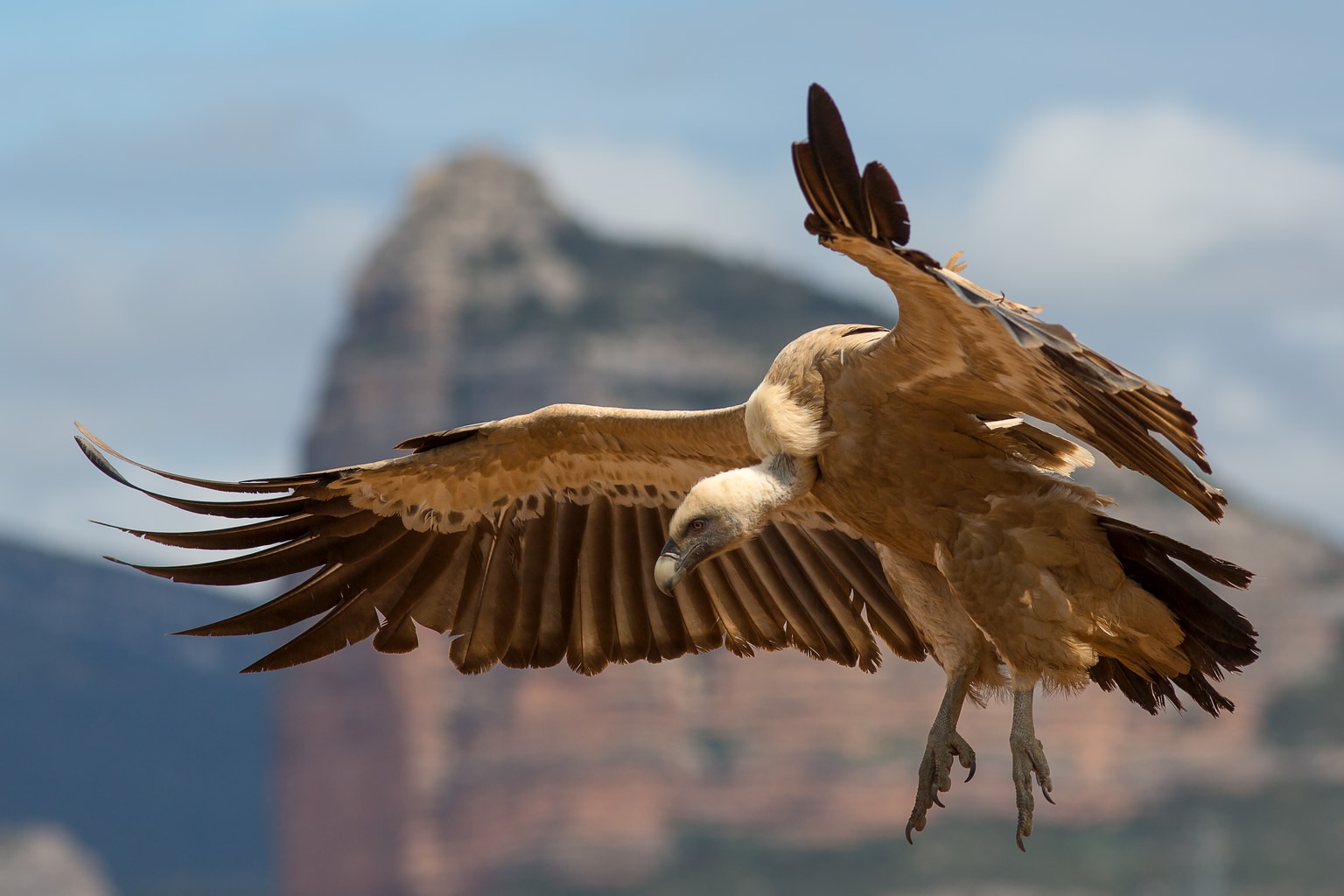
Eurasian Griffon, Griffon Vulture
Mountain Crags, Rocky Areas
Europe, Asia, Africa
- Length: 93–122 cm
- Wingspan: 2.3–2.8 m
- Weight: Males 6.2–10.5 kg, Females 6.5–10.5 kg
- White Head
- Broad Wings
- Short Tail Feathers
- White Neck Ruff
- Yellow Bill
- Buff Body and Wing Coverts
- Dark Flight Feathers
Carrion
- Consumption of poisoned baits
- Reduced food availability due to carcass disposal regulations
About Gyps fulvus
The Eurasian Griffon Vulture (Gyps fulvus)
The Eurasian griffon vulture, scientifically known as Gyps fulvus, is a prominent member of the Old World vultures and the bird of prey family Accipitridae. This large scavenger is characterized by its distinctive appearance, featuring a white head, broad wings, a white neck ruff, and a yellow bill, with buff-colored body and wing coverts contrasting with dark flight feathers. Its wingspan typically ranges from 2.3 to 2.8 meters.
Distribution and Habitat
Gyps fulvus is a resident species found across a wide geographical area that includes parts of the Iberian Peninsula, North Africa, the Middle East, and extending into Central Asia. They inhabit mountainous regions and breed on crags, often preferring the shelter of caves, potholes, and ledges for their nests. Spain holds the largest population of griffon vultures in Europe, with significant numbers also present in countries like Greece, Croatia, and Serbia.
Ecology and Behavior
As a scavenger, the griffon vulture plays a critical ecological role by consuming carcasses, thereby aiding in disease prevention and nutrient cycling. They are efficient flyers, relying heavily on soaring to conserve energy. Griffon vultures possess remarkable physiological adaptations for thermoregulation, utilizing their bald heads and posture to manage body temperature in extreme conditions. While generally feeding on carrion, there are reports of Spanish populations sometimes preying on weak or young animals when natural food sources are scarce.
Conservation
Despite their widespread distribution, griffon vulture populations face significant threats. The primary danger comes from the consumption of poisoned baits, a practice that has led to rapid declines in their numbers. Furthermore, changes in land management and regulations regarding the disposal of animal carcasses have critically lowered food availability in some regions, impacting the carrying capacity of their habitats. Conservation efforts focus on raising awareness about the dangers of illegal poisoning and ensuring adequate food sources remain available.
Source: Wikipedia ↗
Frequently Asked Questions
What is the scientific name for the Eurasian griffon vulture?
The scientific name for the Eurasian griffon vulture is Gyps fulvus. This binomial nomenclature is used to classify the species within the scientific community.
Where is the Eurasian griffon vulture found?
The Eurasian griffon vulture is resident in parts of the Iberian Peninsula, the eastern Atlas Mountains, the eastern Alps, Anatolia, the Caucasus, the Arabian Peninsula, the Iranian plateau, and the Tian Shan and Altai Mountains. It has a significant population in Spain.
What does a Eurasian griffon vulture look like?
It is a large vulture with a length of 93–122 cm (37–48 in) and a wingspan of 2.3–2.8 m (7.5–9.2 ft). Distinctive features include a white head, broad wings, dark flight feathers, a white neck ruff, and a yellow bill.
What is the diet of the griffon vulture?
The griffon vulture is a scavenger and feeds on the carcasses of dead animals. They play a vital role in cleaning up the environment by consuming carrion.
What are the main threats to the griffon vulture population?
The primary threat to the griffon vulture population is the consumption of poisoned baits, often set out illegally. Changes in food availability, such as restrictions on leaving carcasses in fields, also pose a significant risk.
How do griffon vultures regulate their body temperature?
Griffon vultures use their bald heads for thermoregulation in both cold and hot temperatures. They can also adjust their posture to increase bare skin exposure, aiding in heat loss, and tolerate higher internal body temperatures to minimize water and energy loss.
Related Raptor species
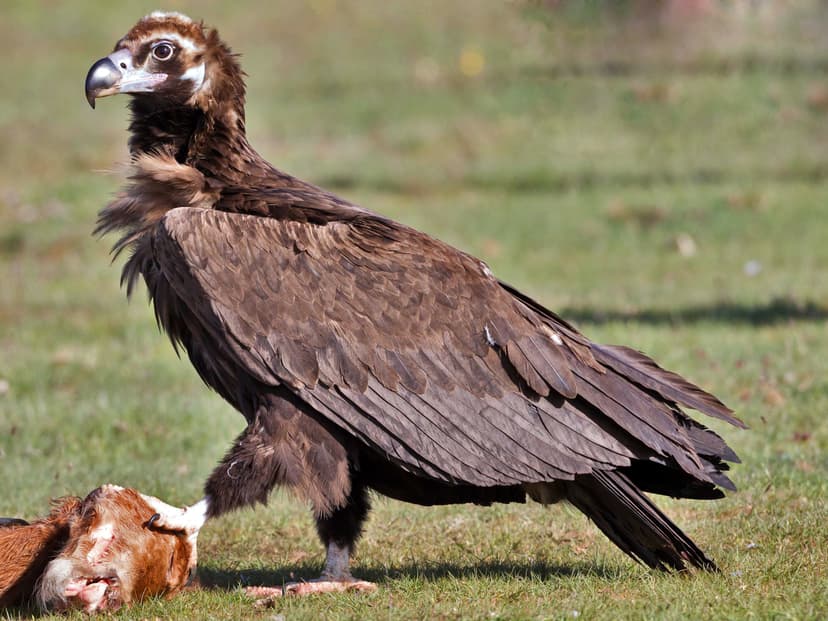
Aegypius monachus
The cinereous vulture (Aegypius monachus), also known as the monk vulture, is a massive Old World vulture native to temperate Eurasia. It is the largest member of its family, Accipitridae, distinguished by its dark plumage, bald head, and a ruff of neck feathers resembling a monk's cowl. This species plays a vital role in its ecosystems by consuming carcasses, which helps prevent the spread of disease.
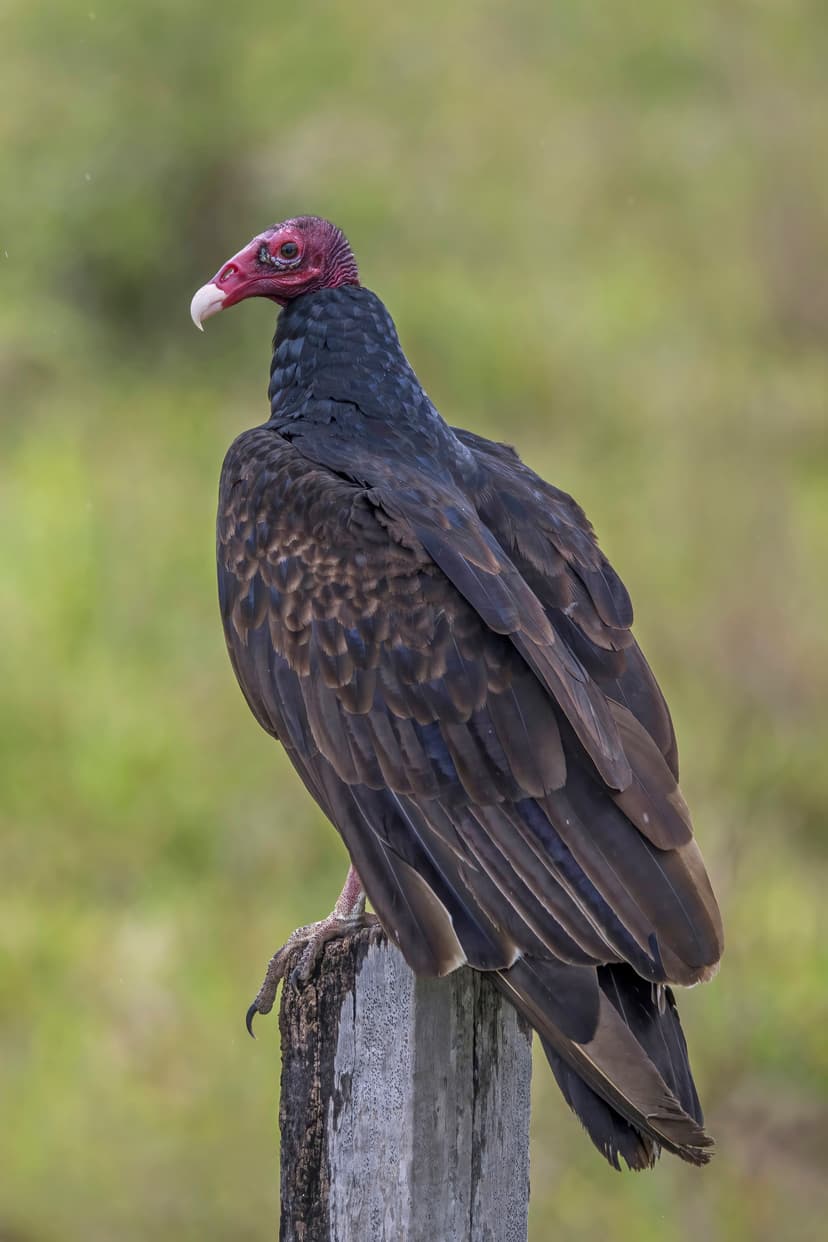
Cathartes aura
The turkey vulture (Cathartes aura) is the most widespread of the New World vultures, found from southern Canada to the tip of South America. It is a scavenger that primarily feeds on carrion, locating food through its exceptional sense of smell and keen eyesight. Distinctive for its bald red head and soaring flight pattern, it plays a crucial role in ecosystems by consuming carcasses.