
Cathartes aura
The turkey vulture (Cathartes aura) is the most widespread of the New World vultures, found from southern Canada to the tip of South America. It is a scavenger that primarily feeds on carrion, locating food through its exceptional sense of smell and keen eyesight. Distinctive for its bald red head and soaring flight pattern, it plays a crucial role in ecosystems by consuming carcasses.
Key Facts
- ›Most widespread of the New World vultures, found across the Americas.
- ›Feeds almost exclusively on carrion, using its sense of smell to locate food.
- ›Flies with wings held in a shallow V-shape, utilizing thermals and flapping infrequently.
- ›Roosts in large community groups, often on dead trees or man-made structures.
- ›Lacks a syrinx, producing only grunts and low hisses as vocalizations.
- ›Nests in caves, hollow trees, or thickets, typically raising two chicks per year.
Buzzard, Turkey Buzzard, John Crow, Carrion Crow
Subtropical Forests, Shrublands, Pastures, Deserts, Grasslands, Low Mountainous Areas, Wetlands, Semi-Desert, Agricultural Land, Urban Areas
North America, Central America, South America
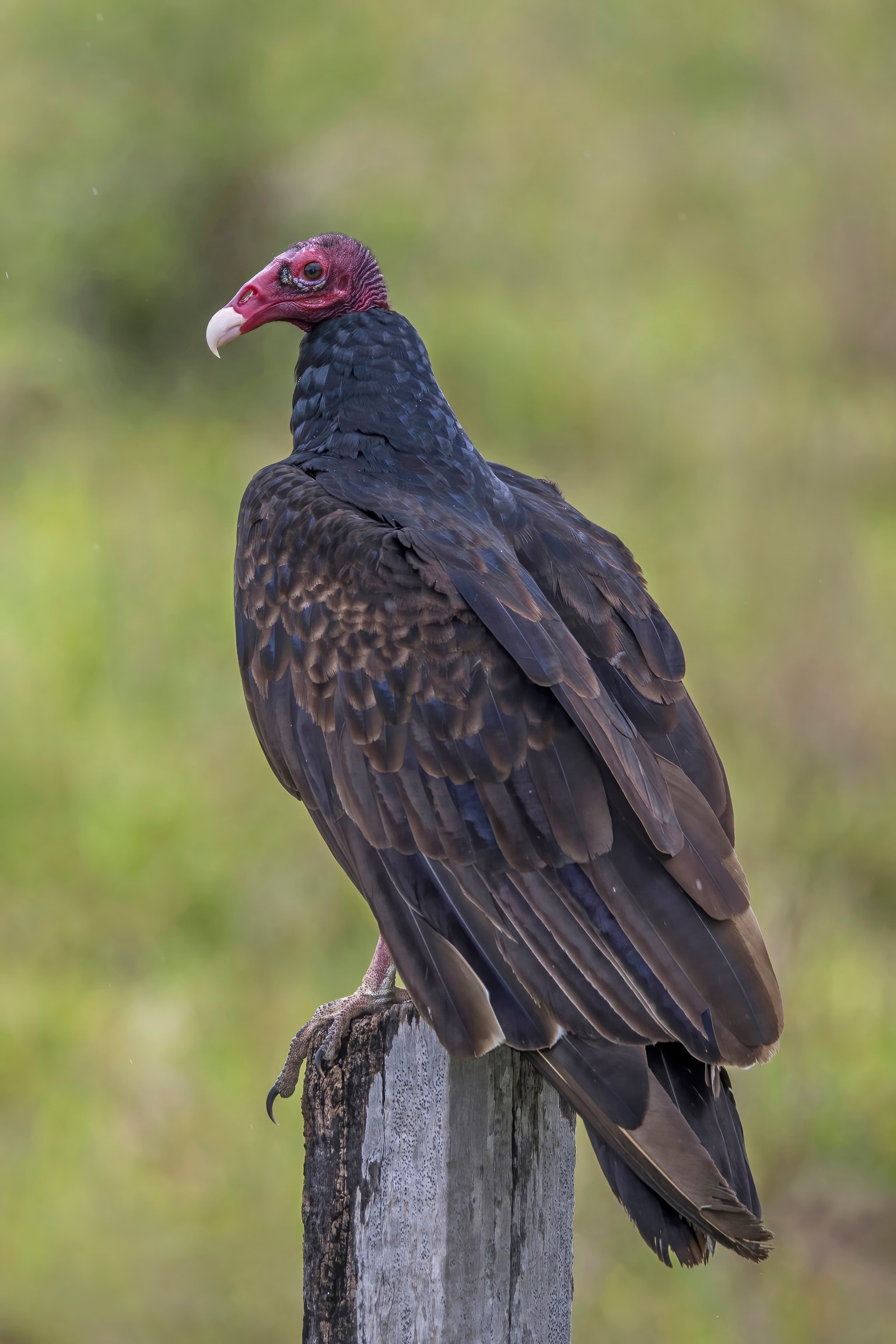
- Adults have a bald red head and dark plumage resembling a male wild turkey.
- Body feathers are mostly brownish-black.
- Flight feathers on the wings appear silvery-gray beneath.
- Small head in proportion to body.
- Short, hooked, ivory-colored beak.
- Irises are gray-brown.
- Legs and feet are pink-skinned, often stained white.
- Immature birds have a gray head with a black beak tip.
- Wingspan ranges from 1.5 to 2 meters.
- Length ranges from 62 to 81 cm.
Carrion, Plant Matter, Shoreline Vegetation, Pumpkin, Grape, Juniper, Coconut, Crops, Live Frogs, Live Insects, Other Invertebrates
- Locates carrion using an exceptionally keen sense of smell, detecting ethyl mercaptan gas.
- Flies low to the ground to pick up scents.
- Follows other vultures, such as King Vultures and Condors, to carcasses.
Small Mammals, Large Grazers, Bird Eggs, Nestlings, Reptiles
Lead Poisoning From Ammunition, Contaminants and Pollutants, Habitat Loss, Human Perception As A Threat
About Cathartes aura
What is Cathartes aura?
The turkey vulture, scientifically known as Cathartes aura, is the most widely distributed of the New World vultures and is a common sight across the Americas, from southern Canada to the southern tip of South America. It is a medium-sized scavenger bird, easily recognized by its bald, red head and dark plumage, which resembles that of a male wild turkey, giving it its common name.
Habitat and Distribution
This adaptable species thrives in a variety of open and semi-open environments. Its range encompasses subtropical forests, shrublands, pastures, deserts, and even urban areas. Turkey vultures often favor areas with juxtaposed woodlands for nesting and roosting, and low mountainous regions that facilitate easier flight. They are permanent residents in the southern United States, while birds from more northerly regions may migrate south.
Diet and Foraging
The turkey vulture's diet consists almost exclusively of carrion. Its survival hinges on an exceptionally keen sense of smell, which it uses to locate dead animals, often flying low to the ground to detect gases produced by early stages of decay. While they primarily scavenge, they may rarely consume plant matter or very small, weak, or sick animals. Their ability to detect carrion by scent allows them to locate food even when it is hidden beneath forest canopies, and other vultures often follow them to carcasses.
Behavior and Reproduction
Turkey vultures are gregarious birds, often roosting in large communal groups, sometimes numbering in the hundreds, which can include other vulture species. They exhibit a characteristic spread-winged or "horaltic" stance, believed to aid in drying wings, warming the body, and killing bacteria. They nest in protected locations such as caves, hollow trees, or thickets, laying typically two eggs directly on a bare surface. Both parents share incubation and feeding duties, with young chicks being fed by regurgitation. The species has limited vocalizations, producing only grunts and hisses due to the lack of a syrinx.
Conservation and Human Interaction
The turkey vulture is classified as Least Concern by the IUCN, with stable populations. It plays a vital ecological role by disposing of carcasses, thus preventing the spread of disease. Despite its ecological importance, it has faced threats such as lead poisoning from ammunition used by hunters. In the United States, it is protected under the Migratory Bird Treaty Act of 1918, making it illegal to harm or possess these birds, their eggs, or parts without proper permits.
Source: Wikipedia ↗
Frequently Asked Questions
What is the scientific name for the turkey vulture?
The scientific name for the turkey vulture is Cathartes aura. It was first formally described by Carl Linnaeus in 1758.
Where do turkey vultures live?
Turkey vultures inhabit a wide range across the Americas, from southern Canada all the way to the southernmost tip of South America. They are found in various open and semi-open environments, including subtropical forests, shrublands, pastures, and deserts.
How do turkey vultures find food?
Turkey vultures are scavengers that rely heavily on their keen sense of smell and sharp eyesight to find carrion. They fly low to the ground, detecting the scent of gases produced by decaying animals.
What do turkey vultures eat?
Their diet consists almost exclusively of carrion, ranging from small mammals to large grazers. They prefer carcasses that are recently dead and avoid those that have begun to putrefy. Rarely, they might consume plant matter or live prey like small, weak, or sick individuals.
What is the conservation status of the turkey vulture?
The turkey vulture is listed as a species of Least Concern by the IUCN Red List. Its populations are considered stable, and it has not met the criteria for threatened status.
Do turkey vultures migrate?
While northern populations may migrate as far south as South America, turkey vultures in the southern United States are permanent residents. Their migratory behavior varies with latitude.
Related Raptor species
Aegypius monachus
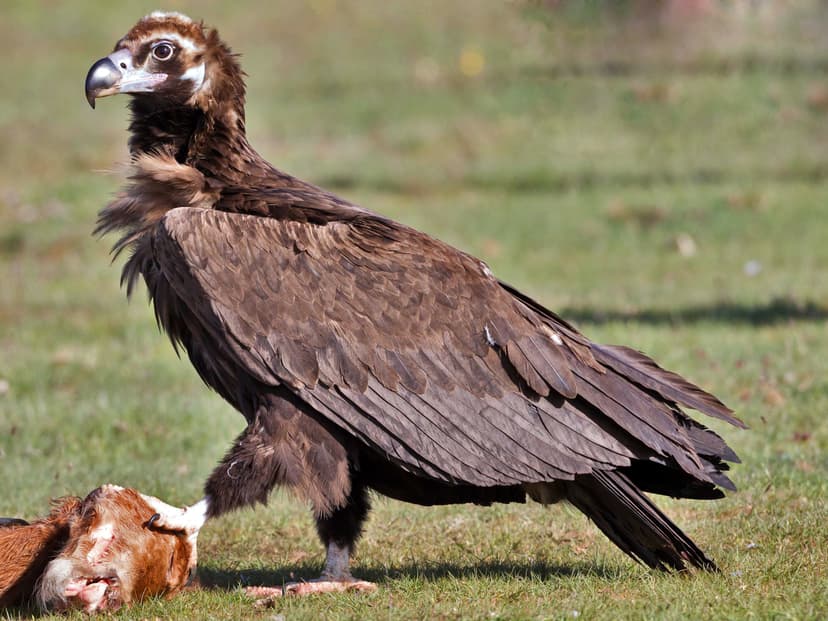
The cinereous vulture (Aegypius monachus), also known as the monk vulture, is a massive Old World vulture native to temperate Eurasia. It is the largest member of its family, Accipitridae, distinguished by its dark plumage, bald head, and a ruff of neck feathers resembling a monk's cowl. This species plays a vital role in its ecosystems by consuming carcasses, which helps prevent the spread of disease.
Gyps fulvus
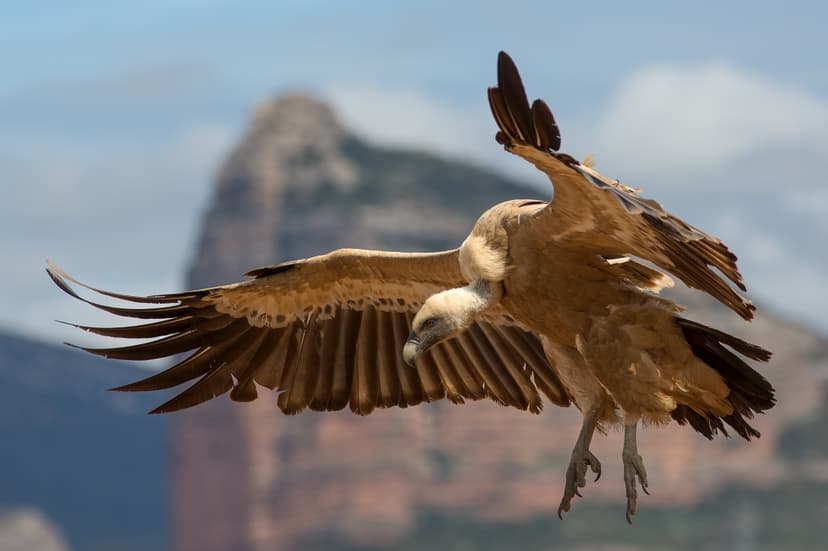
The Eurasian griffon vulture (Gyps fulvus) is a large Old World vulture belonging to the bird of prey family Accipitridae. Found across parts of Europe, Asia, and Africa, it is distinguished by its white head, broad wings, dark flight feathers, and a prominent white neck ruff. These scavengers play a crucial role in their ecosystems by consuming carcasses.
Accipiter nisus
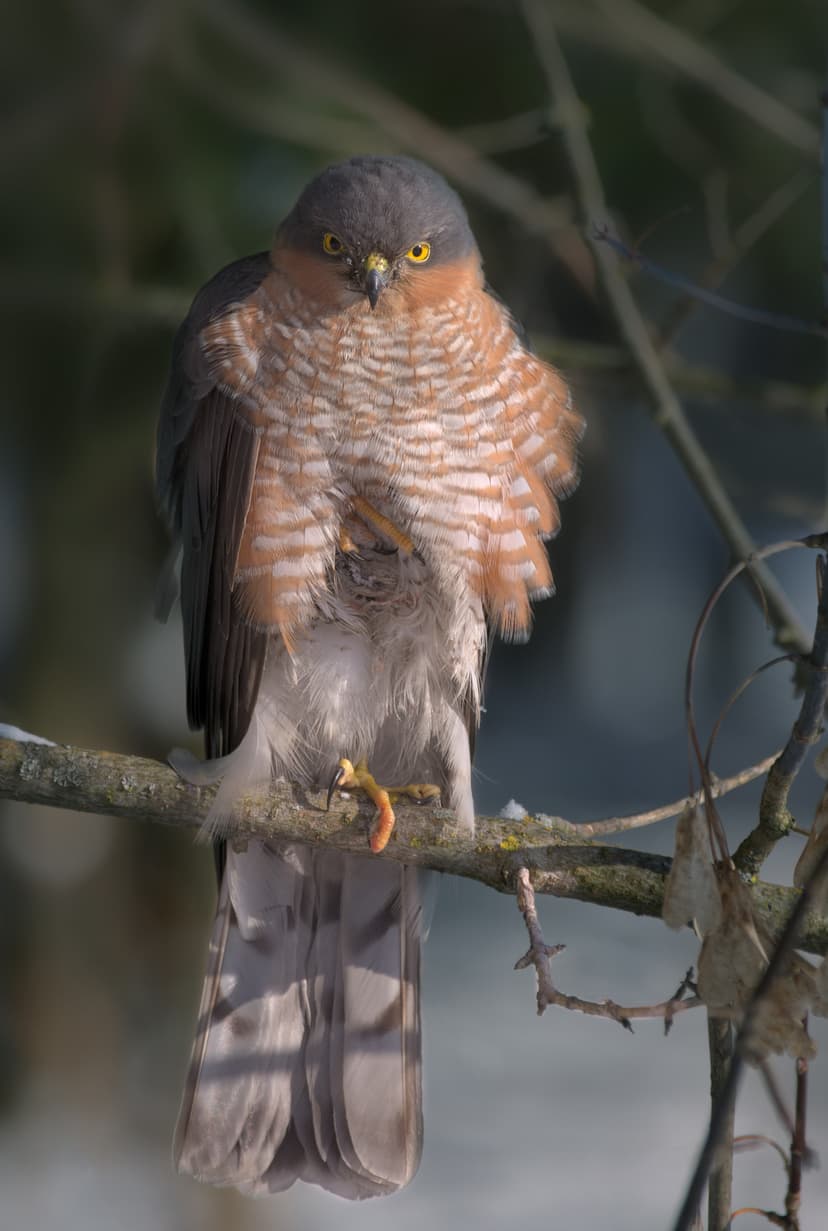
The Eurasian sparrowhawk (Accipiter nisus) is a small bird of prey found across the temperate and subtropical regions of the Old World. It is distinctive for the significant size difference between sexes, with females being much larger than males, and for its specialized hunting of woodland birds, though it also adapts to urban environments. Once threatened by organochlorine insecticides, its populations have recovered and it is now considered of least concern.