
Aegypius monachus
The cinereous vulture (Aegypius monachus), also known as the monk vulture, is a massive Old World vulture native to temperate Eurasia. It is the largest member of its family, Accipitridae, distinguished by its dark plumage, bald head, and a ruff of neck feathers resembling a monk's cowl. This species plays a vital role in its ecosystems by consuming carcasses, which helps prevent the spread of disease.
Key Facts
- ›One of the largest birds of prey, it is the largest Old World vulture and the largest member of the Accipitridae family.
- ›Its scientific name, Aegypius monachus, refers to its vulture-like appearance and its hooded neck feathers.
- ›They are found across much of temperate Eurasia, preferring hilly, mountainous, and dry semi-open habitats.
- ›Cinereous vultures are primarily scavengers, feeding on carcasses of various mammals, birds, reptiles, and fish.
- ›Adults are predominantly dark blackish-brown with a pale, downy head and a bluish-grey skin on their head and neck.
- ›The species plays a crucial ecological role by consuming carrion, thus reducing disease transmission.
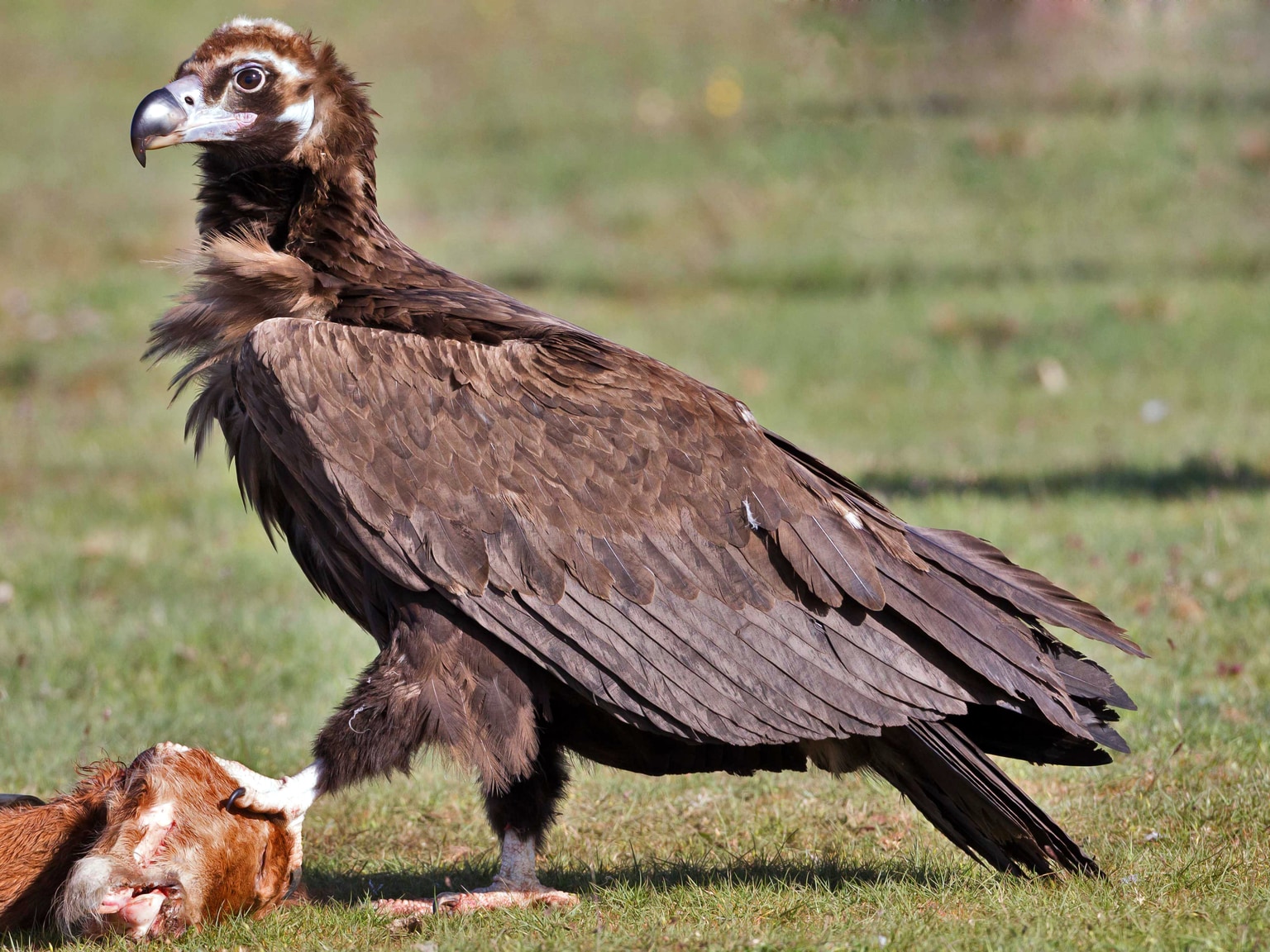
Black Vulture, Eurasian Black Vulture, Monk Vulture
Hilly Areas, Mountainous Areas, Dry Semi-Open Habitats, High-Altitude Meadows, Alpine Meadows, Grasslands, Open Woodlands, Riparian Habitats, Forests, Shrubland
Eurasia, Europe, Asia, Middle East
- Very large raptor
- Dark blackish-brown plumage
- Pale, downy head
- Ruff of neck feathers
- Bluish-grey skin on head and neck
- Massive bill, one of the largest of any accipitrid
- Broad wings with serrated leading edges
- Immature plumage is sepia-brown with a paler underside
Carrion, Mammal Carcasses, Bird Carcasses, Fish Carcasses, Reptile Carcasses, Domestic Animal Carcasses, Wild Animal Carcasses, Live Prey
- Domestic Sheep
- Pigs
- Deer
- Wild Boar
- Yaks
- Bharal
- Goas
- Kiangs
- Woolly Hares
- Himalayan Marmots
- Tarbagan Marmots
- Corsac Fox
- Argali
- European Rabbit
- Calves of Domestic Cattle
- Piglets
- Domestic Lambs
- Puppies
- Lambs of Wild Sheep
- Nestling and Fledglings of Geese, Swans, and Pheasants
- Rodents
- Amphibians
- Reptiles
- Tortoises
- Lizards
- Saiga Antelope
- Mongolian Gazelle
- Tibetan Antelope
Poisoning, Habitat Destruction, Human Disturbance, Shooting, Trapping, Hunting, Egg and Firewood Collection, Rodenticides
About Aegypius monachus
The Cinereous Vulture (Aegypius monachus)
The cinereous vulture, scientifically known as Aegypius monachus, is a colossal bird of prey native to temperate Eurasia. Also recognized by common names such as the monk vulture or Eurasian black vulture, it holds the distinction of being the largest member of the Accipitridae family and the biggest Old World vulture. Its immense size, with a wingspan reaching up to 3.1 meters, and its predominantly dark, ash-colored plumage, contrasted by a pale, downy head and a ruff of neck feathers, give it a distinctive, almost monastic appearance, hence its common name.
Ecological Role and Adaptations
This species plays a critical role in its ecosystems as a dedicated scavenger, consuming carcasses and thereby preventing the spread of diseases. The cinereous vulture is exceptionally well-adapted to its diet, possessing a powerful bill capable of tearing through tough hides and even breaking bones to access flesh. Studies have revealed genetic variations associated with enhanced immune defense and gastric acid secretion, enabling it to safely digest carrion teeming with pathogens. Its specialized haemoglobin allows it to efficiently utilize oxygen at very high altitudes, a trait observed when one was recorded flying at nearly 7,000 meters on Mount Everest.
Distribution and Habitat
The cinereous vulture's range is extensive, spanning much of temperate Eurasia, though it is fragmented, particularly in Europe. They inhabit hilly and mountainous regions, favoring dry, semi-open environments such as high-altitude meadows, grasslands, open woodlands, and riparian habitats. In Asia, they can be found at even higher elevations, inhabiting both mountainous forests and arid alpine steppes.
Behavior and Reproduction
These vultures are largely solitary birds, though small groups may gather at abundant food sources. Their breeding season typically runs from January or February to September or October. They construct enormous nests, often reused and enlarged over many years, in tall trees or on cliff ledges. Pairs exhibit synchronous flight displays and cooperate in all aspects of raising their young, which hatch from a single egg and are fed by regurgitation. Parents are devoted and active in protecting their nest and offspring.
Conservation Status
The cinereous vulture is currently listed as Near Threatened. Historically, populations have declined significantly due to poisoning from baits intended for other predators, reduced availability of carrion due to increased hygiene standards, and direct persecution. Habitat destruction and development also pose significant threats. Despite these challenges, conservation efforts, including protection and supplementary feeding schemes, have led to local population recoveries, particularly in Spain, with some reintroduction programs underway in other parts of Europe.
Source: Wikipedia ↗
Frequently Asked Questions
What is the cinereous vulture's scientific name and common names?
The scientific name for the cinereous vulture is Aegypius monachus. It is also commonly known as the black vulture, Eurasian black vulture, or monk vulture.
What is the size of a cinereous vulture?
Cinereous vultures are very large birds, measuring 98–120 cm (39–47 in) in length with a wingspan of 2.5–3.1 m (8 ft 2 in – 10 ft 2 in). Males typically weigh 6.3–11.5 kg (14–25 lb), while females are slightly heavier, ranging from 7.5–14 kg (17–31 lb).
Where does the cinereous vulture live?
This species is distributed across much of temperate Eurasia, with its range extending from Spain and Portugal in the west to central Asia and northern China in the east. They favor hilly, mountainous areas with dry, semi-open habitats.
What do cinereous vultures eat?
Cinereous vultures are primarily scavengers and feed on carrion of almost any type, including large mammals, birds, fish, and reptiles. They are well-equipped to tear open tough carcasses and are dominant over other scavengers.
How does the cinereous vulture contribute to its ecosystem?
The cinereous vulture plays an important role by consuming carcasses, which helps to prevent the spread of diseases. Their specialized digestive system is adapted to handle pathogens found in carrion.
What are the nesting habits of the cinereous vulture?
They nest in high mountains and large forests, typically on trees or occasionally on cliff ledges. Nests are constructed from sticks and twigs, are very large, and are reused and added to over the years. Both parents cooperate in rearing the young.
What is the conservation status of the cinereous vulture?
The cinereous vulture is currently listed as Near Threatened. Declines have been observed across much of its range due to poisoning, habitat destruction, and human disturbance, though some populations are showing signs of recovery with conservation efforts.
Related Raptor species
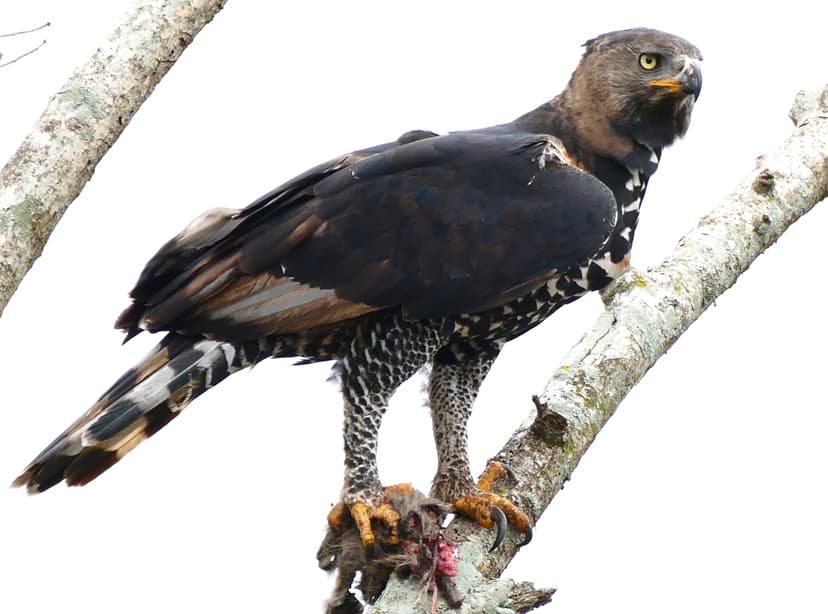
Stephanoaetus coronatus
The crowned eagle (Stephanoaetus coronatus) is a large and powerful bird of prey found in sub-Saharan Africa, primarily inhabiting riparian woodlands and various forests. It is distinguished by its exceptionally large talons, strong legs, and a bold, ferocious disposition, making it Africa's most powerful eagle relative to its prey's size. This species is known for its conspicuous behavior and striking plumage, though it is currently listed as Near Threatened due to habitat destruction.
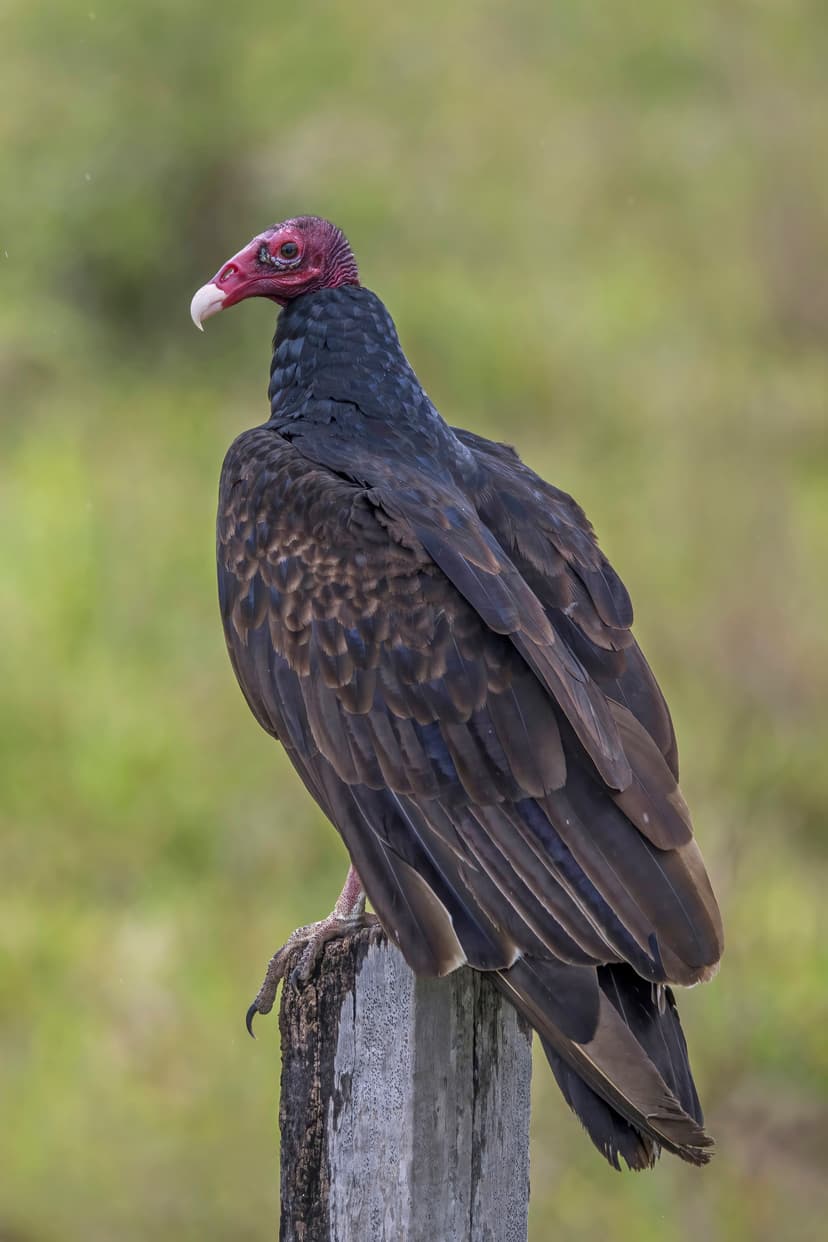
Cathartes aura
The turkey vulture (Cathartes aura) is the most widespread of the New World vultures, found from southern Canada to the tip of South America. It is a scavenger that primarily feeds on carrion, locating food through its exceptional sense of smell and keen eyesight. Distinctive for its bald red head and soaring flight pattern, it plays a crucial role in ecosystems by consuming carcasses.
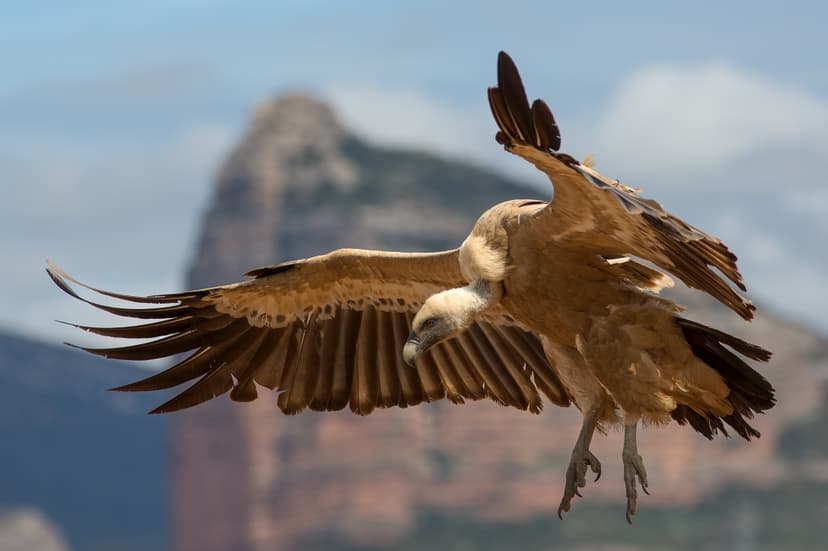
Gyps fulvus
The Eurasian griffon vulture (Gyps fulvus) is a large Old World vulture belonging to the bird of prey family Accipitridae. Found across parts of Europe, Asia, and Africa, it is distinguished by its white head, broad wings, dark flight feathers, and a prominent white neck ruff. These scavengers play a crucial role in their ecosystems by consuming carcasses.