Caviomorpha
Predominantly herbivorous·Not Applicable (Parvorder)
Caviomorpha is a parvorder of rodents, exclusively found in the New World, unified by their hystricognath characteristics. Supported by both fossil and molecular evidence, they represent a significant radiation of rodents that colonized South America and subsequently diversified extensively. This group includes a wide array of species, from the giant capybara to small guinea pigs, showcasing remarkable adaptations in size, diet, and habitat.
Key Facts
- ›Caviomorpha comprises all New World hystricognath rodents.
- ›They originated in South America, with the earliest fossils dating to the late Eocene or early Oligocene.
- ›Colonization of South America is hypothesized to have occurred via oceanic dispersal, likely from Africa.
- ›Caviomorphs underwent explosive diversification in South America, outcompeting native marsupials in rodent-like niches.
- ›Their ecological roles range from burrowing and arboreal to running and aquatic forms.
- ›Notable members include the capybara, guinea pigs, chinchillas, pacas, and New World porcupines.
New World Hystricognaths
South America, West Indies, Central America, North America
- Hystricognath Jaw Structure
- Diverse Range of Sizes, From Small To Very Large
- Adapted To Various Ecological Niches Including Burrowing, Arboreal, Running, and Aquatic Lifestyles.
- Underwent Explosive Diversification Upon Arrival In South America, Outcompeting Other Animals.
Exclusively New World Distribution, Hystricognath Characteristics
About Caviomorpha
Caviomorpha: New World Rodent Radiation
Caviomorpha is a significant parvorder within the rodent order, encompassing all hystricognath rodents native to the New World. This classification is robustly supported by both fossil evidence and molecular data, confirming their unique evolutionary path. While once considered a separate order, Caviomorpha is now firmly established as an integral part of the rodent family tree.
Origin and Colonization
The earliest known rodent fossils in South America, dating back to the late Eocene or early Oligocene, represent early caviomorphs. At this time, South America was an isolated continent, leading to significant scientific inquiry into how these rodents arrived. The most widely accepted hypothesis posits that a group of hystricognath rodents rafted across the Atlantic Ocean from Africa. Molecular studies support a close relationship between the African Phiomorpha and Caviomorpha, strengthening this theory. Caviomorphs also successfully colonized the West Indies, reaching as far as the Bahamas by the early Oligocene, likely through oceanic dispersal.
Diversification and Ecology
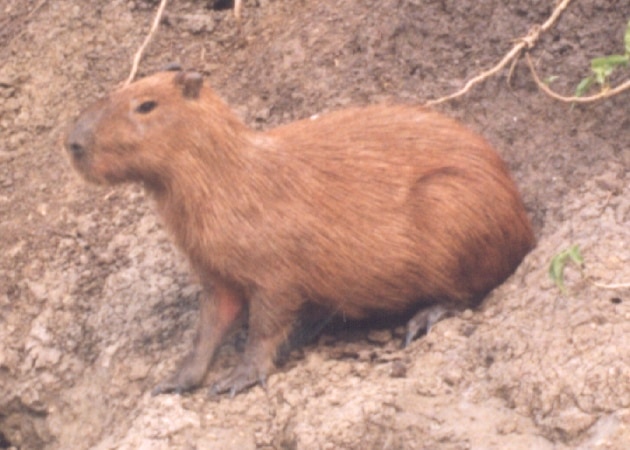
Upon their arrival in South America, Caviomorpha underwent an explosive diversification. They effectively occupied rodent-like ecological niches, often outcompeting indigenous marsupials. Their diets remained predominantly herbivorous, but their sizes and lifestyles varied dramatically. This radiation produced forms ranging from small, rat-sized echimyids to the colossal, bison-sized Phoberomys. Their ecological adaptations include burrowing habits seen in tuco-tucos, arboreal living in porcupines and certain spiny rats, swift running exemplified by maras, and aquatic lifestyles like those of capybaras and nutria. Their habitats span diverse environments, from grasslands and high mountains to dense tropical forests and forest edges.
Modern Distribution and Families
While many caviomorph species have migrated into Central America, only the North American porcupine has naturally colonized North America north of Mexico. The nutria, however, has become a highly successful invasive species in North America. The parvorder is divided into several superfamilies and families, including Cavioidea (Caviidae, Cuniculidae, Dasyproctidae), Chinchilloidea (Chinchillidae, Dinomyidae), Erethizontoidea (Erethizontidae), and Octodontoidea (Abrocomidae, Ctenomyidae, Echimyidae, Octodontidae), along with numerous extinct lineages. This rich diversity underscores the evolutionary success of Caviomorpha in the Americas.
Source: Wikipedia ↗
Frequently Asked Questions
What is Caviomorpha?
Caviomorpha is a parvorder of rodents that exclusively inhabit the New World. They are characterized by their hystricognath features and represent a significant evolutionary radiation of rodents that colonized and diversified in South America.
How did Caviomorpha reach South America?
The prevailing hypothesis suggests that the ancestors of Caviomorpha rafted across the Atlantic Ocean from Africa. This oceanic dispersal is thought to have occurred when South America was an isolated island continent.
What is the diversity of Caviomorpha?
Caviomorph rodents display immense diversity in size, ecology, and habitat. They range from rat-sized species to the massive Josephoartigasia monesi, the largest rodent known. Their adaptations include burrowing, arboreal lifestyles, running, and aquatic living.
Which families are included in Caviomorpha?
Caviomorpha encompasses numerous families, including Caviidae (cavies, capybaras, maras), Chinchillidae (chinchillas, viscachas), Erethizontidae (New World porcupines), and Octodontidae (degus), among others. Many extinct families also existed.
Are there any extinct Caviomorpha species?
Yes, several extinct families and species are known within Caviomorpha. Notable examples include the extinct Heptaxodontidae (giant hutias) and Josephoartigasia monesi, which was the largest rodent ever known.