
Muridae
A broad range of feeding habits, from herbivorous and omnivorous to specialists consuming earthworms or aquatic insects. Most consume plant matter and small invertebrates, often storing seeds.·Not specified
The Muridae, also known as murids, represent one of the largest families of mammals, encompassing around 870 species of mice, rats, and gerbils. These rodents are naturally distributed across Eurasia, Africa, and Australia, occupying a wide array of habitats from tropical forests to tundras. Their success is attributed to their diverse feeding habits, excellent senses, and high reproductive rates.
Key Facts
- ›Murids are a vast family of rodents, including many common mice, rats, and gerbils.
- ›They are found naturally on Eurasia, Africa, and Australia, with some species introduced worldwide.
- ›Murids inhabit a broad range of ecosystems, from forests to deserts.
- ›Their diet is varied, including plant matter, seeds, and small invertebrates.
- ›Most murids are small mammals, typically around 10 cm long excluding the tail.
- ›They have a high reproductive potential, often producing several litters annually.
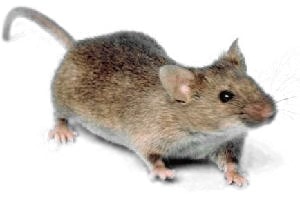
Murids
Eurasia, Africa, Australia
- Typically Small Mammals, Around 10 cm Long Excluding the Tail.
- Range In Size From 4.5-8 cm To 50 cm In Body Length.
- Slender Bodies.
- Scaled Tails Longer Than the Body.
- Pointed Snouts With Prominent Whiskers.
- Commonly Shades of Brown, With Black, Grey, Or White Markings.
- Some Have Elongated Legs For Hopping.
- Some Have Broad Feet and Prehensile Tails For Climbing.
- Some Are Highly Social, While Others Are Solitary.
- Populations Tend To Increase Rapidly and Then Drastically Decline.
- Exhibit Cycles of Rapid Population Growth Followed By Decline, Often In Three- To Four-Year Cycles.
- Generally Have Excellent Senses of Hearing and Smell.
- Consume A Wide Range of Foods With the Aid of Powerful Jaw Muscles and Gnawing Incisors.
- Breed Frequently.
- Sciurognathous Jaws
- Diastema Present
- Lack Canines and Premolars
- Generally Three Molars, Though Sometimes Only One Or Two
- Incisors Grow Throughout Life
About Muridae
Muridae: A Vast Family of Rodents
The Muridae, commonly referred to as murids, constitute one of the largest, if not the second largest, family of mammals globally. This expansive family encompasses approximately 870 species, including many familiar mice, rats, and gerbils. Their natural distribution spans across Eurasia, Africa, and Australia, and they have become widespread globally due to introductions by humans.
Habitat and Distribution
Murids exhibit remarkable adaptability, inhabiting a wide spectrum of ecosystems, from lush tropical forests to arid tundras. While not native to the Americas or Antarctica, their presence has been established worldwide, particularly through species like the house mouse and black rat. They occupy diverse ecological niches, with fossorial (burrowing), arboreal (tree-dwelling), and semi-aquatic species existing alongside the predominantly terrestrial majority. This broad ecological range contributes significantly to their abundance.
Diet and Physical Characteristics
The dietary habits of murids are remarkably varied. They range from strict herbivores and omnivores to specialized feeders that consume earthworms or aquatic insects. Most species consume plant matter and small invertebrates, a practice that often includes storing seeds for future use. Physically, murids are typically small mammals, with a general body length of around 10 cm (excluding the tail), though considerable variation exists, with some species measuring as little as 4.5 cm and others reaching up to 50 cm. Common features include slender bodies, scaled tails often longer than the body, and pointed snouts equipped with prominent whiskers. Their coloration is usually in shades of brown, though black, grey, or white markings are also present. Adaptations for locomotion include elongated legs for hopping in some species and broad feet with prehensile tails for enhanced climbing abilities in others.
Reproduction and Behavior
Reproduction in murids is characterized by high potential. Females commonly produce several litters annually, and breeding may occur year-round in warmer climates. While the lifespans of most species are generally less than two years, their rapid reproductive rates allow populations to increase swiftly. This rapid growth is often followed by drastic declines when food resources are exhausted, contributing to population cycles that can occur over three to four years. Social behavior varies, with some species being highly social while others are solitary. Murids generally possess excellent senses of hearing and smell, aiding their survival and foraging.
Source: Wikipedia ↗
Frequently Asked Questions
What are Muridae?
Muridae is a large family of rodents that includes many common species of mice, rats, and gerbils. They are among the largest families of mammals, with approximately 870 species.
Where do Muridae live?
Murids are found naturally across Eurasia, Africa, and Australia. While not native to the Americas, species like the house mouse have been introduced globally and thrive in diverse environments.
What do Muridae eat?
The diet of murids is very diverse, ranging from herbivorous and omnivorous species to specialists that eat fungi or insects. Most commonly, they consume plant matter and small invertebrates, often storing food for later use.
What are the physical characteristics of Muridae?
Murids are typically small mammals, usually around 10 cm in body length, though some species can be much larger. They often have slender bodies, scaled tails longer than their bodies, and pointed snouts with whiskers. Their coloration is commonly shades of brown, sometimes with black, grey, or white markings.
How do Muridae reproduce?
Murids have a high reproductive rate, with females commonly producing several litters per year. Breeding can occur year-round in warmer regions, and their populations can grow rapidly.
Are there any specific subfamilies within Muridae?
Yes, Muridae is classified into five subfamilies: Deomyinae (spiny mice), Gerbillinae (gerbils), Leimacomyinae (Togo mouse), Lophiomyinae (maned rat), and Murinae (Old World rats and mice).
Related Rodent species
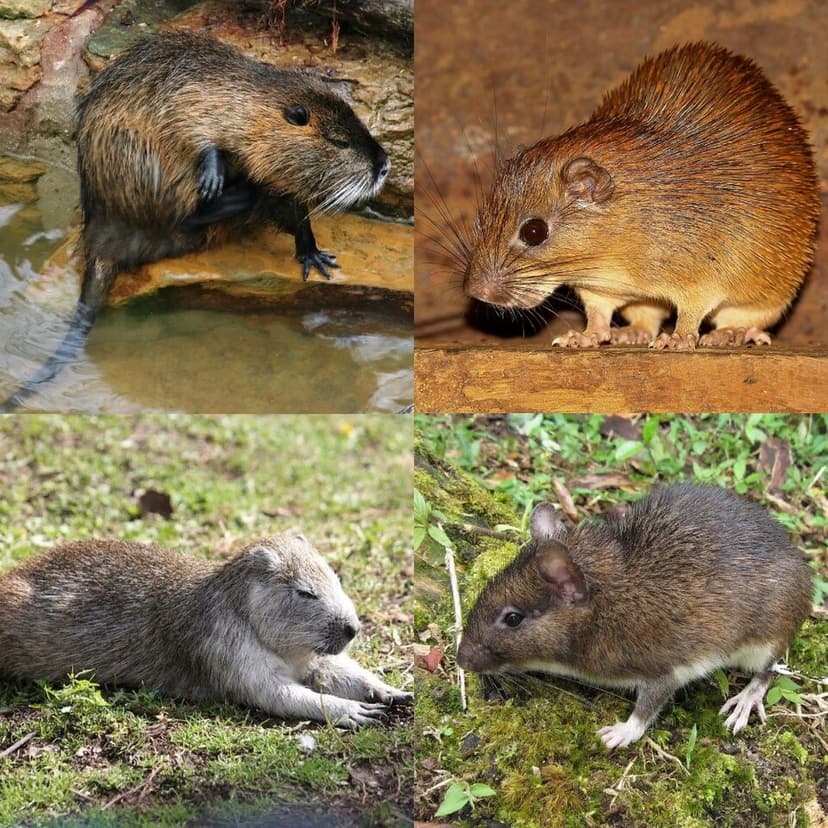
Echimyidae
Echimyidae, commonly known as Neotropical spiny rats, is the most species-rich family of hystricognath rodents, characterized by their diverse adaptations and often stiff, pointed hairs or spines for protection. These rodents are primarily found in South America, with some species extending into Central America and the West Indies, and exhibit a wide range of habitats from arboreal to terrestrial and fossorial.
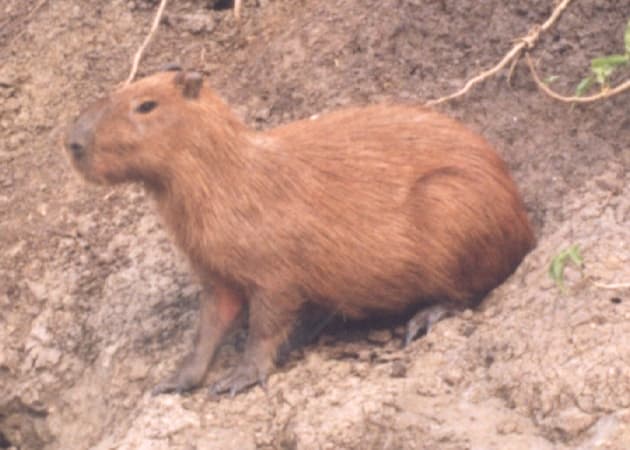
Caviomorpha
Caviomorpha is a parvorder of rodents, exclusively found in the New World, unified by their hystricognath characteristics. Supported by both fossil and molecular evidence, they represent a significant radiation of rodents that colonized South America and subsequently diversified extensively. This group includes a wide array of species, from the giant capybara to small guinea pigs, showcasing remarkable adaptations in size, diet, and habitat.