
Dipodidae
Primarily plant material, sometimes insects and other small animals; obtain water from food
Dipodidae, commonly known as jerboas, are a family of nocturnal, hopping desert rodents native to North Africa and Asia. They are distinct for their anatomy, which is highly adapted for saltatorial locomotion, featuring long hind legs, short forelimbs, and a tail longer than their body, enabling them to make erratic hops and sharp turns to evade predators.
Key Facts
- ›Jerboas are nocturnal hopping desert rodents found in North Africa and Asia.
- ›They possess long hind legs, short forelimbs, and a tail that aids in balance and can be used as a prop.
- ›Their anatomy is specialized for erratic hopping, with fused metatarsal bones (cannon bone) for leverage during jumps.
- ›Jerboas primarily consume plant material and obtain water from their food, avoiding direct drinking.
- ›They dig burrows for shelter from heat, predators, and for hibernation during winter.
- ›Jerboas are generally solitary but may form loose colonies for warmth.

Jerboa
North Africa, Asia
- Long Hind Legs, Short Forelegs
- Tail Longer Than Head and Body
- Fur Is Fine and Typically Sand-Colored
- Some Species Have Long Ears, Others Have Short Ears
- Fused Metatarsal Bones
- Nocturnal and Crepuscular Activity
- Excellent Hearing To Detect Predators
- Dig Burrows For Shelter and Hibernation
- Solitary, But May Form Loose Colonies
- Engage In Dust Bathing For Chemical Communication
- Adaptations To Prevent Sand From Entering Ears and Nose
- Obligate Bipedal Locomotion
- Erratic Hopping With Sharp Turns and Vertical Leaps
- Tail Used For Balance and As A Prop
- Hairs On Feet For Traction In Sandy Environments
Little Owls
About Dipodidae
What are Jerboas?
Jerboas, belonging to the family Dipodidae, are a fascinating group of nocturnal rodents native to the desert regions of North Africa and Asia. They are instantly recognizable by their distinctive physical adaptations for life in arid environments, most notably their powerful hind legs and long tails, which allow them to move by hopping, much like miniature kangaroos.
Anatomy and Locomotion
Their anatomy is highly specialized for saltatorial locomotion. Jerboas possess exceptionally long hind legs, often up to four times the length of their forelimbs, and fused metatarsal bones, referred to as a cannon bone, which provide leverage for impressive leaps. This adaptation allows them not only to cover ground quickly but also to execute erratic movements, sharp turns, and high vertical jumps, crucial for evading predators in open desert landscapes. Unlike many other hopping mammals, jerboas are obligate bipeds, meaning they almost exclusively move on two legs, even at slower speeds.
Behavior and Habitat
Jerboas are primarily nocturnal and crepuscular, emerging from their burrows at twilight to forage. During the heat of the day, they retreat to underground burrows, which they dig strategically near plant life. These burrows serve multiple purposes, including protection from extreme temperatures, shelter from predators, and, for some species, hibernation during the winter months. While generally solitary, jerboas may form loose colonies, particularly in communal burrows for added warmth during cold periods.
Diet and Survival
Their diet predominantly consists of plant material, with some species supplementing this with insects or other small animals. A remarkable adaptation is their ability to obtain all necessary water from their food, as they do not typically drink water directly. To minimize water loss, they forage during the cooler nighttime hours and can dig up plant roots, which retain more moisture. Specialized hairs on the soles of their feet in sandy environments provide enhanced grip, preventing slips.
Source: Wikipedia ↗
Frequently Asked Questions
What is a jerboa?
A jerboa is a type of nocturnal hopping desert rodent belonging to the family Dipodidae. They are found across North Africa and Asia and are known for their unique physical adaptations for desert life and locomotion.
What do jerboas eat?
Most jerboas primarily eat plant material, though some species may opportunistically consume insects or other small animals. They are known to gather food using their front legs and obtain water from the plants they eat, especially the roots of dried plants.
How do jerboas move?
Jerboas move by hopping, a form of saltation, using their elongated hind legs. Their anatomy, including fused metatarsal bones, allows for powerful leaps and erratic movements to evade predators. They are obligate bipeds, rarely using their forelimbs for locomotion.
Where do jerboas live?
Jerboas are found in desert environments across North Africa and Asia. They construct burrows to shelter from the extreme heat of the day, cool desert nights, and to hibernate during the winter.
What is the lifespan of a jerboa?
The typical lifespan of a jerboa is relatively short, generally ranging from 2 to 3 years.
Are jerboas social animals?
Jerboas are generally solitary creatures once they reach adulthood, maintaining their own burrows and foraging independently. However, in some instances, loose colonies can form where certain species dig communal burrows for added warmth.
Related Rodent species
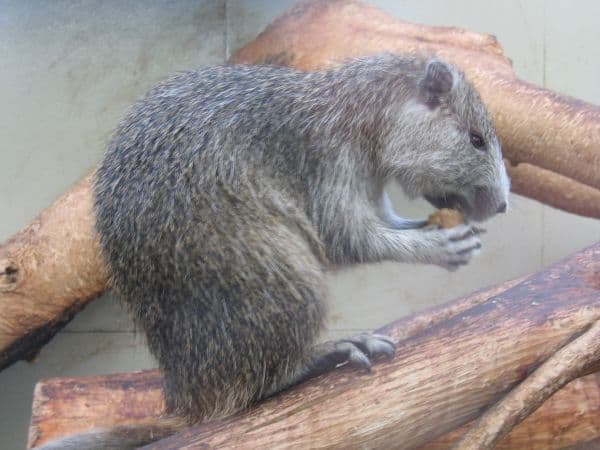
Capromyidae
Hutias, scientifically known as Capromyidae, are a group of moderately large, cavy-like rodents native to the Caribbean islands. While at least half of the twenty identified species are now extinct, the surviving species are known for their stout bodies, large heads, and herbivorous diets, nesting in trees or rock crevices instead of burrows. Some species, like Desmarest's hutia, can become overpopulated in areas lacking natural predators and are sometimes referred to as "banana rats" due to their distinctive feces.

Heteromyidae
Heteromyidae is a diverse family of rodents, commonly known as kangaroo rats, kangaroo mice, and pocket mice, primarily inhabiting the deserts and grasslands of western North America. A distinctive characteristic of this family is the presence of fur-lined cheek pouches used for transporting food to their burrows. Their closest relatives are the pocket gophers, and they exhibit adaptations for arid environments, including efficient water conservation.