
Heteromyidae
Seeds and other plant parts.
Heteromyidae is a diverse family of rodents, commonly known as kangaroo rats, kangaroo mice, and pocket mice, primarily inhabiting the deserts and grasslands of western North America. A distinctive characteristic of this family is the presence of fur-lined cheek pouches used for transporting food to their burrows. Their closest relatives are the pocket gophers, and they exhibit adaptations for arid environments, including efficient water conservation.
Key Facts
- ›Heteromyids are characterized by fur-lined cheek pouches for carrying food.
- ›They are well-adapted to arid environments, obtaining water from their food.
- ›Kangaroo rats are known for their powerful hind legs and leaping locomotion.
- ›Most species are nocturnal, foraging and moving at night.
- ›Their closest relatives are pocket gophers in the family Geomyidae.
- ›The family includes around fifty-nine species divided among six genera.

Kangaroo Rats, Kangaroo Mice, Pocket Mice, Spiny Pocket Mice
Western North America, Mexico, Central America, Northwestern South America
- Small Rodents
- Fur-Lined Cheek Pouches
- Tails Often Tufted and Used For Balance
- Partially Fused Vertebrae In the Neck
- Short Forelimbs
- Enlarged Bullae
- Thin, Papery Skulls Without Robust Cranial Crests
- Extra Hole Penetrating the Rostrum
- Distinctive Occluded Teeth
- Masseter Muscle Set Far Forward On the Snout
- Molars With Two-Lobed Cusps
- Grooved Upper Incisors
- Body Fur Is Short, Fine, and Often Matches Soil Color
- Spiny Pocket Mice Have Coarser Fur and Spiky Bristles On the Back
- Largely Nocturnal
- Carry Food In Fur-Lined Cheek Pouches
- Store Seeds In Burrows Or Shallow Caches
- Use Sight and Olfactory Clues To Locate Food
- Excavate Long Burrow Systems With Passages and Chambers
- Conserve Moisture By Concentrating Urine and Blocking Burrow Entrances
- Some Can Aestivate
- Kangaroo Rats Bound On Hind Legs
- Pocket Mice Typically Run On Four Limbs Or Leap
- Spiny Pocket Mice Move On All Fours and Do Not Leap
Fur-Lined Cheek Pouches, Leaping Locomotion In Kangaroo Rats, Adaptations For Extreme Water Conservation
Foxes, Coyotes, Snakes, Birds
About Heteromyidae
Overview of Heteromyidae
What is Heteromyidae?
Heteromyidae is a family of rodents that encompasses a variety of species, including the well-known kangaroo rats, kangaroo mice, and pocket mice. These small mammals are primarily found in the arid and semi-arid regions of western North America, though some species extend their range into forests and as far south as northern South America. A defining characteristic of the family is their specialized, fur-lined cheek pouches, which are external and used to transport food items back to their complex burrow systems.
Adaptations to Arid Environments
Heteromyids are remarkably adapted to life in environments where water is scarce. They possess a unique ability to extract sufficient moisture from the seeds they consume, often eliminating the need to drink water directly. Further water conservation is achieved through the production of highly concentrated urine and by creating microclimates within their burrows. Some species can also enter a state of aestivation, a form of dormancy, during extreme environmental conditions.
Behavior and Ecology
These rodents are predominantly nocturnal, emerging from their burrows at night to forage for seeds and other plant materials. They utilize their keen senses of sight and smell to locate food, which they then transport in their cheek pouches. Their burrows are intricate, featuring multiple passages and chambers for shelter and food storage. In their ecosystems, heteromyids play a role as prey for various predators, including foxes, coyotes, snakes, and birds. Their diverse species exhibit distinct ecological niches, minimizing direct competition for resources within their shared habitats.
Taxonomy and Diversity
The family Heteromyidae is divided into six genera, with approximately fifty-nine recognized species. While they exhibit a range of physical appearances, their closest relatives are the pocket gophers of the family Geomyidae. Notable physical traits include specialized skulls with thin bone structures, distinctive teeth, and in many species, a tufted tail used for balance. The locomotion of heteromyids also varies, with kangaroo rats known for their powerful leaps and pocket mice typically moving on all fours.
Source: Wikipedia ↗
Frequently Asked Questions
What are the defining features of Heteromyidae rodents?
Heteromyids are most notably recognized by their fur-lined cheek pouches, which are external and extend along their necks. These pouches are used to carry seeds and other food items back to their burrows. Other adaptations include specialized skulls and teeth suited for their diet and environment.
Where are Heteromyidae rodents typically found?
The majority of heteromyids inhabit the deserts and grasslands of western North America, including the western United States and Mexico. Some species, particularly within the genus Heteromys (spiny pocket mice), are also found in forests and extend their range into northern South America.
How do Heteromyidae rodents conserve water in arid environments?
These rodents have remarkable adaptations for water conservation. They can extract sufficient water from their metabolism of dry seeds, eliminating the need to drink. Additionally, they produce highly concentrated urine and may aestivate in underground chambers during extreme conditions.
What is the diet of Heteromyidae rodents?
Heteromyids primarily feed on seeds and other plant parts. They are adept at locating food using sight and smell and store their gathered seeds in specialized chambers within their burrows to absorb moisture from the humid air.
How do kangaroo rats move differently from pocket mice?
Kangaroo rats are distinctive for their locomotion, using their large hind feet and long metatarsals to bound across the ground without using their forelimbs. Pocket mice, being smaller, can also leap but typically run on all four limbs. Spiny pocket mice move exclusively on all fours and do not leap.
Related Rodent species

Dipodidae
Dipodidae, commonly known as jerboas, are a family of nocturnal, hopping desert rodents native to North Africa and Asia. They are distinct for their anatomy, which is highly adapted for saltatorial locomotion, featuring long hind legs, short forelimbs, and a tail longer than their body, enabling them to make erratic hops and sharp turns to evade predators.
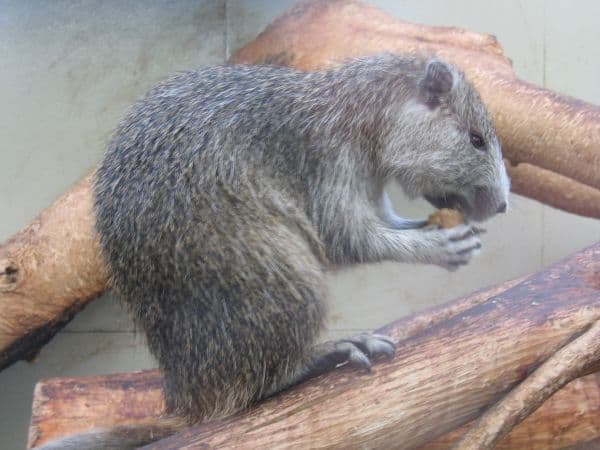
Capromyidae
Hutias, scientifically known as Capromyidae, are a group of moderately large, cavy-like rodents native to the Caribbean islands. While at least half of the twenty identified species are now extinct, the surviving species are known for their stout bodies, large heads, and herbivorous diets, nesting in trees or rock crevices instead of burrows. Some species, like Desmarest's hutia, can become overpopulated in areas lacking natural predators and are sometimes referred to as "banana rats" due to their distinctive feces.