
Ambystoma altamirani
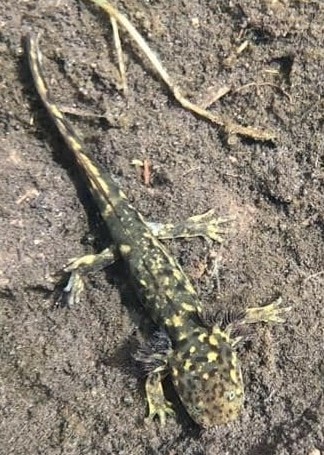
The mountain stream salamander (Ambystoma altamirani) is a species of mole salamander native to central Mexico. It is distinguished by its purplish-black dorsal coloration, purplish-lavender belly, and cream-colored accents on its lips, digit tips, and tail fin. This species inhabits high-elevation pine and pine-oak woodlands, breeding in small streams where both larvae and some adults reside, while other adults venture onto land.
Key Facts
- ›Native to central Mexico, found west and south of the Valley of Mexico.
- ›Inhabits streams in high-elevation pine or pine-oak woodlands, and cleared pastures.
- ›Adults are semi-aquatic, living both on land and in streams.
- ›Undergoes metamorphosis from aquatic larvae to terrestrial/semi-aquatic adults.
- ›Considered endangered due to significant population decreases.
- ›Protected by Mexican law under 'Special Protection'.
Mountain Stream Salamander, Mountain Stream Siredon
Small Streams, High-Elevation Pine Woodland, Pine-Oak Woodland, Cleared Pastures
Central Mexico
- Grows To About 115 Mm Long
- Slender Tail With A Low Dorsal Fin and Smaller Ventral Fin
- Slender Limbs
- Dorsal Surface and Sides Are Purplish-Black
- Belly Is Purplish-Lavender
- Chin and Lower Limb Surfaces Are Clouded With Light Lavender Hue
- Lips Edges, Digit Tips, and Bottom Tail Fin Are Cream Colored
- Undergoes Metamorphosis From Larvae To Adult
- Larvae Are Aquatic
- Adults Gain Limbs and Ability To Live On Land
- Adults Lose Gills and Fins Upon Maturation
- Some Adults and Larvae Remain In Streams Year-Round
- Other Adults Live On Land
- Adults Return To Streams To Breed and Lay Eggs
- No Parental Care
Illegal Logging, Recreational Tourism, Stream Pollution, Sedimentation, Stream Diversion, Introduced Predatory Fishes
About Ambystoma altamirani
Mountain Stream Salamander (Ambystoma altamirani)
The mountain stream salamander, scientifically known as Ambystoma altamirani, is a species of mole salamander endemic to central Mexico. It is recognized for its distinctive purplish-black coloration on its dorsal side and flanks, a purplish-lavender belly, and subtle cream accents on its lips, digits, and tail fin. This species thrives in the unique environment of small streams found in high-elevation pine and pine-oak woodlands, and can also be found in streams within cleared pastures to the west and south of the Valley of Mexico.
Habitat and Ecology
Ambystoma altamirani inhabits altitudes ranging from 2,700 to 3,200 meters above sea level. The species undergoes a significant metamorphic transformation, beginning life as purely aquatic larvae with gills. As they mature, they develop limbs, lose their gills and fins, and gain the ability to live on land. While some adults and larvae remain in the streams year-round, others venture onto land, returning to the water only to breed and lay eggs. Parental care is not exhibited, with adults leaving their offspring after egg deposition.
Conservation Status
This salamander is currently classified as endangered, a status driven by alarming population declines observed over the past three generations. The primary drivers of this decline are habitat degradation and human-induced pressures. These include illegal logging within protected areas, intense recreational tourism, severe stream pollution and sedimentation, alteration of water flow through stream diversion, and the introduction of non-native predatory fish such as trout, which further impact the species' survival. Reflecting its precarious state, Ambystoma altamirani is afforded protection under Mexican law as 'Special Protection' (Pr).
Source: Wikipedia ↗
Frequently Asked Questions
What is the mountain stream salamander?
The mountain stream salamander, also known as the mountain stream siredon, is a species of mole salamander found exclusively in central Mexico. It is characterized by its distinct coloration and semi-aquatic lifestyle.
Where does the mountain stream salamander live?
This species inhabits small streams within high-elevation pine or pine-oak woodland forests, as well as streams in cleared pastures. It is found to the west and south of the Valley of Mexico, at altitudes between 2,700 and 3,200 meters above sea level.
What are the physical characteristics of the mountain stream salamander?
Adult mountain stream salamanders reach about 115 mm in length, with a slender tail measuring approximately 50 mm. Their dorsal surface and sides are purplish-black, contrasting with a purplish-lavender belly. Accents of cream color are present on the edges of the lips, digit tips, and the lower tail fin.
How does the mountain stream salamander reproduce?
The species breeds in small streams. Adults return to these streams to lay eggs, and they do not exhibit parental care for their offspring. Both larvae and some adults remain in the streams year-round.
Why is the mountain stream salamander endangered?
The mountain stream salamander is considered endangered due to substantial population declines. These decreases are attributed to habitat changes, including illegal logging, heavy tourism, stream pollution and sedimentation, stream diversion, and the introduction of predatory fish like trout.
Related Salamander and Newt species
Ambystoma bishopi
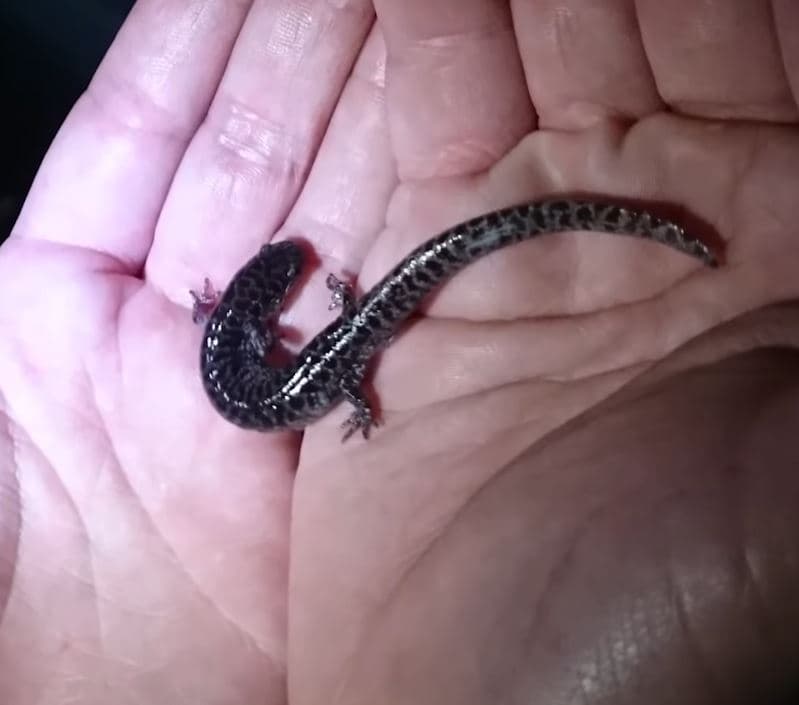
The reticulated flatwoods salamander (Ambystoma bishopi) is a species of mole salamander native to a limited area of the southeastern United States' coastal plain, primarily in Florida and Georgia. It is characterized by a distinctive net-like grey pattern on a dark background and inhabits seasonally wet pine flatwoods, breeding in ephemeral wetlands. This species is currently listed as endangered due to habitat destruction and degradation.

Alpine newt
The alpine newt is a species of newt native to continental Europe, with introduced populations in Great Britain and New Zealand. Adults are typically dark grey to blue on their back and sides, with a vibrant orange belly and throat, with males displaying more striking coloration, especially during the breeding season. They are adaptable, inhabiting both lowlands and high altitudes, and are primarily nocturnal during their terrestrial phase.

Ambystoma amblycephalum
The blunt-headed salamander (Ambystoma amblycephalum) is a mole salamander endemic to Mexico, specifically found near Morelia in Michoacán state. It inhabits a mixed landscape of grasslands and pine-oak forests at high elevations and requires ponds for breeding. This species is distinctive for having both neotenic (aquatic) and terrestrial adult populations.