
Ambystoma taylori
Critically Endangered·Oviparous (implied by laying eggs)
Taylor's salamander (Ambystoma taylori) is a critically endangered neotenic salamander endemic to Laguna Alchichica, a high-altitude crater lake in Mexico. It retains larval features like external gills into adulthood and breeds while still in its larval state. The species is facing a severe decline due to increasing salinity and decreasing water levels in its unique habitat.
Key Facts
- ›Endemic to Laguna Alchichica in Mexico.
- ›A neotenic species, retaining larval characteristics into adulthood.
- ›Entirely aquatic, breeding and laying eggs in its lake habitat.
- ›Faces a critically endangered status due to habitat degradation.
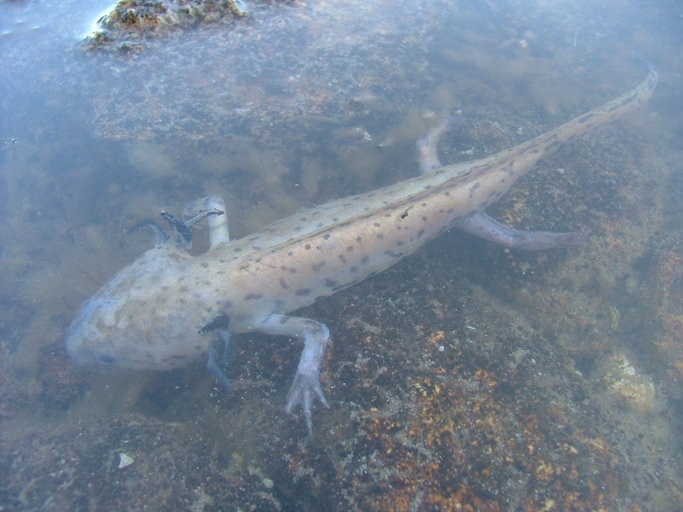
- ›Characterized by pale yellowish coloration with dark spots.
- ›Feeds through buccal suction and is omnivorous.
Taylor's Salamander
High-Altitude Crater Lake, Brackish Water, Alkaline Water
Mexico
- Moderately Sized Salamander.
- Retains Caudal Fin and External Gills Into Adulthood .
- Pale Yellowish Coloration With Dark Spots Along Dorsal Sides.
- Relatively Short, Thick External Gill Stalks.
- Large Head.
- Underdeveloped Limbs.
Omnivorous, Feeds By Buccal Suction
- Entirely Aquatic.
- Breeds and Lays Eggs In the Lake.
- Hides Below the Waterline, Under Overhangs, and In Deep Water.
Increasing Salinity of Habitat, Decreasing Water Levels In Habitat, Water Extraction For Irrigation and Drinking
About Ambystoma taylori
Taylor's Salamander (Ambystoma taylori)
Taylor's salamander, scientifically known as Ambystoma taylori, is a highly specialized amphibian endemic to a single location: Laguna Alchichica, a high-altitude crater lake in Mexico. This species is remarkable for its neotenic nature, meaning it retains its larval characteristics, such as prominent external gills and a caudal fin, throughout its entire adult life. It also reproduces while still in this larval state, never undergoing the full metamorphosis typical of many salamander species.
Ecology and Habitat
The species inhabits a unique and challenging environment. Laguna Alchichica is characterized by its brackish water, with a salinity of 9.2 g/L, and its highly alkaline nature, with a pH ranging from 8.5 to 10. The water temperature typically stays between 18 and 21 °C. Taylor's salamanders are adapted to this environment, often seeking refuge below the waterline, utilizing overhangs along the crater's edge, and inhabiting the deeper sections of the lake. They are entirely aquatic, spending their lives from birth to reproduction within the lake.
Physical Characteristics and Diet
Taylor's salamanders are moderately sized, with mature individuals commonly measuring around 70 mm (2.8 inches) in snout-vent length, though some can reach up to 102–113 mm (4.0–4.4 inches). They possess a pale yellowish coloration punctuated by dark spots along their dorsal sides. Distinctive features include relatively short and thick external gill stalks, a notably large head, and underdeveloped limbs, all indicative of their neotenic state. Their feeding strategy involves buccal suction, and they are considered omnivores, consuming whatever organic matter is available in their aquatic habitat.
Conservation Status and Threats
Tragically, Ambystoma taylori is facing an acute conservation crisis. Its sole habitat, Laguna Alchichica, is under severe pressure. Water is being extracted from the lake for agricultural irrigation and human consumption, leading to a significant drop in water levels and a concurrent increase in salinity. This environmental degradation poses an existential threat to the species. The International Union for Conservation of Nature (IUCN) has classified Taylor's salamander as "Critically Endangered," highlighting the urgent need for conservation efforts, including proposals for captive breeding programs to ensure its survival.
Source: Wikipedia ↗
Frequently Asked Questions
What makes Taylor's salamander unique?
Taylor's salamander is unique because it is neotenic, meaning it retains its larval features, such as external gills, throughout its adult life and reproduces in this larval state without undergoing complete metamorphosis. It is also one of the few species found exclusively in a single, specific high-altitude crater lake.
Where is Taylor's salamander found?
This species is found only in Laguna Alchichica, a high-altitude crater lake located to the southwest of Perote, Mexico. This specific lake is its sole natural habitat.
What are the conditions of its habitat?
Laguna Alchichica is a brackish lake with a high pH, making it very alkaline. The water temperature typically ranges between 18–21 °C. The salamanders often inhabit areas below the waterline, seeking shelter under overhangs at the crater's edge and in deeper parts of the lake.
Why is Taylor's salamander considered critically endangered?
The species is critically endangered because its habitat, Laguna Alchichica, is becoming increasingly saline and its water levels are falling. This deterioration is primarily due to water extraction for irrigation and drinking, making the environment less suitable for the salamander's survival.
What does Taylor's salamander eat?
Taylor's salamanders are omnivores and feed using a method called buccal suction. While specific prey items are not detailed, their diet is generally considered to consist of various organic matter found in their aquatic environment.
Related Salamander and Newt species

Ambystoma dumerilii
The Lake Patzcuaro salamander, also known as achoque (Ambystoma dumerilii), is a paedomorphic salamander endemic to Lake Patzcuaro in Michoacán, Mexico. It is distinguished by retaining larval characteristics, such as prominent external gills, throughout its adult life. Historically used for food and traditional medicine by the Purépecha people, the species is now critically endangered due to severe habitat degradation and pollution.

Ambystoma andersoni
Anderson's salamander (Ambystoma andersoni) is a neotenic salamander native to Zacapu Lagoon in Michoacán, Mexico. Distinctive for retaining larval features into adulthood, it possesses external gills with red filaments and a prominent caudal fin, with a unique pattern of black blotches on a red-brown base.
Ambystoma leorae
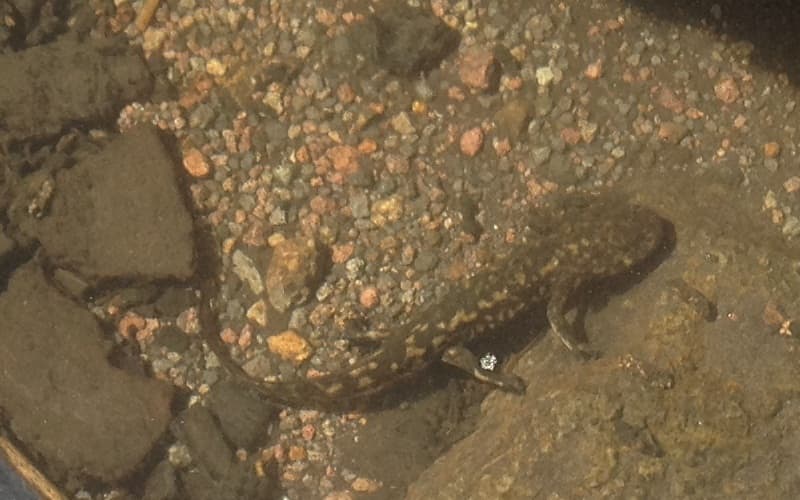
The Leora's stream salamander (Ambystoma leorae) is a critically endangered mole salamander endemic to a very small region within Mexico's Iztaccihuatl-Popocatepetl National Park. Its survival is threatened by its specific water quality requirements and human activities such as water extraction, cattle grazing, and direct consumption, leading to a single known population persisting on Mount Tlaloc.