
Ambystoma tigrinum
The tiger salamander (Ambystoma tigrinum) is one of the largest terrestrial salamanders native to North America. It is characterized by its distinctive yellow or greenish-yellow markings on a black or dark brown body, and it emits a bright fluorescence under UV light. These amphibians spend much of their lives in burrows and are primarily terrestrial as adults, returning to water only to breed.
Key Facts
- ›Tiger salamanders typically reach lengths of 6-8 inches (15-20 CM), with some individuals growing up to 13 inches (33 CM).
- ›They possess smooth bodies with costal grooves, short snouts, thick necks, strong legs, and specialized foot pads for burrowing.
- ›Their diet includes insects, snails, slugs, frogs, worms, and occasionally other small vertebrates or even their own kind.
- ›When threatened, they secrete a poisonous white substance from their skin glands as a defense mechanism.
- ›Adult tiger salamanders are largely terrestrial, inhabiting burrows in woodlands and open fields, and usually only return to water to reproduce.
- ›Some individuals exhibit neoteny, retaining larval characteristics like gills and remaining aquatic throughout their lives.
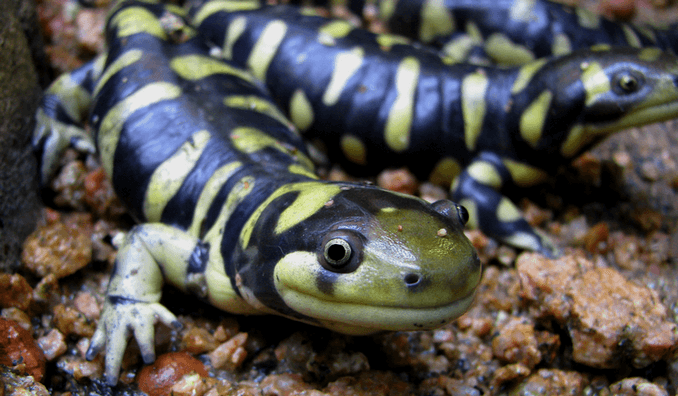
Eastern Tiger Salamander
Woodlands, Grassy Open Fields, Burrows, Wetlands, Cattle Ponds, Vernal Pools, Flooded Swamps
United States, Eastern Mexico, Southern Canada, Atlantic Coast From New York Down To Florida
- Typically 6–8 Inches In Length, With Longest Recorded At 13 Inches .
- Markings Vary In Color From Brownish Yellow To Greenish Yellow On A Black Or Dark Brown Body and Tail.
- Emit Bright Yellow-Green Fluorescence Under Blue Or Ultraviolet Light.
- Smooth-Bodied With Costal Grooves For Moisture Control.
- Possess Short Snouts, Thick Necks, Strong Legs, and Lengthy Tails.
- Utilize Specialized Foot Pads For Burrowing.
- Sexually Dimorphic: Males Are Larger With Longer and Higher Tails Than Females.
Small Insects, Snails, Slugs, Frogs, Aquatic Microcrustaceans, Worms, Other Smaller Salamander Species, Lizards, Snakelets, Newborn Mice, Cannibalism
- Secretive Creatures That Spend Most of Their Lives Underground In Burrows.
- Adults Are Almost Entirely Terrestrial, Returning To Water Primarily To Breed.
- Migrate To New Territories After Metamorphosis, With Females and Larger Individuals Traveling Further.
- Exhibit Strong Loyalty To Their Birthplaces, Migrating Long Distances To Return.
- When Threatened, They Display Their Tail and Secrete A Poisonous White Substance From Skin Glands.
- Males Nudge Females To Initiate Mating; Sneaker Males Mimic Female Behavior.
- Larvae Are Aquatic and Possess External Gills and A Caudal Fin.
- Some Individuals Exhibit Neoteny, Remaining In Larval Form and Aquatic Throughout Their Lives.
Deforestation, Destruction of Wetland Environments, Pond Disturbance, Invasive Fish, Road Construction, Acid Rain, Vehicle Strikes, Contamination of Aquatic Habitats
About Ambystoma tigrinum
Ambystoma tigrinum: The Tiger Salamander
The tiger salamander, scientifically known as Ambystoma tigrinum, is a prominent species of mole salamander and ranks among the largest terrestrial salamanders found in North America. These amphibians are distinguished by their striking coloration, typically featuring yellow or greenish-yellow markings against a dark brown or black background, which fluoresce brightly under ultraviolet light. They are secretive by nature, spending the majority of their lives concealed in burrows dug in loose soil, a habitat requirement that makes them indicators of healthy environments.
Description and Biology
Adult tiger salamanders usually measure between 6 to 8 inches (15 to 20 cm) in length, though exceptional individuals can reach up to 13 inches (33 cm). Their bodies are smooth with costal grooves that aid in moisture retention, and they possess short snouts, thick necks, robust legs, and a prominent tail. Specialized foot pads assist them in their burrowing activities. Their diet is varied, encompassing insects, snails, slugs, worms, frogs, and aquatic invertebrates, with adults sometimes resorting to cannibalism when resources are scarce. When threatened, they can secrete a poisonous white substance from their skin glands as a defensive measure.
Habitat and Distribution
The tiger salamander boasts the widest geographic range of any salamander species in North America. They can be found across the United States, from the Atlantic coast northward to southern Canada, and into eastern Mexico. Their preferred habitats include woodlands, open fields, and crucially, areas with loose soil suitable for burrowing. As adults, they are predominantly terrestrial, usually returning to aquatic environments like wetlands, cattle ponds, vernal pools, and flooded swamps solely for breeding purposes.
Reproduction and Life Cycle
Tiger salamanders demonstrate a strong fidelity to their natal sites, often migrating considerable distances to return for breeding. The breeding season typically occurs in late winter or early spring, coinciding with warmer ground temperatures and thawed water bodies. Reproduction involves males depositing spermatophores, which females then use for fertilization. Females lay clutches of up to 100 eggs, attaching them to submerged vegetation. The larval stage is entirely aquatic, characterized by external gills and a caudal fin. This larval period lasts for approximately three months before metamorphosis, though some individuals may exhibit neoteny, retaining larval features and remaining aquatic throughout their lives, especially in conditions where terrestrial life is less favorable.
Conservation and Threats
While the tiger salamander as a species is widespread, certain populations, particularly in the southeastern United States, are experiencing declines. Major threats include habitat loss due to deforestation and wetland destruction, pond disturbance, the introduction of invasive fish species, and the impacts of human development such as road construction. Environmental factors like acid rain and habitat contamination also pose risks to their survival. The use of tiger salamander larvae as fishing bait is also a significant concern, as it can facilitate the transport and spread of diseases like ranaviruses among wild populations.
Source: Wikipedia ↗
Frequently Asked Questions
What do tiger salamanders eat?
Tiger salamanders have a varied diet that includes small insects, snails, slugs, frogs, aquatic microcrustaceans, and worms. Adults can also become cannibalistic, consuming other tiger salamanders or smaller vertebrates like lizards, baby snakes, and newborn mice if the opportunity arises.
Where do tiger salamanders live?
Tiger salamanders inhabit a wide range of environments across North America, from woodlands with conifer and deciduous trees to grassy open fields. They are secretive creatures spending most of their lives underground in burrows, requiring loose soil for digging.
What are the distinctive physical features of a tiger salamander?
Tiger salamanders are identified by their black or dark brown bodies adorned with markings that vary in color, typically brownish-yellow to greenish-yellow, on their head, body, and tail. They have smooth skin, costal grooves for moisture control, short snouts, thick necks, strong legs, lengthy tails, and specialized foot pads for burrowing.
How do tiger salamanders reproduce?
Tiger salamanders are loyal to their birthplaces and migrate to breed in wetlands like ponds and flooded swamps. Males deposit spermatophores, and females lay up to 100 eggs attached to vegetation. The larval stage lasts about three months before they metamorphose.
What is neoteny in tiger salamanders?
Neoteny is a phenomenon where some tiger salamanders retain their larval characteristics, such as external gills, and remain aquatic throughout adulthood without undergoing metamorphosis. This is a form of facultative paedomorphosis and is more common when aquatic environments are favorable or terrestrial conditions are poor.
Are tiger salamanders venomous?
Tiger salamanders are not venomous in the sense of injecting toxins, but they do secrete a thick, white, poisonous substance from their skin glands when threatened. This substance is a defense mechanism intended to warn predators.
Related Salamander and Newt species

Alpine salamander
The alpine salamander (Salamandra atra) is a terrestrial amphibian found in the mountainous regions of Europe, primarily in the Alps. It is distinguished by its completely black coloration, although some subspecies display yellow or golden spots. Unlike most salamanders, it gives birth to live young, bypassing an aquatic larval stage.
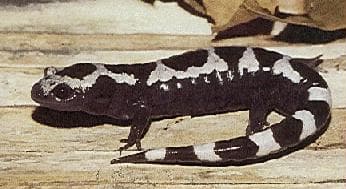
Ambystoma opacum
The marbled salamander (Ambystoma opacum) is a stout, terrestrial salamander found in the eastern United States, distinguished by its striking black and white banded pattern. Females typically have light gray bands, while males exhibit bright white bands, with males also possessing a larger proportion of white on their dorsal surface. This species spends most of its life under logs or in burrows and relies on seasonally flooded areas for breeding.

Ambystoma maculatum
The spotted salamander (Ambystoma maculatum) is a species of mole salamander native to eastern North America. It is distinguished by its black body adorned with two rows of yellow or orange spots running from its head to its tail. This amphibian is notable for the symbiotic algae that inhabit its egg masses, a unique relationship among vertebrates.