
Ambystoma maculatum
The spotted salamander (Ambystoma maculatum) is a species of mole salamander native to eastern North America. It is distinguished by its black body adorned with two rows of yellow or orange spots running from its head to its tail. This amphibian is notable for the symbiotic algae that inhabit its egg masses, a unique relationship among vertebrates.
Key Facts
- ›Native to eastern United States and Canada.
- ›Characterized by black coloration with yellow to orange spots.
- ›Breeds in ephemeral vernal pools that exclude fish.
- ›Embryos have a symbiotic relationship with algae (Chlorococcum amblystomatis).
- ›Possesses regenerative abilities for limbs, tail, and even parts of the head.
- ›Can live up to 20 years, with some individuals reaching 30 years.

Yellow-Spotted Salamander
Mature Forests, Vernal Pools, Ephemeral Pools, Forests With Well-Drained Soils, Burrows Dug By Small Mammals
Eastern United States, Canada, Nova Scotia, Lake Superior Region, Southern Georgia, Texas
- Length of 15–25 Cm , Including Tail.
- Females Are Generally Larger Than Males.
- Stout Body With A Wide Snout.
- Main Color Is Black, Sometimes Bluish-Black, Dark Gray, Dark Green, Or Dark Brown.
- Two Uneven Rows of Yellowish-Orange Spots Run From the Head To the Tail.
- Spots On the Head Are More Orange, While Body Spots Are More Yellow.
- Underside Is Slate Gray and Pink.
- Females Have Brighter-Colored Spots; Males Have Less Bright Spots Covering A Larger Dorsal Area.
Earthworms, Slugs, Snails, Spiders, Millipedes, Centipedes, Insects, Algae, Other Invertebrates, Smaller Salamanders
- Fossorial
- Rarely Comes Above Ground Except After Rain Or For Foraging/Breeding.
- Brumates Underground During Winter.
- Emerges From Underground In Spring After Rain and When Temperatures Rise Above 4°C .
- Migrates To Breeding Ponds .
- Uses Hiding, Tail Autotomy, and Toxic Skin Secretions For Defense.
- Exhibits Regenerative Abilities.
- Larvae Occupy Refuges In Vegetation and Reduce Activity In the Presence of Predators.
- May Use Landmark Learning and Geotaxis For Orientation.
- Males Emerge Earlier Than Females For Breeding.
Herbicide Use Affecting Symbiotic Algae, Pet Trade
About Ambystoma maculatum
Spotted Salamander (Ambystoma maculatum)
The spotted salamander, scientifically known as Ambystoma maculatum, is a common amphibian native to the eastern United States and Canada. This species is readily identifiable by its robust, black body, typically measuring between 15 to 25 cm in length, and marked by two distinct rows of yellow to orange spots that extend from its head to the tip of its tail. Females tend to be larger and exhibit brighter coloration than males.
Habitat and Distribution
Spotted salamanders primarily inhabit mature deciduous forests, favoring areas with well-drained soils and access to ephemeral vernal pools. These pools are crucial breeding sites as they dry out seasonally, preventing the establishment of fish that would prey on salamander eggs and larvae. During non-breeding periods, they spend much of their time underground in burrows, often those created by small mammals. Their geographic range spans from Nova Scotia and the Lake Superior region down to southern Georgia and Texas.
Life Cycle and Unique Symbiosis
A remarkable characteristic of Ambystoma maculatum is the symbiotic relationship its eggs form with the alga Chlorococcum amblystomatis. This is the only known instance where vertebrate cells host an endosymbiont microbe, excluding mitochondria. The algae reside within the egg capsule, providing oxygen and nutrients to the developing embryo through photosynthesis while metabolizing the embryo's waste products. This mutualistic interaction aids significantly in embryonic development. The larval stage lasts for two to four months, after which the young salamanders metamorphose and leave the water.
Behavior and Defense
Spotted salamanders are largely fossorial, meaning they live underground, and are most active during humid conditions, especially after rainfall. They migrate in large numbers to their breeding ponds in early spring, an event sometimes referred to as the 'Big Night.' For defense, they rely on camouflage, hiding in leaf litter or burrows, the ability to detach their tails (autotomy), and the secretion of a mild toxin from skin glands when threatened. These salamanders also possess impressive regenerative capabilities, able to regrow lost limbs, tails, and even parts of internal organs.
Source: Wikipedia ↗
Frequently Asked Questions
What is the scientific name for the spotted salamander?
The scientific name for the spotted salamander is Ambystoma maculatum. The genus name 'Ambystoma' comes from Greek words meaning 'blunt mouth,' and 'maculatum' is Latin for 'spotted.'
What do spotted salamanders eat?
Spotted salamanders prey on a variety of invertebrates including earthworms, slugs, snails, spiders, millipedes, and centipedes. Their larvae are aggressive predators and may even cannibalize others if food is scarce.
Where do spotted salamanders live?
These salamanders are typically found in mature forests with access to ponds or vernal pools for breeding. Outside the breeding season, they inhabit well-drained soils within forests, often utilizing burrows dug by small mammals.
What is unique about spotted salamander eggs?
Spotted salamander eggs are notable for hosting symbiotic algae, Chlorococcum amblystomatis, within their jelly-like casings. This is the only known instance of vertebrate cells hosting an endosymbiont microbe outside of mitochondria, where the algae provide oxygen and nutrients and remove waste.
How do spotted salamanders defend themselves?
Spotted salamanders employ several defense mechanisms. They can hide in burrows or leaf litter, detach their tails (autotomy), and excrete a toxic milky liquid from poison glands located on their back and neck when disturbed.
What is the typical lifespan of a spotted salamander?
Spotted salamanders typically live around 20 years in the wild. However, some individuals have been recorded to live as long as 30 to 32 years.
Related Salamander and Newt species
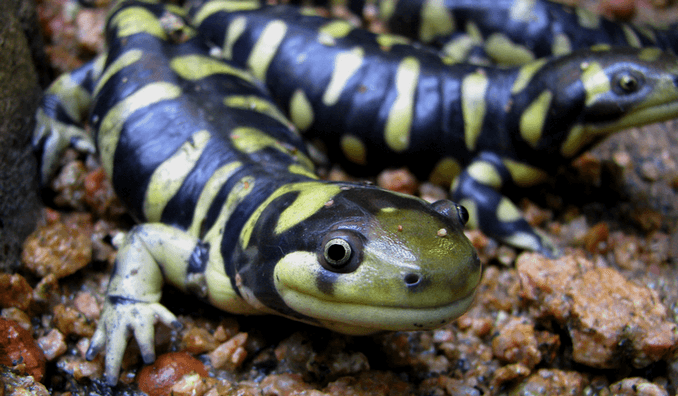
Ambystoma tigrinum
The tiger salamander (Ambystoma tigrinum) is one of the largest terrestrial salamanders native to North America. It is characterized by its distinctive yellow or greenish-yellow markings on a black or dark brown body, and it emits a bright fluorescence under UV light. These amphibians spend much of their lives in burrows and are primarily terrestrial as adults, returning to water only to breed.

Ambrosi's cave salamander
Ambrosi's cave salamander, also known as the Spezia cave salamander, is a species of salamander endemic to a small region of northwestern Italy. It inhabits temperate forests, rocky areas, caves, and subterranean environments, distinguishing itself with a variable coloration ranging from brown to black, often with marbling or mottling. This species is critically endangered due to habitat loss and its very restricted range.
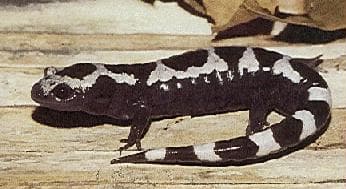
Ambystoma opacum
The marbled salamander (Ambystoma opacum) is a stout, terrestrial salamander found in the eastern United States, distinguished by its striking black and white banded pattern. Females typically have light gray bands, while males exhibit bright white bands, with males also possessing a larger proportion of white on their dorsal surface. This species spends most of its life under logs or in burrows and relies on seasonally flooded areas for breeding.