
Batrachoseps altasierrae
Batrachoseps altasierrae·Plethodontidae
Batrachoseps altasierrae is a species of lungless salamander belonging to the genus Batrachoseps, commonly known as slender salamanders. These amphibians are characterized by their slender, snake-like bodies, small limbs, and a distinctive four-toed foot structure. They inhabit a range extending from Oregon and California in the United States down to northern Baja California in Mexico.
Key Facts
- ›Belongs to the genus Batrachoseps, commonly referred to as slender salamanders.
- ›Possesses four toes on each foot, a distinguishing feature among lungless salamanders.
- ›Feeds primarily on small invertebrates such as springtails, mites, and spiders.
- ›Features mature red blood cells that lack a nucleus, a trait typically found only in mammals.
- ›Native to regions including Oregon, California, and northern Baja California.
- ›Part of the Plethodontidae family, which are known as lungless salamanders.

Slender Salamander
Diverse Environments
Oregon, California, Northern Baja California
Long Slender Snake-Shaped Bodies, Very Small Limbs That Appear Almost Vestigial, Four Toes On Each Foot
Small Insects, Springtails, Small Bark Beetles, Crickets, Young Snails, Mites, Spiders
- Use Long Frog-Like Projectile Tongues To Grab Prey
About Batrachoseps altasierrae
Batrachoseps altasierrae is a species of lungless salamander belonging to the genus Batrachoseps, commonly known as slender salamanders. This genus is characterized by its members' distinctive four toes on each foot, a feature that helps distinguish them from other lungless salamanders.
Physiology and Diet
Slender salamanders, including Batrachoseps altasierrae, share a common physiology of being lungless. They possess long, slender, snake-shaped bodies and remarkably small limbs that can appear almost vestigial in some species. Their diet primarily consists of small invertebrates, such as springtails, mites, spiders, small bark beetles, crickets, and young snails. Like many salamanders in the Plethodontidae family, they utilize long, projectile tongues to rapidly capture their prey.
A particularly noteworthy physiological trait of the genus Batrachoseps is that their mature red blood cells lack a nucleus. This characteristic is highly unusual, as it is a trait typically found only in mammals and certain species of Antarctic fish, differentiating them significantly from most other vertebrates.
Geographic Distribution
The range of Batrachoseps species extends from the northwestern United States, specifically Oregon and parts of California, southward into northern Baja California, Mexico. Within California, these slender salamanders demonstrate a notable adaptability, capable of tolerating a diverse array of environments, provided their fundamental ecological needs are met.
Source: Wikipedia ↗
Frequently Asked Questions
What distinguishes Batrachoseps altasierrae from other salamanders?
Batrachoseps altasierrae, like other members of its genus, is a lungless salamander and has a slender, snake-like body with very small limbs. A key distinguishing feature is the presence of only four toes on each foot.
What is the typical diet of Batrachoseps altasierrae?
The primary diet of Batrachoseps altasierrae consists of small insects and invertebrates. This includes prey like springtails, small bark beetles, crickets, young snails, mites, and spiders, which they capture using their projectile tongues.
Where is Batrachoseps altasierrae found geographically?
This species is distributed across a significant range, extending from Oregon and California in the United States down to northern Baja California in Mexico. They can adapt to various environments within this region as long as their basic needs are met.
What is unique about the blood cells of Batrachoseps species?
A remarkable physiological trait of mature red blood cells in the genus Batrachoseps, including B. altasierrae, is the absence of a nucleus. This characteristic is exceptionally rare among vertebrates, being known to occur primarily in mammals and certain Antarctic fish.
Related Salamander and Newt species
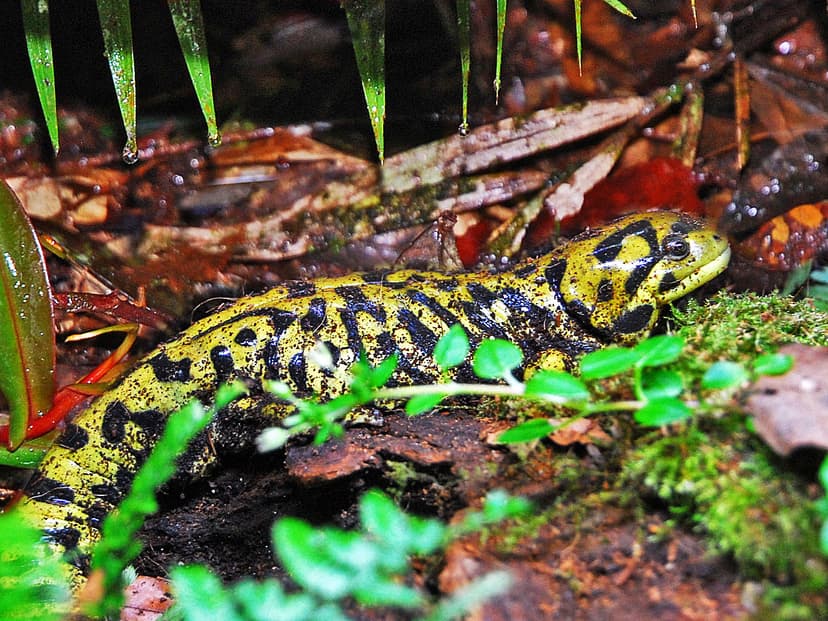
Barred tiger salamander
The barred tiger salamander (Ambystoma mavortium), also known as the western tiger salamander, is a large species of mole salamander found in western North America. It is distinctive for its tiger-like coloring, with bars and spots of muddy yellow on a dark background, and exhibits variable morphologies, including a cannibalistic form.

Batrachoseps gavilanensis
The Gabilan Mountains slender salamander (Batrachoseps gavilanensis) is a species of salamander endemic to California's Central Coast region. It is distinguished by its gray coloration with brown and black washes, white speckling, and a unique characteristic of having only four toes on both its front and hind feet, unlike its relatives.

Blue-spotted salamander
The blue-spotted salamander (Ambystoma laterale) is a mole salamander found in the Great Lakes region and northeastern United States, as well as parts of Ontario and Quebec in Canada. Its most distinctive feature is its bluish-black skin adorned with blue and white flecks and spots. This species is notable for its complex reproductive strategies, including unisexual lineages that can reproduce through gynogenesis.