
Barred tiger salamander
The barred tiger salamander (Ambystoma mavortium), also known as the western tiger salamander, is a large species of mole salamander found in western North America. It is distinctive for its tiger-like coloring, with bars and spots of muddy yellow on a dark background, and exhibits variable morphologies, including a cannibalistic form.
Key Facts
- ›Grows from 7.6 to 38.1 CM (3.0 to 15.0 in), making it one of the largest North American salamanders.
- ›Possesses a broad head and sturdy body with a color pattern of grey, dark brown, or black overlaid with yellow bars and spots.
- ›Primarily terrestrial as adults, with a fully aquatic larval stage that possesses external gills.
- ›Exhibits opportunistic feeding habits and can include a cannibalistic morph with specialized teeth for consuming larger prey.
- ›Found in a variety of lowland habitats including forests, woodlands, deserts, and open fields.
- ›Recognized by several states as official symbols, including Kansas, Colorado, and Wyoming.
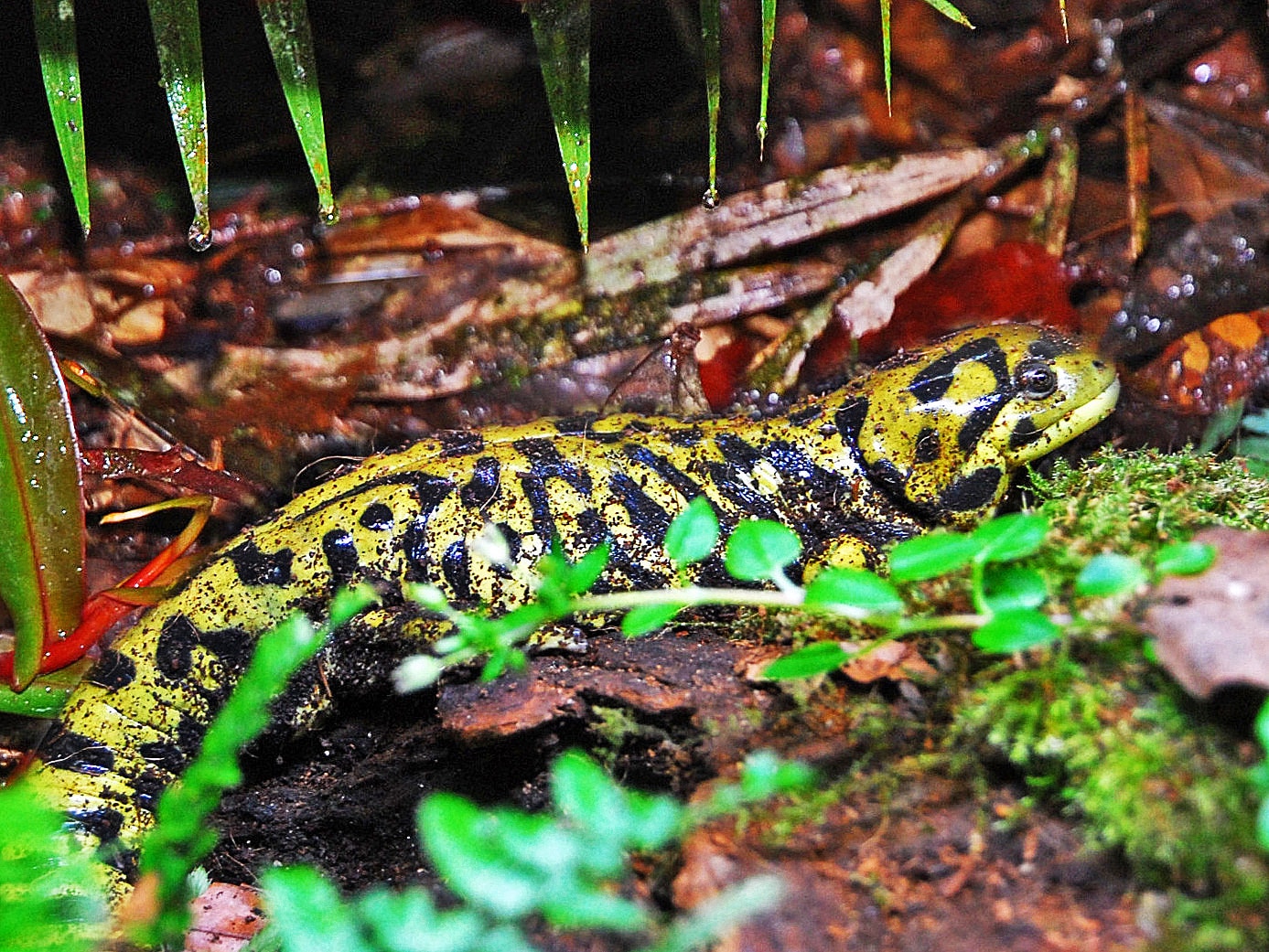
Western Tiger Salamander
Lowland Deciduous Forests, Coniferous Forests, Woodlands, Open Fields, Rough Ground, Upland Meadows, Grasslands, Deserts, Semideserts, Streams, Aquatic Environments
Western Canada, Western United States, Northern Mexico, Southern Arizona
- Broad Head and Sturdy Body.
- Dorsal Surface Is Grey, Dark Brown, Or Black With Bars and Spots of Muddy Yellow.
- Ventral Surface Varies From Light To Dark.
- Larvae Have Alternating Dark and Light Blotches On the Dorsal Surface and Pale Stripes Along the Sides.
- Cannibalistic Morphs Have Large Vomerine Teeth, Slim Bodies, and Wider Heads.
Insects, Slugs, Earthworms, Larger Organisms, Fathead Minnows
- Primarily Nocturnal.
- Opportunistic Feeders.
- Terrestrial As Adults.
- Entirely Aquatic In the Juvenile, Larval Stage.
- Breeding Occurs During Most Months of the Year, With Eggs Laid In Water.
- Exhibits Cannibalism, Particularly In Drier Areas and Competitive Waters.
Habitat Degradation, Habitat Fragmentation, Introduced Species, Disease Outbreaks
About Barred tiger salamander
The barred tiger salamander, scientifically known as Ambystoma mavortium and also referred to as the western tiger salamander, is a prominent species of mole salamander native to western North America. It is recognized as one of the largest salamander species found on the continent, distinguished by its robust physique and a striking coloration pattern that gives it a tiger-like appearance. This coloration typically involves a base of grey, dark brown, or black, adorned with bars and spots of muddy yellow.
Description and Morphology
Adult barred tiger salamanders generally measure between 7.6 to 16.5 cm (3.0 to 6.5 inches) in length. However, the species exhibits neoteny, a phenomenon where individuals retain larval features into adulthood, allowing some neotenic forms to reach considerably larger sizes, up to 17.8 to 38.1 cm (7.0 to 15.0 inches). The species possesses a broad head and a sturdy body. A notable characteristic is the existence of two main feeding morphologies: a typical form and a cannibalistic form. The cannibalistic morph is distinguished by enhanced features such as large vomerine teeth, a slimmer body, and a wider head, which facilitate the consumption of larger prey items, including other salamanders and small fish. This adaptation is particularly advantageous in environments with high competition for food resources.
Behavior and Habitat
Primarily nocturnal, barred tiger salamanders are adept at ambushing prey, demonstrating opportunistic feeding behaviors. Their diet consists of a variety of invertebrates, including insects, slugs, and earthworms. As adults, they are largely terrestrial, inhabiting a diverse array of environments. These include lowland deciduous and coniferous forests, woodlands, open fields, grasslands, deserts, semideserts, and areas near streams. The larval stage, however, is entirely aquatic and characterized by the presence of external gills.
Distribution and Reproduction
The natural distribution of the barred tiger salamander spans lower western Canada, the western United States, and northern Mexico. In Canada, they are found in British Columbia, Alberta, Saskatchewan, and Manitoba, while their range in the United States extends from the Dakotas and Oklahoma down to the southernmost tip of Texas. Breeding is a protracted affair, occurring during most months of the year. The salamanders lay their eggs in water, and the developing larvae are exclusively aquatic, relying on water bodies for their growth and development.
Subspecies and Conservation
Five subspecies of Ambystoma mavortium are recognized: the Gray barred tiger salamander (A. m. diaboli), the barred tiger salamander (A. m. mavortium), the blotched tiger salamander (A. m. melanostictum), the Arizona tiger salamander (A. m. nebulosum), and the Sonoran tiger salamander (A. m. stebbinsi). The Sonoran tiger salamander subspecies, in particular, faces significant conservation challenges. It was classified as endangered in 1997 due to threats such as habitat degradation and fragmentation caused by increased human activity, as well as disease outbreaks and predation by introduced species like crayfish. The larvae of some tiger salamander species are also introduced into new areas, such as southern Arizona, where they are sometimes used as fish bait.
Cultural Significance
The barred tiger salamander holds symbolic importance in several U.S. states. It is recognized as the state amphibian of Kansas and Colorado. The blotched tiger salamander subspecies was also designated as Wyoming's official state amphibian in 2019. These designations often stem from educational initiatives, such as petitions by schoolchildren advocating for their state to recognize the species.
In Captivity
Tiger salamanders are commonly kept in captivity due to their hardy nature and ease of feeding, making them popular pets. Their larger size also contributes to their suitability as captives. The larval stage of tiger salamanders is frequently sold as fishing bait, often marketed under names such as "mud puppies" or "water dogs."
Source: Wikipedia ↗
Frequently Asked Questions
What is the scientific name for the barred tiger salamander?
The scientific name for the barred tiger salamander is Ambystoma mavortium. It belongs to the Ambystoma genus, which encompasses several species of mole salamanders.
What is the typical size of a barred tiger salamander?
Adult barred tiger salamanders typically range from 7.6 to 16.5 cm (3.0 to 6.5 inches) in length. However, neotenic forms can grow significantly larger, reaching lengths of 17.8 to 38.1 cm (7.0 to 15.0 inches).
What do barred tiger salamanders eat?
Barred tiger salamanders are opportunistic feeders, consuming a variety of prey they can catch. Their diet includes insects, slugs, and earthworms. Cannibalistic morphs may also prey on other salamanders or even fish.
Where are barred tiger salamanders found?
These salamanders are primarily found in western Canada, the western United States, and northern Mexico. Their range extends across provinces like British Columbia and Alberta, and states from the Dakotas to Texas.
What are the different habitats of the barred tiger salamander?
Barred tiger salamanders inhabit a range of environments, including lowland deciduous and coniferous forests, woodlands, open fields, grasslands, deserts, semideserts, and along streams. Their larval stage is entirely aquatic.
Are there different forms of barred tiger salamanders?
Yes, there are two main feeding morphologies: a typical form and a cannibalistic form. The cannibalistic morph is characterized by larger teeth and a wider head, enabling it to consume larger prey and potentially reduce competition.
What is the conservation status of the Sonoran tiger salamander subspecies?
The Sonoran tiger salamander (Ambystoma mavortium stebbinsi) was classified as an endangered species in 1997. This status is due to habitat degradation, fragmentation caused by human activity, and threats from introduced species and diseases.
Related Salamander and Newt species

Batrachoseps major
The Garden slender salamander (Batrachoseps major) is a species of salamander found in southern California and northern Baja California, Mexico. It is distinguished by having only four toes on its hind feet and typically a pale underside, making it identifiable amongst similar species.
Black mountain salamander
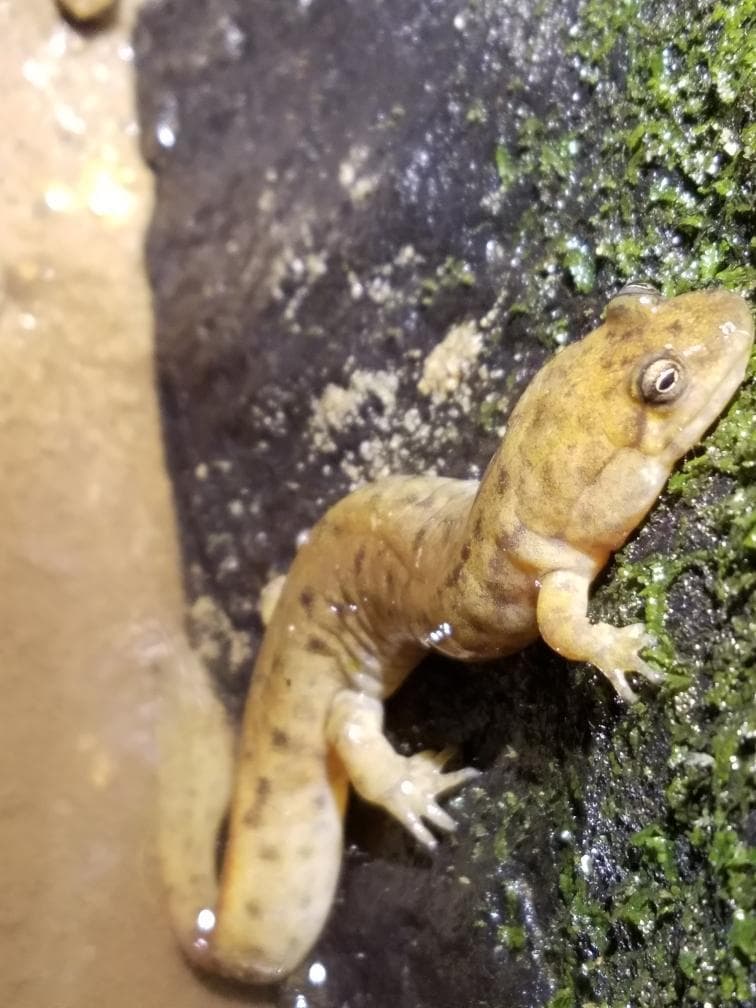
The black mountain salamander (Desmognathus welteri) is a species of salamander found in the southern Appalachian Mountains of the southeastern United States. It is characterized by its robust body, short limbs, and variable brown coloration. This secretive salamander primarily inhabits temperate forests near swift-flowing streams and is known for its lengthy larval development and dedicated maternal care for its eggs.

Amphiuma means
The two-toed amphiuma (Amphiuma means) is a large aquatic salamander native to the southeastern United States. It is distinguished by its four vestigial legs, each with two toes, and its dark, unicolored skin. Commonly but incorrectly referred to as a "congo snake" or "blind eel," this species inhabits shallow, vegetated waters and can deliver a significant bite when threatened.