
Batrachoseps major
The Garden slender salamander (Batrachoseps major) is a species of salamander found in southern California and northern Baja California, Mexico. It is distinguished by having only four toes on its hind feet and typically a pale underside, making it identifiable amongst similar species.
Key Facts
- ›Adults range from 3.2–5.9 CM in length with 17-21 costal grooves.
- ›Possesses only four toes on its hind feet, a characteristic of the Batrachoseps genus.
- ›Primarily inhabits lowland areas, including coastal sage scrub, oak woodlands, and conifer forests.
- ›Can adapt to urban environments, making it one of the few native amphibians found in developed areas.
- ›Feeds on worms, insects, and other invertebrates, capturing prey with its long tongue.
- ›The subspecies B. M. aridus, the Desert slender salamander, is considered endangered and possibly extinct.

Garden Slender Salamander, Southern California Slender Salamander
Lowland Habitats, Coastal Sage Scrub, Oak Woodland, Conifer Forests, North-Facing Slopes of Desert Mountains, Urban Development, Yards, Limestone Seeps With Permanent Water
Northern Baja California, Mexico, Southern California, United States, San Fernando Valley, Ensenada, El Rosario, Sierra De San Pedro MáRtir, Santa Catalina Island, Coronado Islands, Todos Santos Islands, Los Angeles County, San Diego County, Santa Rosa Mountains
- Small Salamander, Larger Than Most Other Batrachoseps Species
- Adult Length: 3.2–5.9 Cm
- 17-21 Costal Grooves
- Four Toes On Hind Feet
- Color Is Variable, Usually Some Form of Gray
- Pale Underside Is A Key Identification Feature
Worms, Insects, Other Invertebrates
- Active Above Ground In Wetter Winter Months
- Active Near the Surface When Soil Temperatures Are Between 5–21 °C
- Uses Long Tongue To Grab Prey
- Swallowing Prey Can Take Longer Than 30 Minutes
Habitat Loss
About Batrachoseps major
Batrachoseps major: The Garden Slender Salamander
The Garden slender salamander, scientifically known as Batrachoseps major, is a species of salamander native to a specific region of southern California in the United States and northern Baja California in Mexico. This species is part of the Plethodontidae family, commonly known as lungless salamanders.
Description and Identification
Batrachoseps major is distinguished by its relatively small size, with adults typically measuring between 3.2 and 5.9 centimeters in length. A notable characteristic shared with other members of the Batrachoseps genus is the presence of only four toes on its hind feet. While coloration can vary, individuals are usually a shade of gray. A key feature for identification, especially when encountering similar species like B. nigriventris, is the pale underside of B. major. This species is generally larger and more robust than B. nigriventris.
Distribution and Habitat
The natural range of the Garden slender salamander is confined to a portion of the California Floristic Province. It is found from the San Fernando Valley in the north down to Ensenada in Baja California, with historical records extending further south. The species also inhabits islands off the coast, though its presence there is likely due to introduction. Despite its limited geographic spread, B. major is generally abundant within its territory.
This salamander primarily occupies lowland habitats, including coastal sage scrub, oak woodlands, and conifer forests. It has demonstrated a remarkable ability to adapt to human-altered landscapes, including suburban yards and other urban environments, allowing it to persist where many other native amphibians cannot. In its northern range, it can coexist with B. nigriventris, sometimes found under the same cover.
Ecology and Behavior
Due to the arid summer climate of coastal California and northwestern Baja California, the Garden slender salamander's above-ground activity is largely restricted to the wetter winter months, typically from October to June. They are most active when soil temperatures are between 5 and 21 degrees Celsius. Their diet consists of worms, insects, and other invertebrates, which they capture using a long, sticky tongue. The process of swallowing prey can be lengthy, sometimes exceeding 30 minutes.
Conservation
The Garden slender salamander is classified as Least Concern by the IUCN, largely due to its adaptability to human-modified habitats and its general abundance. However, habitat loss remains a significant threat. A notable exception is the subspecies Batrachoseps major aridus, known as the Desert slender salamander, which inhabits a very small range in the Santa Rosa Mountains and is listed as endangered. This subspecies has not been recorded since 1996 and may be extinct, though thorough recent surveys have not been conducted.
Source: Wikipedia ↗
Frequently Asked Questions
What are the distinguishing physical features of the Garden slender salamander?
The Garden slender salamander is relatively small, with adults measuring between 3.2 and 5.9 centimeters in length. A key identification feature is its pale underside, and like other members of its genus, it has only four toes on its hind feet.
Where is the Garden slender salamander found?
This species is endemic to a portion of southern California in the United States and northwestern Baja California in Mexico. Its range extends from the San Fernando Valley south to Ensenada and includes several islands.
What kind of habitats does Batrachoseps major prefer?
Batrachoseps major primarily inhabits lowland areas, including coastal sage scrub, oak woodlands, and conifer forests. It has also shown an ability to adapt to urban development, being found in yards and similar modified habitats where moisture is present.
When is the Garden slender salamander most active?
Due to the dry summers in its native region, Batrachoseps major is most active above ground during the wetter winter months, typically from October to June. Activity occurs when soil temperatures are between 5–21 °C.
What does the Garden slender salamander eat?
Its diet consists of worms, insects, and other invertebrates. The salamander uses its long tongue to capture prey, and swallowing can sometimes take over 30 minutes.
What is the conservation status of the Garden slender salamander?
While threatened by habitat loss, Batrachoseps major is listed as Least Concern by the IUCN. However, one of its subspecies, the Desert slender salamander (B. m. aridus), is federally listed as endangered and may be extinct.
Related Salamander and Newt species
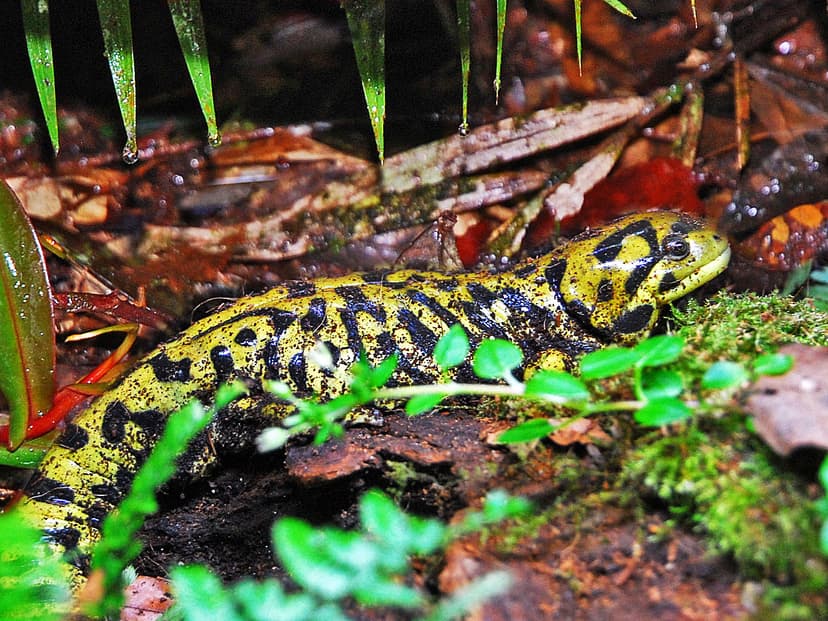
Barred tiger salamander
The barred tiger salamander (Ambystoma mavortium), also known as the western tiger salamander, is a large species of mole salamander found in western North America. It is distinctive for its tiger-like coloring, with bars and spots of muddy yellow on a dark background, and exhibits variable morphologies, including a cannibalistic form.

Batrachoseps attenuatus
The California slender salamander (Batrachoseps attenuatus) is a lungless salamander native to coastal California and southwestern Oregon. It is distinguished by its narrow, worm-like body, four toes on each foot, and a distinctive coloration, typically black with a reddish or brown stripe. This species is adept at foraging in narrow underground burrows and can adapt to some urban environments.

Bolitoglossa platydactyla
Bolitoglossa platydactyla, also known as the broadfoot mushroomtongue salamander, is a species of salamander native to Mexico. It inhabits moist lowland forests, savannas, plantations, and even gardens and urban areas. This species is recognized by its broad feet, which are a distinctive physical characteristic.