
Bolitoglossa platydactyla
Bolitoglossa platydactyla·Plethodontidae
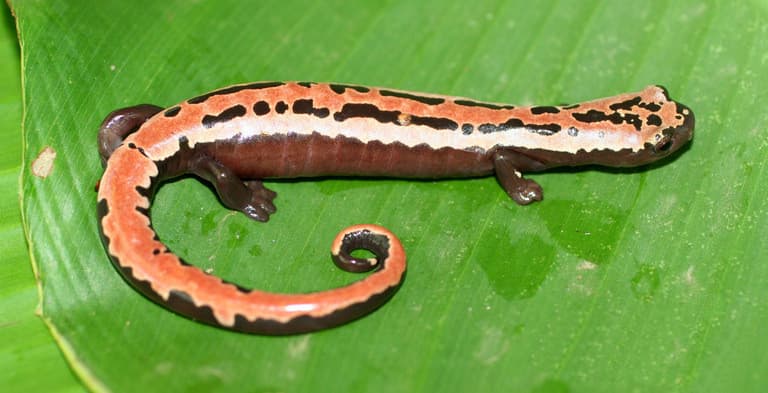
Bolitoglossa platydactyla, also known as the broadfoot mushroomtongue salamander, is a species of salamander native to Mexico. It inhabits moist lowland forests, savannas, plantations, and even gardens and urban areas. This species is recognized by its broad feet, which are a distinctive physical characteristic.
Key Facts
- ›Endemic to Mexico.
- ›Inhabits subtropical or tropical moist lowland forests.
- ›Can be found in moist savanna, plantations, rural gardens, and urban areas.
- ›Its common names include broadfoot mushroomtongue salamander and broad-footed salamander.
- ›Belongs to the family Plethodontidae.
- ›Threatened by habitat loss.

Broadfoot Mushroomtongue Salamander, Broad-Footed Salamander
Subtropical Or Tropical Moist Lowland Forests, Moist Savanna, Plantations, Rural Gardens, Urban Areas
Mexico
Possesses Broad Feet.
Habitat Loss
About Bolitoglossa platydactyla
Bolitoglossa platydactyla, commonly referred to as the broadfoot mushroomtongue salamander or broad-footed salamander, is a species of salamander native to Mexico. It belongs to the family Plethodontidae, a diverse group of lungless salamanders.
Natural Habitat and Distribution
This species is endemic to Mexico, meaning it is found nowhere else in the wild. Its natural habitats are varied and include subtropical or tropical moist lowland forests, moist savannas, plantations, and rural gardens. Notably, Bolitoglossa platydactyla has also adapted to survive in urban areas, demonstrating a degree of resilience to human-modified landscapes.
Physical Characteristics and Conservation
One of the distinguishing features of Bolitoglossa platydactyla is its broad feet, which are reflected in its common names. The primary threat to this species is habitat loss, which endangers its populations by reducing the availability of suitable environments for survival and reproduction. Further research into its specific ecological needs and behaviors would be beneficial for conservation efforts.
Source: Wikipedia ↗
Frequently Asked Questions
What are the common names for Bolitoglossa platydactyla?
Bolitoglossa platydactyla is commonly known as the broadfoot mushroomtongue salamander and the broad-footed salamander. These names highlight its distinctive physical features.
Where is Bolitoglossa platydactyla found naturally?
This species is endemic to Mexico. Its natural range includes various moist environments.
What types of habitats does Bolitoglossa platydactyla prefer?
Bolitoglossa platydactyla thrives in subtropical or tropical moist lowland forests. It is also found in moist savanna, plantations, rural gardens, and even urban areas, indicating adaptability to human-modified landscapes.
What is the primary threat to Bolitoglossa platydactyla?
The main threat to the survival of Bolitoglossa platydactyla is habitat loss. This loss of suitable environments impacts its populations.
What family does Bolitoglossa platydactyla belong to?
Bolitoglossa platydactyla is a member of the family Plethodontidae. This family is known for lungless salamanders.
Related Salamander and Newt species
Bolitoglossa mexicana
The Mexican climbing salamander (Bolitoglossa mexicana) is a lungless salamander species found in Central America, inhabiting diverse forests and gardens. It is distinguished by its direct development, where young hatch as miniature adults, and its reliance on cutaneous respiration, necessitating moist environments.

Batrachoseps major
The Garden slender salamander (Batrachoseps major) is a species of salamander found in southern California and northern Baja California, Mexico. It is distinguished by having only four toes on its hind feet and typically a pale underside, making it identifiable amongst similar species.

Batrachoseps attenuatus
The California slender salamander (Batrachoseps attenuatus) is a lungless salamander native to coastal California and southwestern Oregon. It is distinguished by its narrow, worm-like body, four toes on each foot, and a distinctive coloration, typically black with a reddish or brown stripe. This species is adept at foraging in narrow underground burrows and can adapt to some urban environments.