
Bolitoglossa biseriata
Bolitoglossa biseriata·Plethodontidae
The two-lined climbing salamander (Bolitoglossa biseriata) is a species of salamander native to Panama, western Colombia, and northwestern Ecuador. This arboreal amphibian is distinguished by its preference for humid lowland forests, where it resides within bromeliads and heliconias.
Key Facts
- ›Found in Panama, western Colombia, and northwestern Ecuador.
- ›Inhabits humid lowland forests.
- ›Lives arboreally within bromeliads and heliconias.
- ›Belongs to the Plethodontidae family.
- ›Threatened by habitat loss.

Two-Lined Climbing Salamander, Two-Lined Mushroomtongue Salamander
Humid Lowland Forest, Bromeliads, Heliconias
Panama, Western Colombia, Northwestern Ecuador
Arboreal
Habitat Loss
About Bolitoglossa biseriata
The two-lined climbing salamander, scientifically known as Bolitoglossa biseriata, is a species of salamander belonging to the family Plethodontidae. This amphibian is naturally distributed across Panama, western Colombia, and northwestern Ecuador, inhabiting specific ecological niches within these regions.
Habitat and Lifestyle
Bolitoglossa biseriata is found in humid lowland forests. It is an arboreal species, meaning it spends a significant portion of its life in trees. Its preferred microhabitats include the dense foliage of bromeliads and heliconias, where it likely finds shelter and prey.
Conservation Concerns
The species faces a significant threat from habitat loss. The ongoing destruction and degradation of its natural forest environments are the primary factors endangering its survival. Further research into its specific ecological needs and population status is crucial for developing effective conservation strategies.
Source: Wikipedia ↗
Frequently Asked Questions
What is the scientific name for the two-lined climbing salamander?
The scientific name for the two-lined climbing salamander is Bolitoglossa biseriata. This binomial nomenclature is used to classify the species within the scientific community.
Where is the Bolitoglossa biseriata found naturally?
Bolitoglossa biseriata is naturally found in Panama, western Colombia, and northwestern Ecuador. These regions provide the specific environmental conditions necessary for its survival.
What type of habitat does the two-lined climbing salamander prefer?
The two-lined climbing salamander prefers humid lowland forests. It is an arboreal species, meaning it lives in trees and is often found within bromeliads and heliconias in these forests.
What are the main threats to Bolitoglossa biseriata?
The primary threat to Bolitoglossa biseriata is habitat loss. Destruction or degradation of its natural forest environment puts the species at risk.
Related Salamander and Newt species

Chiropterotriton priscus
The primeval splayfoot salamander (Chiropterotriton priscus) is a species of salamander native to Mexico, found in high-elevation pine and pine-fir forests. It is distinguished by its terrestrial habits, living under fallen logs and bark, and its endemic range on Cerro Potosí and nearby areas.
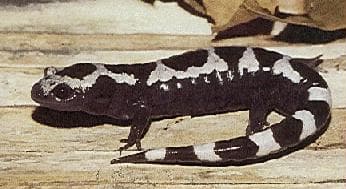
Ambystoma opacum
The marbled salamander (Ambystoma opacum) is a stout, terrestrial salamander found in the eastern United States, distinguished by its striking black and white banded pattern. Females typically have light gray bands, while males exhibit bright white bands, with males also possessing a larger proportion of white on their dorsal surface. This species spends most of its life under logs or in burrows and relies on seasonally flooded areas for breeding.
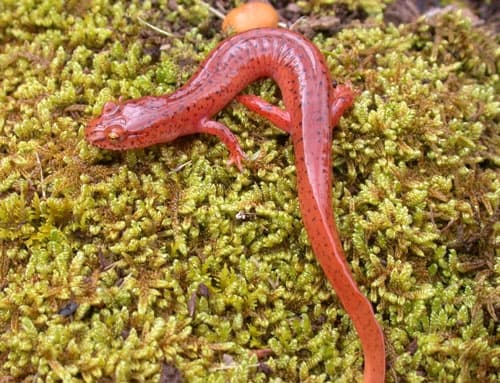
Blue Ridge spring salamander
The Blue Ridge spring salamander, a subspecies of the spring salamander (Gyrinophilus porphyriticus), is found in the southern Appalachian Mountains and adjacent Piedmont regions of the United States. This species is distinguished by a distinctive white line from its eye to its nostril, bordered by a dark line, and its varied dorsal coloration ranging from reddish to orange-yellow with black or brown spots. They inhabit cool springs, mountain springs, and moist forest areas, and are notable for their diet which can include other salamanders.