
Bolitoglossa hartwegi
Bolitoglossa hartwegi·Plethodontidae·Males: 34–47 mm SVL; Females: 34–54 mm SVL
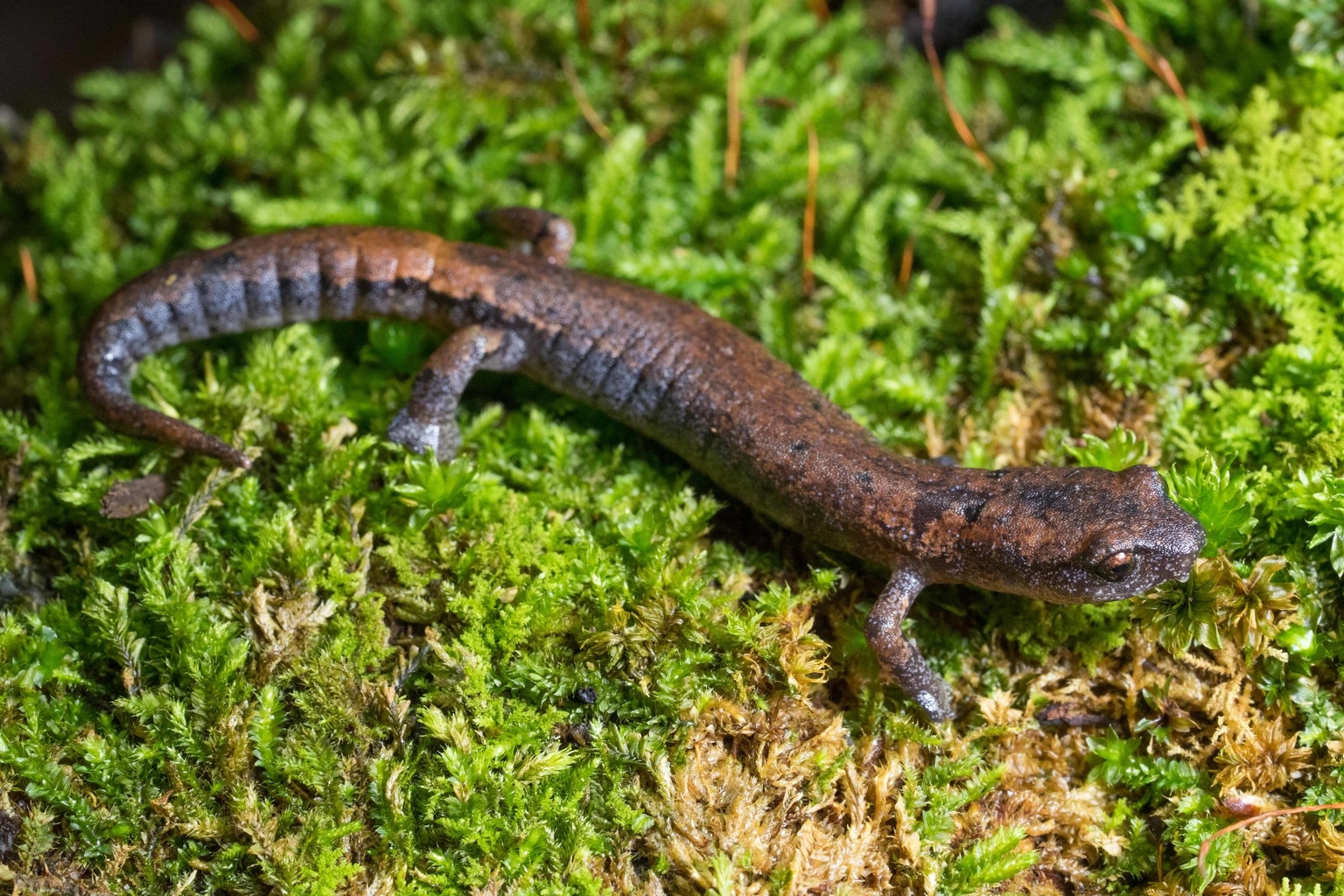
Hartweg's climbing salamander, scientifically known as Bolitoglossa hartwegi, is a species of salamander found in the mountainous regions of north-central Chiapas, Mexico, and the adjacent Guatemalan Sierra de los Cuchumatanes. This species is distinctive for its robust body, relatively short snout, and slender limbs, inhabiting coniferous and oak forests.
Key Facts
- ›Found in north-central Chiapas, Mexico, and the Guatemalan Sierra de los Cuchumatanes.
- ›Inhabits coniferous and oak forests at elevations of 1,200–2,800 meters.
- ›Males range from 34–47 MM and females from 34–54 MM in snout-vent length.
- ›Lives in crevices, under rock flakes, under bark, and arboreal bromeliads.
- ›Tolerates habitat modification but can be threatened by habitat loss.
Hartweg's Climbing Salamander, Hartweg's Mushroomtongue Salamander, Hartweg's Salamander
Coniferous Forests, Oak Forests, Crevices, Under Rock Flakes, Under Bark of Logs, Arboreal Bromeliads
North-Central Chiapas, Mexico, Sierra De Los Cuchumatanes, Guatemala
- Robust Body
- Relatively Short and Truncate Snout
- Slender and Moderately Long Limbs
- Relatively Large Hands and Feet
- Tail Is Robust and About Two Thirds of Snout-Vent Length
Habitat Loss
About Bolitoglossa hartwegi
Hartweg's Climbing Salamander (Bolitoglossa hartwegi)
Hartweg's climbing salamander, known scientifically as Bolitoglossa hartwegi, is a species of salamander belonging to the Plethodontidae family. This species is endemic to the mountainous regions of north-central Chiapas in Mexico and the adjacent Sierra de los Cuchumatanes in Guatemala. The species is named in honor of Norman Hartweg, an American herpetologist celebrated for his extensive work on the amphibians and reptiles of Chiapas.
Description and Habitat
Adult Bolitoglossa hartwegi exhibit a robust body structure, characterized by a relatively short and truncate snout, slender limbs, and moderately long appendages. The tail is robust and measures approximately two-thirds of the snout-vent length (SVL). Males typically range from 34–47 mm in SVL, while females are slightly larger, measuring between 34–54 mm in SVL. These salamanders inhabit coniferous and oak forests, frequently found in proximity to limestone outcrops. Their microhabitats include crevices, spaces beneath rock flakes, the undersides of rotting logs, and arboreal bromeliads, typically at elevations between 1,200 and 2,800 meters above sea level.
Conservation
Bolitoglossa hartwegi is generally considered a common species and demonstrates a reasonable capacity to tolerate modifications to its habitat. However, habitat loss remains a significant threat to its long-term survival. Despite its adaptability, ongoing environmental changes and human development could impact its populations in the future.
Source: Wikipedia ↗
Frequently Asked Questions
What is the scientific name for Hartweg's climbing salamander?
The scientific name for Hartweg's climbing salamander is Bolitoglossa hartwegi. This name honors Norman Hartweg, an American herpetologist recognized for his extensive studies of Chiapan amphibians and reptiles.
Where is Bolitoglossa hartwegi found?
Bolitoglossa hartwegi is naturally distributed in the north-central Chiapas region of Mexico and the adjacent Sierra de los Cuchumatanes in Guatemala.
What kind of habitat does Hartweg's climbing salamander prefer?
This salamander prefers coniferous and oak forests, often found in association with limestone outcrops. They inhabit crevices, rock flakes, under bark of logs, and even arboreal bromeliads at high elevations.
What are the physical characteristics of Bolitoglossa hartwegi?
Bolitoglossa hartwegi has a robust body with a relatively short, truncate snout. Its limbs are slender and moderately long, with relatively large hands and feet. Males typically measure 34–47 mm and females 34–54 mm in snout-vent length.
Is Hartweg's climbing salamander endangered?
While it is considered a common species that tolerates habitat modification reasonably well, habitat loss is still identified as a potential threat to Bolitoglossa hartwegi.
Related Salamander and Newt species

Chiropterotriton priscus
The primeval splayfoot salamander (Chiropterotriton priscus) is a species of salamander native to Mexico, found in high-elevation pine and pine-fir forests. It is distinguished by its terrestrial habits, living under fallen logs and bark, and its endemic range on Cerro Potosí and nearby areas.
Blue Ridge spring salamander
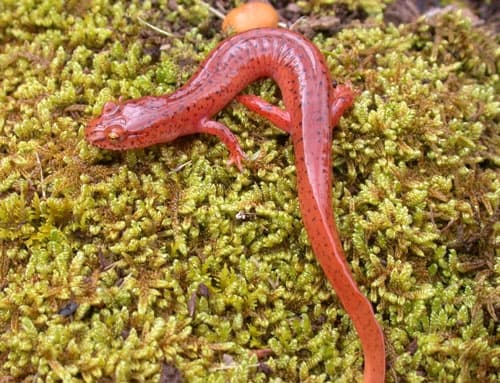
The Blue Ridge spring salamander, a subspecies of the spring salamander (Gyrinophilus porphyriticus), is found in the southern Appalachian Mountains and adjacent Piedmont regions of the United States. This species is distinguished by a distinctive white line from its eye to its nostril, bordered by a dark line, and its varied dorsal coloration ranging from reddish to orange-yellow with black or brown spots. They inhabit cool springs, mountain springs, and moist forest areas, and are notable for their diet which can include other salamanders.
Ambystoma leorae
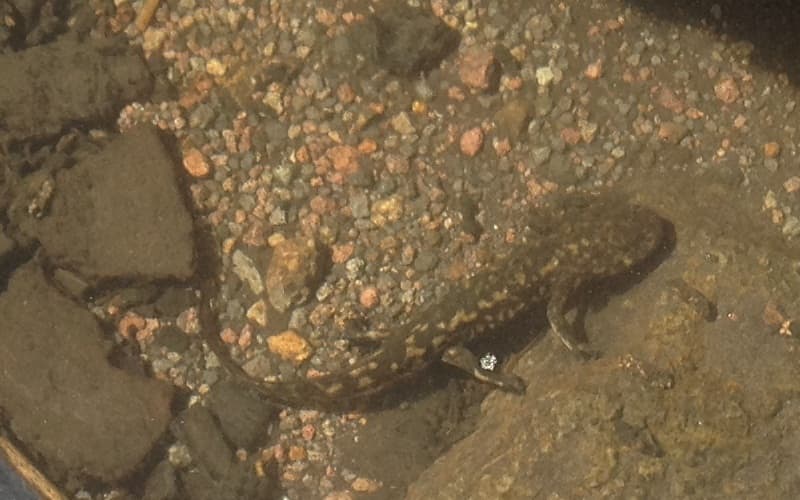
The Leora's stream salamander (Ambystoma leorae) is a critically endangered mole salamander endemic to a very small region within Mexico's Iztaccihuatl-Popocatepetl National Park. Its survival is threatened by its specific water quality requirements and human activities such as water extraction, cattle grazing, and direct consumption, leading to a single known population persisting on Mount Tlaloc.