
Bolitoglossa mexicana
The Mexican climbing salamander (Bolitoglossa mexicana) is a lungless salamander species found in Central America, inhabiting diverse forests and gardens. It is distinguished by its direct development, where young hatch as miniature adults, and its reliance on cutaneous respiration, necessitating moist environments.
Key Facts
- ›Belongs to the Plethodontidae family, characterized by being lungless.
- ›Found in Belize, Guatemala, Honduras, Mexico, and potentially Nicaragua.
- ›Inhabits subtropical/tropical dry and moist forests, plantations, and gardens.
- ›Reproduces via direct development, bypassing a larval stage.
- ›Threatened primarily by habitat loss.
- ›Skin respiration requires moist environments to balance oxygen absorption and water loss.
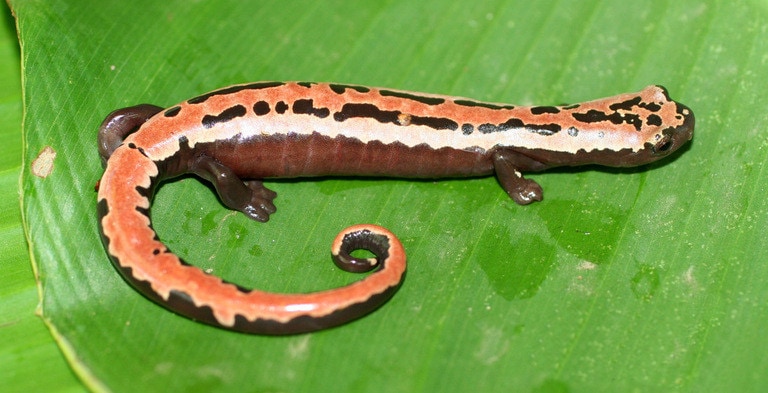
Mexican Climbing Salamander
Subtropical Or Tropical Dry Forests, Subtropical Or Tropical Moist Lowland Forests, Subtropical Or Tropical Moist Montane Forests, Plantations, Rural Gardens
Belize, Guatemala, Honduras, Mexico, Nicaragua
Lungless, Breathes Through Skin
- Habitat Selection and Behavior Are Influenced By the Tradeoff Between Oxygen Absorption and Water Loss.
- Smaller Individuals Benefit From Greater Oxygen Uptake At the Cost of Increased Water Loss.
Habitat Loss
About Bolitoglossa mexicana
The Mexican climbing salamander, scientifically known as Bolitoglossa mexicana, is a species of salamander native to Central America. It is found across Belize, Guatemala, Honduras, Mexico, and potentially extends into Nicaragua. This species thrives in a variety of forested environments, including subtropical and tropical dry forests, moist lowland forests, and montane forests. It also demonstrates adaptability by inhabiting human-altered landscapes such as plantations and rural gardens.
A defining characteristic of Bolitoglossa mexicana, shared with other members of the Plethodontidae family, is its lack of lungs. Instead, it relies entirely on breathing through its skin, a process known as cutaneous respiration. This method necessitates consistently moist habitats to ensure efficient gas exchange and to minimize water loss from its body.
Reproduction in the Mexican climbing salamander is notable for its direct development. Unlike many amphibians that undergo a free-living larval stage, the embryos of Bolitoglossa mexicana hatch as fully formed, miniature adults. This reproductive strategy influences its life cycle and habitat requirements.
The behavior and habitat selection of Bolitoglossa mexicana are significantly shaped by the delicate balance between oxygen absorption and water conservation. Smaller individuals, for instance, can achieve greater oxygen uptake due to their higher surface-area-to-volume ratio, but this comes at the cost of increased susceptibility to dehydration. The primary threat to this species is habitat loss, which directly impacts the moist environments essential for its survival and respiration.
Source: Wikipedia ↗
Frequently Asked Questions
What are the natural habitats of the Mexican climbing salamander?
The Mexican climbing salamander is found in a variety of habitats including subtropical and tropical dry forests, moist lowland forests, and moist montane forests. It also adapts to human-modified environments like plantations and rural gardens.
How does the Mexican climbing salamander breathe?
As a member of the Plethodontidae family, it is lungless and breathes entirely through its skin. This cutaneous respiration requires consistently moist environments to facilitate gas exchange and prevent excessive water loss.
What is unique about the reproduction of Bolitoglossa mexicana?
This species reproduces through direct development. This means that the young hatch from eggs as fully formed miniature adults, rather than going through a free-living larval stage which is common in many other amphibian species.
What factors influence the habitat choices of smaller Mexican climbing salamanders?
Smaller individuals face a greater challenge in balancing oxygen absorption with water loss. They benefit from a higher surface area to volume ratio for increased oxygen uptake, but this also leads to a greater risk of dehydration.
What are the main threats to the Mexican climbing salamander?
The primary threat documented for Bolitoglossa mexicana is habitat loss. Changes and destruction of its natural forest and garden environments significantly impact its survival.
Related Salamander and Newt species

Bolitoglossa platydactyla
Bolitoglossa platydactyla, also known as the broadfoot mushroomtongue salamander, is a species of salamander native to Mexico. It inhabits moist lowland forests, savannas, plantations, and even gardens and urban areas. This species is recognized by its broad feet, which are a distinctive physical characteristic.

Bolitoglossa salvinii
Salvin's salamander (Bolitoglossa salvinii) is a species of salamander native to El Salvador and Guatemala. It inhabits subtropical and tropical moist forests, as well as degraded former forest areas, and is distinguished by its vulnerability to habitat loss and fragmentation.

Bolitoglossa rufescens
The northern banana salamander (Bolitoglossa rufescens) is a small, terrestrial and arboreal salamander found in the Atlantic slopes of Meso-America, from Mexico through Guatemala, Belize, and northern Honduras. It is distinctive for its lungless respiration and its adaptation to life within bromeliads in tropical and subtropical moist lowland rain forests and mountain ecosystems.