
Bolitoglossa resplendens
Near-Threatened
Bolitoglossa lincolni, also known as Lincoln's mushroomtongue salamander, is a species of salamander native to high-elevation forests in Guatemala and Mexico. It is distinguished by its fragmented distribution and vulnerability to habitat degradation, which has led to its classification as near-threatened.
Key Facts
- ›Found in high-elevation forests (1,700–3,000 M) in Guatemala and Mexico.
- ›Classified as Near-Threatened by the IUCN due to fragmented distribution and habitat loss.
- ›Suffers from deforestation, agricultural expansion, and grazing.
- ›Belongs to the family Plethodontidae and the subgenus Magnadigita.
- ›Has been reported to hybridize with Bolitoglossa franklini.

Lincoln's Mushroomtongue Salamander, Lincoln's Salamander
High-Elevation Forests, Vegetation
Guatemala, Mexico
Habitat Degradation, Deforestation, Agricultural Expansion, Grazing, Encroaching Human Inhabitations, Salamander Chytrid Fungus
About Bolitoglossa resplendens
Bolitoglossa lincolni: Lincoln's Mushroomtongue Salamander
Bolitoglossa lincolni, commonly known as Lincoln's mushroomtongue salamander or Lincoln's salamander, is a species of salamander belonging to the family Plethodontidae. This species is endemic to the high-elevation forest ecosystems of Guatemala and Mexico, inhabiting areas between 1,700 and 3,000 meters (5,600 to 9,800 feet) above sea level. Its preferred habitat is within the dense vegetation of these mountainous regions.
Distribution and Habitat
The geographic range of Bolitoglossa lincolni extends from the Guatemalan Plateau and the Pacific slopes of mountain ranges like the Sierra de Cuilco and Sierra de los Cuchumatanes in western Guatemala. Northward, its distribution reaches the central Chiapas plateau in Mexico. While the species can temporarily persist in degraded areas by utilizing undisturbed patches, it ultimately disappears from heavily disturbed habitats.
Conservation Status and Threats
Bolitoglossa lincolni is currently classified as Near-Threatened by the International Union for Conservation of Nature (IUCN). This classification is primarily due to its highly fragmented distribution and the ongoing degradation of its natural habitat. Major threats contributing to this status include deforestation resulting from agricultural expansion, livestock grazing, and the encroachment of human settlements. Despite these challenges, the species remains relatively common in certain localities and has not experienced the severe population declines seen in some other Guatemalan salamanders. A significant future concern is the potential spread of the salamander chytrid fungus, a pathogen that has devastated amphibian populations elsewhere and could pose a serious threat if it reaches the Americas.
Taxonomy and Relationships
Formally described in 1943, Bolitoglossa lincolni was initially placed in the genus Oedipus before being transferred to Bolitoglossa in 1963. Notably, specimens previously described as Bolitoglossa resplendens from Chiapas, Mexico, were later synonymized with B. lincolni in 1984, a taxonomic decision that has persisted. The species is categorized within the subgenus Magnadigita and has been observed to hybridize with another species, Bolitoglossa franklini.
Protected Areas
Bolitoglossa lincolni benefits from its presence within several protected areas, including the Huitepec Ecological Reserve and Volcán Tajumulco National Park, which offer some level of habitat preservation.
Source: Wikipedia ↗
Frequently Asked Questions
What is the scientific name for Lincoln's salamander?
The scientific name for Lincoln's salamander is Bolitoglossa lincolni. It was formerly described as Oedipus lincolni and Bolitoglossa resplendens was once considered a distinct species before being synonymized.
Where is Bolitoglossa lincolni found?
Bolitoglossa lincolni is found in Guatemala and Mexico. Its distribution spans from the Guatemalan Plateau and Pacific versants of mountain ranges in western Guatemala, north to the plateau of central Chiapas.
What kind of habitat does Bolitoglossa lincolni prefer?
This species inhabits high-elevation forests, typically at elevations between 1,700 and 3,000 meters (5,600 to 9,800 feet). They dwell within the vegetation of these forests.
Why is Bolitoglossa lincolni considered Near-Threatened?
Bolitoglossa lincolni is classified as Near-Threatened because of its highly fragmented distribution and ongoing habitat degradation. Threats include deforestation, agricultural expansion, grazing, and encroaching human settlements.
Does Bolitoglossa lincolni face any future threats?
A significant future threat to Bolitoglossa lincolni is the salamander chytrid fungus. While it has not yet spread to the Americas, its introduction to Guatemala or Mexico would pose a substantial risk to the species.
Related Salamander and Newt species

Chiropterotriton priscus
The primeval splayfoot salamander (Chiropterotriton priscus) is a species of salamander native to Mexico, found in high-elevation pine and pine-fir forests. It is distinguished by its terrestrial habits, living under fallen logs and bark, and its endemic range on Cerro Potosí and nearby areas.
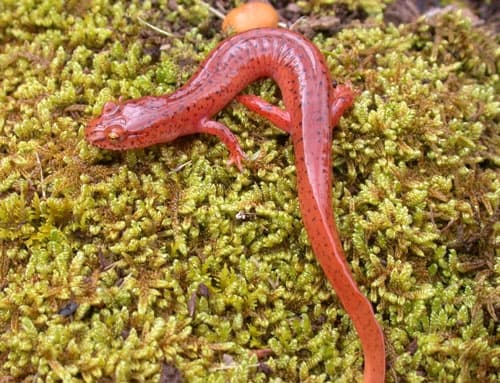
Blue Ridge spring salamander
The Blue Ridge spring salamander, a subspecies of the spring salamander (Gyrinophilus porphyriticus), is found in the southern Appalachian Mountains and adjacent Piedmont regions of the United States. This species is distinguished by a distinctive white line from its eye to its nostril, bordered by a dark line, and its varied dorsal coloration ranging from reddish to orange-yellow with black or brown spots. They inhabit cool springs, mountain springs, and moist forest areas, and are notable for their diet which can include other salamanders.
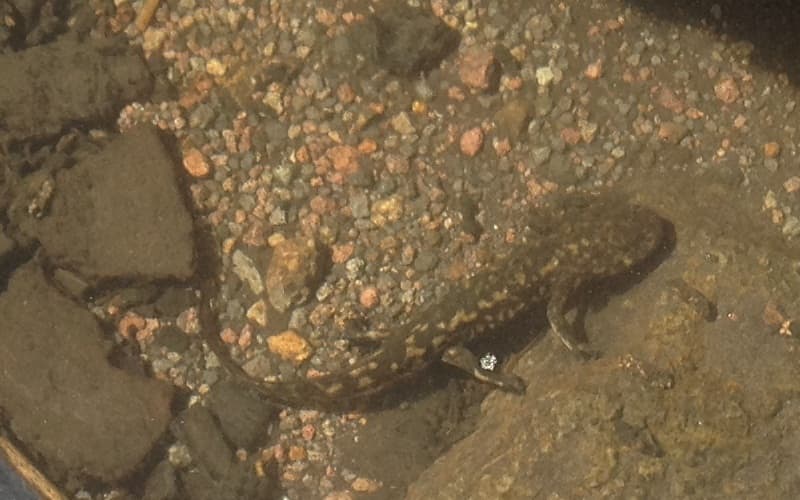
Ambystoma leorae
The Leora's stream salamander (Ambystoma leorae) is a critically endangered mole salamander endemic to a very small region within Mexico's Iztaccihuatl-Popocatepetl National Park. Its survival is threatened by its specific water quality requirements and human activities such as water extraction, cattle grazing, and direct consumption, leading to a single known population persisting on Mount Tlaloc.