
Brown cave salamander
Speleomantes genei·Plethodontidae
The brown cave salamander, also known as Gene's cave salamander or the Sardinian salamander, is a species found exclusively on the island of Sardinia, Italy. This plethodontid salamander inhabits temperate forests, rocky regions, and subterranean environments, including caves.
Key Facts
- ›Endemic to Sardinia, Italy.
- ›Inhabits temperate forests, rocky areas, and subterranean habitats.
- ›Belongs to the family Plethodontidae.
- ›Threatened by habitat loss.
- ›Also known as Gene's cave salamander or Sardinian cave salamander.
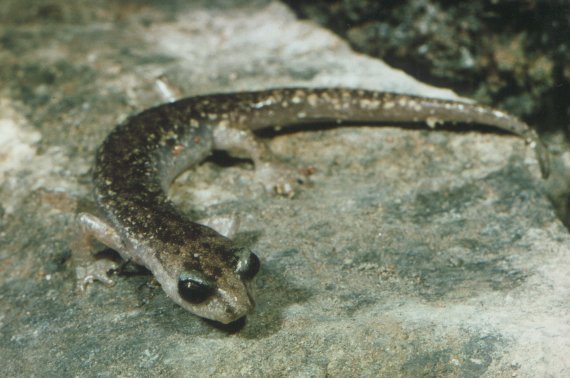
Gene's Cave Salamander, Sardinian Cave Salamander, Sardinian Salamander
Temperate Forests, Rocky Areas, Caves, Subterranean Habitats
Sardinia
Habitat Loss
About Brown cave salamander
The brown cave salamander, scientifically known as Speleomantes genei, is a species of salamander endemic to the island of Sardinia, Italy. It is also recognized by several other common names, including Gene's cave salamander, Sardinian cave salamander, and simply Sardinian salamander.
This species belongs to the family Plethodontidae, which are lungless salamanders. Its natural habitat encompasses a variety of environments, including temperate forests, rocky areas, and subterranean spaces such as caves. The brown cave salamander thrives in these sheltered and often moist conditions.
Regrettably, the brown cave salamander faces significant threats, with habitat loss being the primary concern for its survival. Conservation efforts are crucial to protect the remaining populations and their specialized environments.
Source: Wikipedia ↗
Frequently Asked Questions
What is the scientific name of the brown cave salamander?
The scientific name of the brown cave salamander is *Speleomantes genei*.
Where is the brown cave salamander found?
The brown cave salamander is endemic to Sardinia, an island belonging to Italy. Its natural range includes temperate forests, rocky areas, and subterranean environments such as caves.
What are the natural habitats of the brown cave salamander?
This species is found in temperate forests, rocky areas, caves, and other subterranean habitats. It prefers environments that offer shelter and moisture.
What are the common names for *Speleomantes genei*?
Besides the brown cave salamander, it is also known as Gene's cave salamander, Sardinian cave salamander, or simply the Sardinian salamander.
What is the main threat to the brown cave salamander population?
The primary threat to the survival of the brown cave salamander is habitat loss. This can affect the availability of suitable environments for them to live and reproduce.
Related Salamander and Newt species

Ambrosi's cave salamander
Ambrosi's cave salamander, also known as the Spezia cave salamander, is a species of salamander endemic to a small region of northwestern Italy. It inhabits temperate forests, rocky areas, caves, and subterranean environments, distinguishing itself with a variable coloration ranging from brown to black, often with marbling or mottling. This species is critically endangered due to habitat loss and its very restricted range.
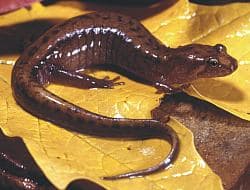
Allegheny Mountain dusky salamander
The Allegheny Mountain dusky salamander is a medium-sized, lungless salamander native to eastern North America, found in temperate forests, streams, and rocky areas. Its coloration is highly variable, often featuring a light dorsal stripe and dark spots, and it possesses larger hind legs than front legs. This species is particularly notable for its protection under Ontario's Endangered Species Act, 2007, with Canadian populations designated as endangered due to various threats.

Carolina mountain dusky salamander
The Carolina mountain dusky salamander is a species of salamander found exclusively in the Appalachian Mountains of North Carolina. It inhabits temperate forests, rivers, springs, and rocky areas, and is notably threatened by habitat loss.