
Allegheny Mountain dusky salamander
Desmognathus ochrophaeus·Plethodontidae·10 cm
The Allegheny Mountain dusky salamander is a medium-sized, lungless salamander native to eastern North America, found in temperate forests, streams, and rocky areas. Its coloration is highly variable, often featuring a light dorsal stripe and dark spots, and it possesses larger hind legs than front legs. This species is particularly notable for its protection under Ontario's Endangered Species Act, 2007, with Canadian populations designated as endangered due to various threats.
Key Facts
- ›Adults typically reach lengths of around 10 CM.
- ›Possesses a variable brownish coloration, often with a distinct light stripe down the back.
- ›Belongs to the Plethodontidae family, meaning adults breathe through their moist skin.
- ›Found in temperate forests, intermittent rivers, springs, and rocky environments.
- ›Canadian populations in Ontario and Quebec are designated as endangered.
- ›Hind legs are noticeably larger and stouter than the front legs.
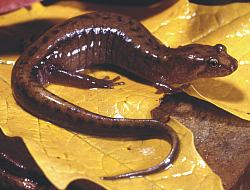
Allegheny Mountain Dusky Salamander
Temperate Forests, Rivers, Intermittent Rivers, Freshwater Springs, Rocky Areas
Eastern United States, Southern Ontario, Canada, Southern Quebec, Canada
- Medium-Sized Salamander
- Adults Grow To About 10 Cm In Length
- Brownish Coloration With Variable Patterns
- Often Has A Light Stripe Down the Back
- Row of Dark Spots On the Center of the Back
- Flanked By Dark Pigments
- Hind Legs Are Larger and Stouter Than the Front Legs
- Adults Breathe Through Moist Skin
- Somewhat Terrestrial
- Found Under Stones, Logs, and Bark Near Water Sources
About Allegheny Mountain dusky salamander
The Allegheny Mountain dusky salamander, scientifically known as Desmognathus ochrophaeus, is a species of lungless salamander native to eastern North America. It inhabits a range that extends across the eastern United States and into Canada, including specific populations in southern Ontario and Quebec.
Distribution and Habitat
This salamander thrives in a variety of natural environments, including temperate forests, along rivers and intermittent streams, near freshwater springs, and in rocky terrain. Its presence is noted in areas where the ground is consistently moist, such as under stones, logs, and bark.
Physical Description
As a medium-sized salamander, the Allegheny Mountain dusky salamander typically reaches an adult length of approximately 10 cm. Its coloration is highly variable but often presents as brownish with a distinct light stripe running down its back. This stripe is frequently accompanied by a central row of dark spots, with additional dark pigments along the flanks. A notable physical characteristic is that its hind legs are proportionally larger and sturdier than its front legs. Being a member of the Plethodontidae family, adults lack lungs and must maintain moist skin for respiration.
Conservation Status in Canada
Canadian populations of Desmognathus ochrophaeus are subject to significant conservation measures. The Carolinian population in Ontario was designated as endangered in 2009, and the Appalachian population in Quebec received the same designation in April 2021. Previously, from 1998 to 2007, these populations were classified as a COSEWIC 'Species of Special Concern.' Ontario's Endangered Species Act, 2007, provides legal protection against killing, harming, or possessing the species. Similarly, salamanders on Niagara Parks Commission property are protected under the Niagara Parks Act.
Source: Wikipedia ↗
Frequently Asked Questions
What is the scientific name for the Allegheny Mountain dusky salamander?
The scientific name for the Allegheny Mountain dusky salamander is Desmognathus ochrophaeus. This binomial nomenclature is used to classify the species within the scientific community.
What size does the Allegheny Mountain dusky salamander typically grow to?
The Allegheny Mountain dusky salamander is a medium-sized species, with adults generally growing to lengths of about 10 cm. This measurement reflects its adult size in its natural habitat.
Where are Allegheny Mountain dusky salamanders found?
They are native to eastern North America, with populations found in the eastern United States, southern Ontario, and a disjunct population in southern Quebec, Canada. Their preferred habitats include temperate forests, streams, springs, and rocky areas.
What are the key physical characteristics of this salamander?
Adults are brownish and can exhibit a wide range of color patterns. A common feature is a light stripe down the back, bordered by dark spots and pigments. Notably, their hind legs are larger and sturdier than their front legs.
Why are Canadian populations of this salamander considered endangered?
Canadian populations, specifically the Carolinian population in Ontario and the Appalachian population in Quebec, are designated as endangered. This status reflects concerns for their long-term survival within their Canadian range.
What family does the Allegheny Mountain dusky salamander belong to?
This species belongs to the Plethodontidae family, which are commonly known as lungless salamanders. As adults, they rely on breathing through their moist skin to obtain oxygen.
Related Salamander and Newt species

Ambrosi's cave salamander
Ambrosi's cave salamander, also known as the Spezia cave salamander, is a species of salamander endemic to a small region of northwestern Italy. It inhabits temperate forests, rocky areas, caves, and subterranean environments, distinguishing itself with a variable coloration ranging from brown to black, often with marbling or mottling. This species is critically endangered due to habitat loss and its very restricted range.

Alpine newt
The alpine newt is a species of newt native to continental Europe, with introduced populations in Great Britain and New Zealand. Adults are typically dark grey to blue on their back and sides, with a vibrant orange belly and throat, with males displaying more striking coloration, especially during the breeding season. They are adaptable, inhabiting both lowlands and high altitudes, and are primarily nocturnal during their terrestrial phase.
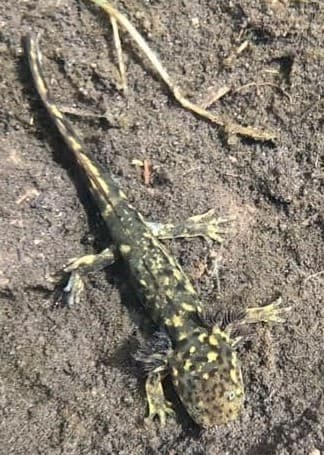
Ambystoma altamirani
The mountain stream salamander (Ambystoma altamirani) is a species of mole salamander native to central Mexico. It is distinguished by its purplish-black dorsal coloration, purplish-lavender belly, and cream-colored accents on its lips, digit tips, and tail fin. This species inhabits high-elevation pine and pine-oak woodlands, breeding in small streams where both larvae and some adults reside, while other adults venture onto land.