
California giant salamander
The California giant salamander is a large amphibian endemic to Northern California, spending its adult terrestrial life near freshwater sources. Distinctive features include a marbled pattern, a broad head, and the ability to vocalize. This species is an important indicator of stream health.
Key Facts
- ›Endemic to Northern California, found up to 6,500 feet.
- ›Adults reach 17–30.5 CM (6.7–12.0 in) in total length.
- ›Possesses a marbled or reticulate pattern of dark blotches on a light brown or brassy background.
- ›Predominantly nocturnal, but can be active during the day after rains or during mating season.
- ›Diet includes invertebrates, small mammals, and other amphibians.
- ›Breeds from March to may in aquatic environments, with females guarding egg clutches.
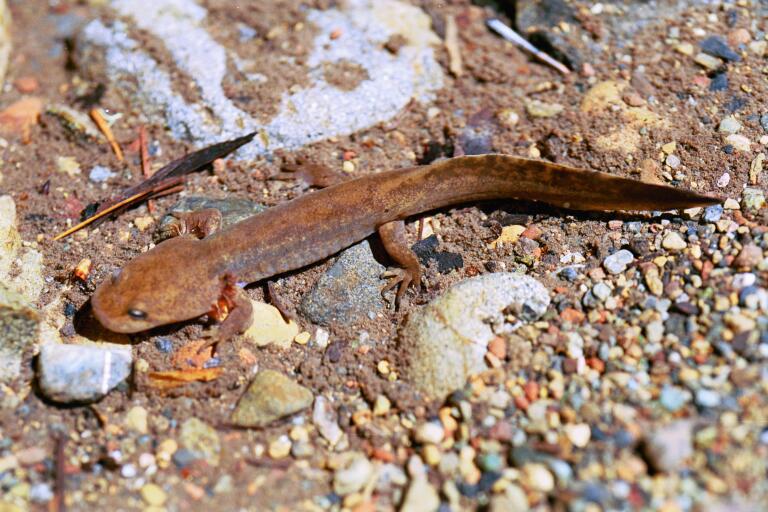
Pacific Giant Salamander
Damp, Coastal Forests, Montane Riparian Habitats, Valley-Foothill Riparian Habitats, Cool, Rocky Streams, Lakes, Ponds, Shallow Fresh Water, Surface Litter, Tunnels
California
- Adults Reach 17–30.5 Cm In Total Length.
- Four Toes On Front Feet, Five Toes On Back Feet.
- Tail Is Approximately 40% of Total Length and Laterally Compressed.
- Marbled Or Reticulate Pattern of Dark Blotches On A Light Brown Or Brassy-Colored Background On Head, Back, and Sides.
- Broad Head With A Shovel-Like Snout.
- Gular Fold .
- Medium-Sized Eyes With Brass-Flecked Iris and Large Black Pupil.
- Capable of Vocalizing.
- Neotenic Adults Have Uniform Brown Coloring and Retained External Gills.
Snails, Slugs, Insects, Other Invertebrates, Small Mice, Shrews, Possibly Reptiles, Other Amphibians, Aquatic Invertebrates, Fish, Snakes
- Predominantly Nocturnal.
- Diurnal Activity Can Occur After Rains Or During Mating Season.
- Terrestrial Adults Search For Prey Under Surface Objects and In Tunnels.
- Aquatic Adults and Larvae Feed In Water.
- Females Guard Egg Clutches.
- Terrestrial Adults Migrate To Find Water Sources For Breeding.
- Vocalization Is Possible.
Disease, Parasitic Infections
About California giant salamander
The California giant salamander (Dicamptodon ensatus) is a species of large salamander native to Northern California, belonging to the family Ambystomatidae. These amphibians are endemic to the western United States, where terrestrial adults typically reside on land but remain in close proximity to freshwater sources. Their life cycle also involves aquatic phases during breeding and larval development, and some individuals exhibit neoteny, becoming sexually mature while retaining larval features like external gills.
Distribution and Habitat
The California giant salamander is found in damp, coastal forests, including areas with coast Douglas fir and California coast redwood. They inhabit both montane and valley-foothill riparian zones, preferring clear, cold freshwater streams, ponds, and lakes. Adults are often found under surface litter and in tunnels, while aquatic forms inhabit streams and occasionally lakes. The species' range is primarily in Northern California, with distinct populations in counties north of the San Francisco Bay and south of the Bay.
Description and Behavior
Adult California giant salamanders can reach lengths of 17 to 30.5 cm (6.7 to 12.0 inches) including their tail. They possess a distinctive marbled or reticulate pattern of dark blotches on a light brown or brassy background. Key physical traits include four toes on the front feet, five on the back, a laterally compressed tail, a broad head with a shovel-like snout, and a gular fold across the throat. This species is notable for being one of the few salamanders capable of vocalizing. They are predominantly nocturnal but can be active during daylight hours following rains or during their mating season.
Diet and Reproduction
The diet of terrestrial adults consists of invertebrates such as snails and insects, small mammals like mice and shrews, and sometimes other amphibians. Aquatic adults and larvae consume aquatic invertebrates, fish, and snakes. Reproduction occurs in aquatic environments, typically from March to May, with egg-laying peaking in May. Females carefully guard their egg clutches for months to protect them from predation. The larval stage usually lasts one to two years before transformation into terrestrial adults, though neotenic individuals may remain aquatic.
Source: Wikipedia ↗
Frequently Asked Questions
What is the scientific name of the California giant salamander?
The scientific name of the California giant salamander is Dicamptodon ensatus.
Where can the California giant salamander be found?
The California giant salamander is endemic to Northern California, primarily in damp, coastal forests and riparian habitats. Its range is divided into two main regions: one in northern counties like Sonoma and Mendocino, and another south of San Francisco Bay.
What do California giant salamanders eat?
Terrestrial adults consume prey such as snails, slugs, insects, small mice, and shrews. Aquatic adults and larvae feed on aquatic invertebrates, fish, snakes, and other amphibians.
How do California giant salamanders reproduce?
They breed in aquatic environments like streams and puddles from March to May, with egg-laying peaking in May. Females guard their egg clutches for months until they hatch.
What are the physical characteristics of the California giant salamander?
Adults can reach 17–30.5 cm in total length, with a tail making up about 40% of their length. They have a marbled pattern of dark blotches on a light brown or brassy background, a broad head, and a fold of skin on the throat. They also have four toes on the front feet and five on the back.
Are there any specific behaviors of the California giant salamander?
The California giant salamander is predominantly nocturnal. They are also one of the few salamander species capable of vocalizing. During breeding season, terrestrial adults migrate to find water sources.
What is the larval stage like for the California giant salamander?
After hatching in water, larvae grow approximately half an inch per month. They typically transform into terrestrial adults after 1 to 2 years. Some larvae exhibit neoteny, retaining gills and becoming aquatic adults.
Related Salamander and Newt species
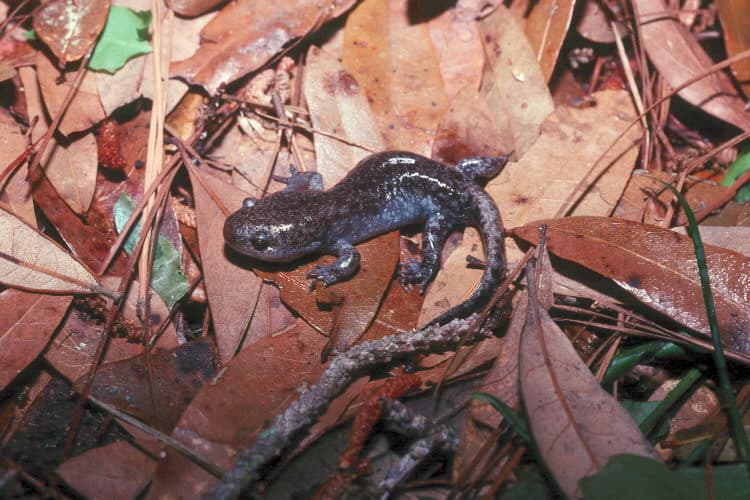
Ambystoma talpoideum
The mole salamander (Ambystoma talpoideum), also known as the tadpole salamander, is a species native to the eastern and central United States. It is characterized by its stocky build, large head, and a unique ability to remain in a neotenic, or larval, state into adulthood. These salamanders inhabit forest floors and migrate to ponds for breeding, with their populations facing threats from habitat alteration.

Ambystoma dumerilii
The Lake Patzcuaro salamander, also known as achoque (Ambystoma dumerilii), is a paedomorphic salamander endemic to Lake Patzcuaro in Michoacán, Mexico. It is distinguished by retaining larval characteristics, such as prominent external gills, throughout its adult life. Historically used for food and traditional medicine by the Purépecha people, the species is now critically endangered due to severe habitat degradation and pollution.

Ambystoma andersoni
Anderson's salamander (Ambystoma andersoni) is a neotenic salamander native to Zacapu Lagoon in Michoacán, Mexico. Distinctive for retaining larval features into adulthood, it possesses external gills with red filaments and a prominent caudal fin, with a unique pattern of black blotches on a red-brown base.