
Ambystoma talpoideum
The mole salamander (Ambystoma talpoideum), also known as the tadpole salamander, is a species native to the eastern and central United States. It is characterized by its stocky build, large head, and a unique ability to remain in a neotenic, or larval, state into adulthood. These salamanders inhabit forest floors and migrate to ponds for breeding, with their populations facing threats from habitat alteration.
Key Facts
- ›The mole salamander is found across much of the eastern and central United States, from Florida to Texas.
- ›Adults typically reside in leaf litter on the forest floor and migrate to ponds for reproduction.
- ›Some individuals exhibit neoteny, retaining larval features like feathery gills into adulthood.
- ›They are primarily nocturnal and have a diet consisting mainly of arthropods and other small invertebrates.
- ›The species is listed as 'Least Concern' by the IUCN, though it faces threats from habitat destruction and the introduction of predatory fish.
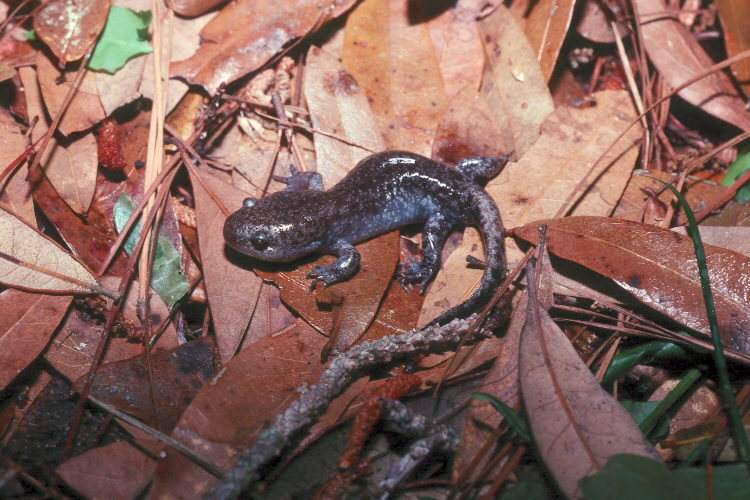
Tadpole Salamander
Leaf Litter On the Forest Floor, Ponds, Ephemeral, Fish-Free Waters, Floodplain Pine Or Broadleaf Forests, Gum and Cypress Ponds
United States
- Stocky Build
- Short Bodies
- Large Heads
- Gray Or Dark Brown Coloration
- Darker Mottling
- Lighter Gray Undersides
- Swollen Cloaca In Males
- Large Feathery Gills In Larvae and Paedomorphic Adults
- Two Light Stripes On Their Underside In Larvae
Arthropods, Tadpoles, Ambystomatidae Larvae
- Primarily Nocturnal
- Migrate To Ponds To Breed
- Males Are Less Likely To Mate In Areas With Multiple Rival Males
- Eggs Laid In the Spring During Heavy Rains
- Some Larvae Undergo Metamorphosis, Others Remain Neotenic
- Paedomorphic Adults Can Undergo Metamorphosis Later In Life
- Lower Their Heads To Expose Parotoid Glands When Attacked
- Exude A Noxious Secretion From Parotoid Glands
Destruction of Forest Ponds and Swamp Habitat, Filling In Or Deepening of Breeding Ponds, Introduction of Predatory Fish
About Ambystoma talpoideum
Mole Salamander: Ambystoma talpoideum
The mole salamander, scientifically identified as Ambystoma talpoideum and sometimes referred to as the tadpole salamander, is a species of salamander native to the eastern and central United States. Its natural range extends from Florida to Texas, with populations reaching north to Illinois and isolated groups in Virginia and Indiana.
Description and Habitat
Mole salamanders are recognized by their stocky build, featuring short bodies and notably large heads. Adults typically measure between 4.5 to 10.9 cm (1.8 to 4.3 inches) in length and are usually gray or dark brown, often with darker mottling and lighter undersides. A distinctive characteristic is the presence of feathery gills in their larval and paedomorphic (neotenic) adult stages. Larval mole salamanders can be identified by two light stripes on their underside. These amphibians inhabit floodplain pine or broadleaf forests, preferring areas close to gum and cypress ponds. Terrestrial adults seek shelter and thermoregulation beneath the leaf litter on the forest floor, while their aquatic larvae are found in ponds and ephemeral water bodies that are free of predatory fish.
Behavior and Reproduction
Primarily nocturnal, the mole salamander is most active in the moist debris of forest habitats, usually near a water source. During the breeding season, which spans from October to March, adults migrate to near bodies of water on rainy winter nights. The eggs are deposited in the spring, often during heavy rainfall. A significant aspect of their life cycle is facultative neoteny, where some larvae undergo metamorphosis into terrestrial adults, while others retain their larval features, including gills, and remain aquatic. This paedomorphic state can persist if ponds do not dry out, though environmental cues like drying ponds can trigger metamorphosis later in life. When threatened, both adults and juveniles can exude a noxious secretion from their parotoid glands by lowering their heads.
Diet
The mole salamander is an opportunistic predator, consuming a variety of small prey. Its diet consists almost entirely of various arthropods, supplemented by a small number of other salamander larvae and tadpoles.
Conservation
The mole salamander is currently listed as 'Least Concern' by the IUCN due to a stable population trend. However, the species faces several threats, including habitat destruction, particularly the alteration of breeding ponds, and the introduction of predatory fish. Despite the general 'Least Concern' status, it is classified as 'imperiled' in Virginia and 'endangered' in Indiana, highlighting regional conservation concerns.
Source: Wikipedia ↗
Frequently Asked Questions
What is a mole salamander?
The mole salamander, scientifically known as Ambystoma talpoideum, is a species of salamander found in the eastern and central United States. It is known for its stocky build and the unique characteristic of some individuals remaining in a larval state (neoteny) throughout their lives.
Where do mole salamanders live?
Mole salamanders inhabit floodplain pine or broadleaf forests, particularly near gum and cypress ponds. Adults are found under the leaf litter on the forest floor, while the aquatic larvae reside in ponds and ephemeral, fish-free waters.
What do mole salamanders eat?
Mole salamanders are opportunistic feeders, consuming almost anything smaller than themselves that they can overpower. Their diet primarily consists of various arthropods and a small number of other salamander larvae.
Why are some mole salamanders called tadpole salamanders?
Older sources often refer to the mole salamander as the tadpole salamander because some individuals remain in a neotenic state, meaning they retain larval characteristics, such as prominent gills, into adulthood.
What are the main threats to mole salamanders?
Key threats to mole salamanders include the destruction of their forest pond and swamp habitats, the alteration of breeding ponds (filling or deepening), and the introduction of predatory fish into their aquatic environments.
What is the conservation status of the mole salamander?
The International Union for Conservation of Nature (IUCN) lists the mole salamander as 'Least Concern' due to a stable population trend. However, it is considered 'imperiled' in Virginia and 'endangered' in Indiana.
Related Salamander and Newt species

Alpine newt
The alpine newt is a species of newt native to continental Europe, with introduced populations in Great Britain and New Zealand. Adults are typically dark grey to blue on their back and sides, with a vibrant orange belly and throat, with males displaying more striking coloration, especially during the breeding season. They are adaptable, inhabiting both lowlands and high altitudes, and are primarily nocturnal during their terrestrial phase.
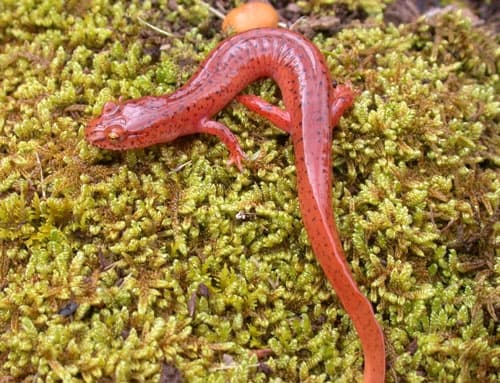
Blue Ridge spring salamander
The Blue Ridge spring salamander, a subspecies of the spring salamander (Gyrinophilus porphyriticus), is found in the southern Appalachian Mountains and adjacent Piedmont regions of the United States. This species is distinguished by a distinctive white line from its eye to its nostril, bordered by a dark line, and its varied dorsal coloration ranging from reddish to orange-yellow with black or brown spots. They inhabit cool springs, mountain springs, and moist forest areas, and are notable for their diet which can include other salamanders.

Blackbelly salamander
The blackbelly salamander, formerly classified as Desmognathus quadramaculatus, is a medium-sized salamander endemic to the Appalachian Mountains of the southeastern United States. It is distinguished by its dark brown to black coloration, often with pale spots, and its predominantly aquatic lifestyle, inhabiting cold mountain streams. Recent research has reclassified this group, splitting it into multiple distinct species.