
California slender salamander
The California slender salamander is a lungless salamander native to coastal mountain areas of Northern California and southwestern Oregon. It is distinguished by its narrow, slender body, four-toed feet, and a worm-like appearance due to conspicuous costal grooves. This species is known for its ability to forage in narrow tunnels and its unique adaptation of respiring through its skin.
Key Facts
- ›Possesses four toes on each foot, a characteristic of its genus, Batrachoseps.
- ›Respires through its skin, as it is a lungless salamander.
- ›Features a slender body and head, often described as worm-like with 18-21 costal grooves.
- ›Typically displays black dorsal coloration with a reddish or brown stripe, and a dark ventral side with fine whitish dots.
- ›Active on the ground surface from fall to spring, foraging under leaf litter and in tunnels, with heightened activity after rainfall.
- ›Undergoes aestivation from may to October, seeking cooler, moister retreats in burrows or tunnels.

California Oak Woodland, Redwood Forest, Douglas Fir Forest, Montane Hardwood Conifer, Grasslands, Riparian Zone, Near Streams, Moist Environments, Beneath Leaf Litter, Beneath Rotting Logs, Beneath Rocks, Tunnels Or Burrows, Rodent Homes, Urban and Suburban Environments
Northern California, United States, Extreme Southwestern Oregon, Monterey County, California, Humboldt County, California, Mendocino County, California, Butte County, California, Alameda County, California
- Typically Seven To Thirteen Centimeters In Total Length.
- Narrow Body and Head.
- Four Toes On Each Foot.
- Eighteen To Twenty-One Conspicuous Costal Grooves, Giving A Worm-Like Appearance.
- Dorsal Coloration Is Typically Black With A Reddish Or Brown Stripe.
- Ventral Marking Is Dark With Minute Whitish Dots.
- Thin, Moist Skin.
- Red Blood Cells Possess A Nucleus, Which Is Unusual Among Vertebrates.
Tiny Arthropods, Mites, Spiders, Snails
- Active On the Ground Surface From Fall To Spring, Foraging Under Leaf Litter and In Tunnels.
- Activity Is Heightened During and Immediately After Rainfall.
- Aestivation From May To October, Seeking Out Tunnels Or Burrows For A Cooler and Moister Retreat.
- Egg-Laying Occurs As Early As December In the Southern Part of Its Range.
- Oviposition Is Thought To Occur Primarily In the Tunnels of Other Creatures, But Clutches Are Also Found On Moist Surfaces Beneath Bark, Rocks, Or Forest Detritus.
- Can Out-Compete Other Salamander Species In Its Specialized Niche of Searching For Food In Narrow Tunnels.
About California slender salamander
The California Slender Salamander (Batrachoseps attenuatus)
The California slender salamander, scientifically known as Batrachoseps attenuatus, is a lungless salamander primarily found in the coastal mountain regions of Northern California and extending into limited areas of southwestern Oregon. This species is notable for its distinct morphology, characterized by a narrow, slender body and head, and the presence of only four toes on each foot, a trait shared by all members of its genus, Batrachoseps. Its appearance is often described as worm-like due to the presence of 18 to 21 conspicuous costal grooves along its body. The dorsal coloration is typically black, often accented by a reddish or brown stripe, while the underside is dark with fine whitish dots. A unique physiological characteristic is that its red blood cells retain a nucleus when mature, a rarity among vertebrates.
Distribution and Habitat
The principal range of the California slender salamander stretches across the coastal ranges of Northern California from Monterey County northward, encompassing a small portion of coastal Oregon. Its distribution also includes the western slopes of the Sierra Nevada foothills and specific areas of the northern California Central Valley. This adaptable species inhabits a variety of plant communities, including oak woodlands, redwood and Douglas fir forests, montane hardwood conifer regions, grasslands, and riparian zones. They can be found from valley floors up to mid-elevations in coastal ranges, often seeking refuge in moist environments, beneath leaf litter, rotting logs, or rocks, particularly from October to March. During the dry season, they retreat into tunnels or rodent burrows for moisture and cooler temperatures.
Behavior and Reproduction
From autumn through spring, the California slender salamander is active on the surface, foraging in leaf litter and subterranean tunnels. Activity significantly increases during and immediately following rainfall. From May to October, the species enters a period of aestivation, seeking cooler and moister retreats. Unlike many other salamanders, egg-laying can occur quite early, beginning as soon as December in the southern extent of its range. Eggs are typically laid in the tunnels of other creatures or on moist surfaces under bark or detritus, with clutches containing around five to twenty eggs. Hatching usually occurs in March or April.
Conservation Considerations
While the state of California has not enacted specific protections for the California slender salamander, conservation efforts have been proposed by various groups. In contrast, the state of Oregon has taken protective measures, classifying the species as nongame wildlife and making it illegal to harm or possess them. Their ability to survive in some urban and suburban environments highlights their adaptability, though habitat preservation remains a key concern for their long-term survival.
Source: Wikipedia ↗
Frequently Asked Questions
What is the scientific name for the California slender salamander?
The scientific name for the California slender salamander is *Batrachoseps attenuatus*. The species name 'attenuatus' is derived from the Latin word for slender, reflecting its physical characteristics.
What is the typical size of a California slender salamander?
The California slender salamander typically ranges from seven to thirteen centimeters in total length. This measurement is taken from snout to vent. Its body and head are notably narrow.
Where can the California slender salamander be found?
Its primary range includes the coastal ranges of Northern California, from Monterey County northward, and extends into small areas of southwestern coastal Oregon. It can also be found in the western foothills of the Sierra Nevada and the northern Central Valley of California.
What kind of habitats does the California slender salamander prefer?
This species inhabits various plant communities, including oak woodlands, redwood forests, Douglas fir forests, montane hardwood conifer areas, grasslands, and riparian zones. They are found from valley floors to mid-elevations in coastal ranges, often seeking cover near streams and moist environments.
What do California slender salamanders eat?
Their diet primarily consists of tiny arthropods. Their slender shape is well-suited for penetrating burrows to forage for prey such as mites, spiders, and snails.
When does the California slender salamander breed?
Egg-laying can occur as early as December in the southern part of its range, which is relatively early compared to other members of its genus. Hatching typically occurs around March or April.
Are there any conservation efforts for the California slender salamander?
While California does not have specific protections, groups have proposed them. The state of Oregon, however, has implemented rules to protect nongame wildlife, making it illegal to harm or possess California slender salamanders.
Related Salamander and Newt species
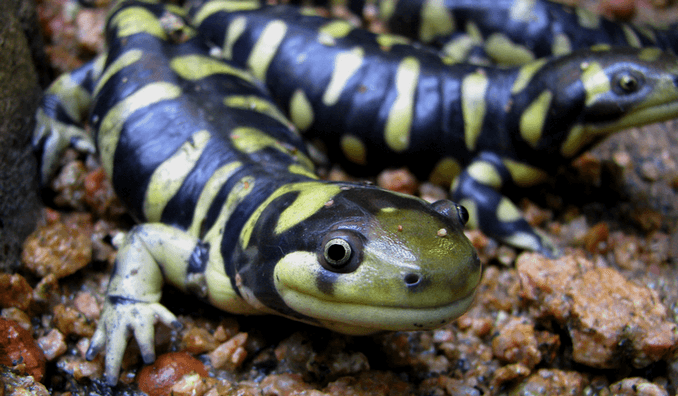
Ambystoma tigrinum
The tiger salamander (Ambystoma tigrinum) is one of the largest terrestrial salamanders native to North America. It is characterized by its distinctive yellow or greenish-yellow markings on a black or dark brown body, and it emits a bright fluorescence under UV light. These amphibians spend much of their lives in burrows and are primarily terrestrial as adults, returning to water only to breed.

Ambystoma macrodactylum
The long-toed salamander (Ambystoma macrodactylum) is a mole salamander native to the Pacific Northwest of North America. It is distinguished by its mottled black, brown, and yellow coloration and a notably long outer fourth toe on its hind limbs. This species occupies a wide range of habitats, from temperate rainforests to alpine meadows, and is known for its subterranean adult lifestyle and aquatic breeding phase.

Batrachoseps attenuatus
The California slender salamander (Batrachoseps attenuatus) is a lungless salamander native to coastal California and southwestern Oregon. It is distinguished by its narrow, worm-like body, four toes on each foot, and a distinctive coloration, typically black with a reddish or brown stripe. This species is adept at foraging in narrow underground burrows and can adapt to some urban environments.