
Ambystoma macrodactylum
The long-toed salamander (Ambystoma macrodactylum) is a mole salamander native to the Pacific Northwest of North America. It is distinguished by its mottled black, brown, and yellow coloration and a notably long outer fourth toe on its hind limbs. This species occupies a wide range of habitats, from temperate rainforests to alpine meadows, and is known for its subterranean adult lifestyle and aquatic breeding phase.
Key Facts
- ›Characterized by a long outer fourth toe on the hind limbs.
- ›Found in diverse habitats across the Pacific Northwest, including forests, meadows, and riparian zones.
- ›Adults are primarily subterranean, living in burrows or under debris.
- ›Breeds in slow-moving streams, ponds, and lakes.
- ›Hibernates during winter, relying on stored energy reserves.
- ›Classified as Least Concern by the IUCN, but faces threats from land development.

Long-Toed Salamander
Temperate Rainforests, Coniferous Forests, Montane Riparian Zones, Sagebrush Plains, Red Fir Forests, Semiarid Sagebrush, Cheatgrass Plains, Alpine Meadows, Slow-Moving Streams, Ponds, Lakes, Forest Understory, Shoreline Shallows of Rivers, Ephemeral Waters
Pacific Northwest, Canada, United States, Alaska, California, Oregon, Washington, Idaho, Montana, Alberta, British Columbia
- Mottled Black, Brown, and Yellow Pigmentation.
- Long Outer Fourth Toe On Hind Limbs.
- Dusky Black Body With A Dorsal Stripe of Tan, Yellow, Or Olive-Green, Which Can Be Broken Into Spots.
- Sides of the Body May Have Fine White Or Pale Blue Flecks.
- Belly Is Dark-Brown Or Sooty With White Flecks.
- Adults Typically 3.8–7.6 Cm Long.
- Larval Skin Is Mottled With Black, Brown, and Yellow.
- Metamorphosed Adults Have Four Digits On Front Limbs and Five On Rear Limbs.
Insects, Tadpoles, Worms, Beetles, Small Fish, Small Invertebrates, Small Aquatic Crustaceans, Aquatic Dipterans
- Subterranean Lifestyle As Adults, Digging and Feeding In Forest Soils, Decaying Logs, and Burrows.
- Migrates Seasonally To Breeding Ponds.
- Males Arrive Earlier and Stay Longer Than Females During Breeding Season.
- Males Display An Enlarged Or Bulbous Vent Area During the Breeding Season.
- Engages In Courtship Dances Involving Body Rubbing and Pheromone Release.
- Deposits Spermatophores During Mating.
- Hibernates During Cold Winter Months.
- Some Larvae Become Cannibalistic.
Land Development
About Ambystoma macrodactylum
Long-toed Salamander (Ambystoma macrodactylum)
The long-toed salamander, scientifically known as Ambystoma macrodactylum, is a species of mole salamander belonging to the family Ambystomatidae. This species is readily identifiable by its distinctive mottled black, brown, and yellow coloration and, most notably, its elongated outer fourth toe on the hind limbs. Its distribution is primarily concentrated in the Pacific Northwest of North America, where it inhabits a wide array of environments.
Habitat and Distribution
The long-toed salamander demonstrates remarkable ecological versatility, thriving in habitats ranging from lush temperate rainforests and coniferous forests to more arid sagebrush plains, red fir forests, and high-altitude alpine meadows. They are often found near water bodies, utilizing slow-moving streams, ponds, and lakes for their aquatic breeding phase. Adults typically lead a subterranean existence, seeking shelter in the forest understory, under coarse woody debris, rocks, or within small mammal burrows. Their altitudinal range extends from sea level up to approximately 2,800 meters (9,200 ft).
Life Cycle and Behavior
The life cycle begins with eggs laid in gelatinous masses, often attached to vegetation or substrates in calm water. Larvae hatch within two to six weeks and are carnivorous, feeding on small invertebrates. After a larval period that lasts at least four months, they metamorphose into terrestrial juveniles. Adult long-toed salamanders are primarily nocturnal and often go unnoticed due to their secretive, underground lifestyle. They hibernate during the cold winter months, relying on stored energy reserves in their skin and tail. Breeding activity is triggered by rainfall, ice thaw, or snowmelt and varies seasonally with elevation, occurring from late winter to early summer.
Physical Characteristics and Taxonomy
Adults typically measure between 4.1 and 8.9 cm (1.6 to 3.5 inches) in length. The dorsal stripe, which can be tan, yellow, or olive-green, may be continuous or broken into spots, and the sides of the body can feature fine white or pale blue flecks. The belly is generally dark brown or sooty with white flecks. Genetically, Ambystoma macrodactylum is closely related to A. laterale from eastern North America, with evolutionary origins suggesting a dispersal into western North America following the loss of the mid-continental seaway. The species is divided into five subspecies, differentiated by their geographic location and patterns in their dorsal stripe.
Conservation
While the long-toed salamander is currently classified as Least Concern by the IUCN, its habitat is vulnerable to threats from various forms of land development. These activities can negatively impact the salamander's preferred environments and populations.
Source: Wikipedia ↗
Frequently Asked Questions
What makes the long-toed salamander distinctive?
The long-toed salamander is most notably distinguished by its unusually long outer fourth toe on its hind limbs, which gives the species its common name. It also possesses a characteristic mottled black, brown, and yellow pigmentation.
Where can I find a long-toed salamander?
These salamanders are primarily found in the Pacific Northwest of North America. They inhabit a variety of environments, including temperate rainforests, coniferous forests, montane riparian zones, sagebrush plains, and alpine meadows.
What do long-toed salamanders eat?
Adult long-toed salamanders have a varied diet that includes insects, tadpoles, worms, beetles, and small fish. Larvae are carnivorous and feed on small invertebrates such as aquatic crustaceans and other small aquatic organisms.
How long do long-toed salamanders live?
An adult long-toed salamander may live for approximately 6 to 10 years. Some larger individuals can reach snout-to-vent lengths of up to 8 cm (3.1 in) and total lengths of up to 14 cm (5.5 in).
What is the conservation status of the long-toed salamander?
The long-toed salamander is classified as a species of Least Concern by the IUCN. However, many forms of land development pose threats to its habitat and negatively impact its populations.
When do long-toed salamanders breed?
The breeding season for long-toed salamanders varies significantly with elevation and latitude. Generally, lower-elevation populations breed in the fall, winter, and early spring, while higher-elevation populations breed in the spring and early summer.
Related Salamander and Newt species
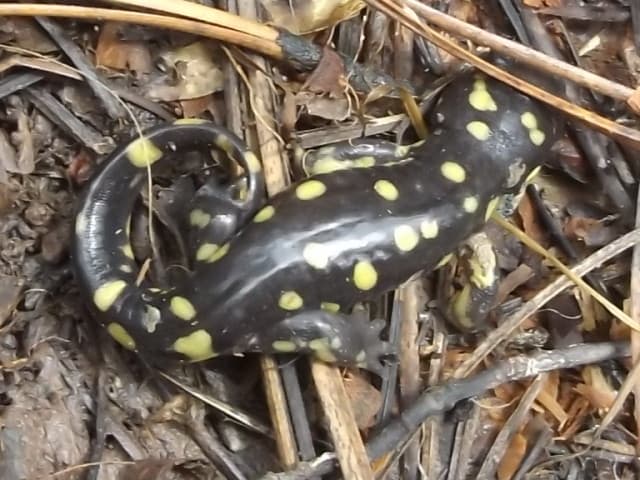
Ambystoma rosaceum
The Tarahumara salamander (Ambystoma rosaceum) is a freshwater mole salamander species endemic to Mexico, found in temperate and montane forests, grasslands, and various aquatic habitats. It is distinguished by its medium size, variable coloration of yellow spots or streaks on a dark background in adults, and the potential for paedomorphosis, where individuals retain larval features. While generally considered Least Concern, it faces threats from habitat loss and introduced species.
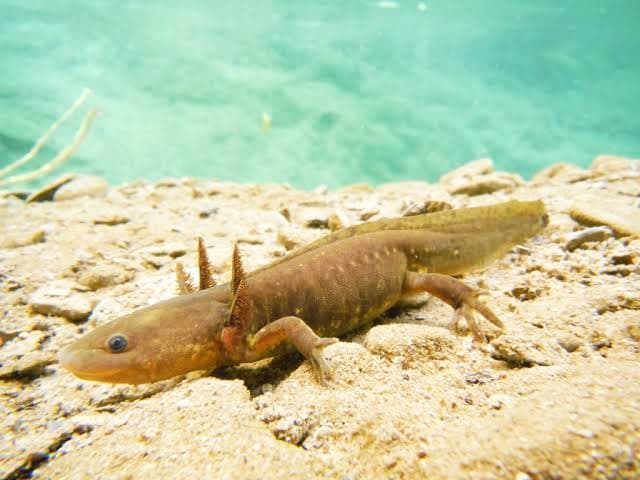
Ambystoma velasci
The plateau tiger salamander (Ambystoma velasci) is a mole salamander species found in Mexico, with a possible range extending into the United States. It is distinctive for its ability to exhibit facultative paedomorphosis, meaning adults can retain larval features or undergo metamorphosis again in response to environmental changes. Adults are characterized by olive-green backs with dark spots and a cream underside.
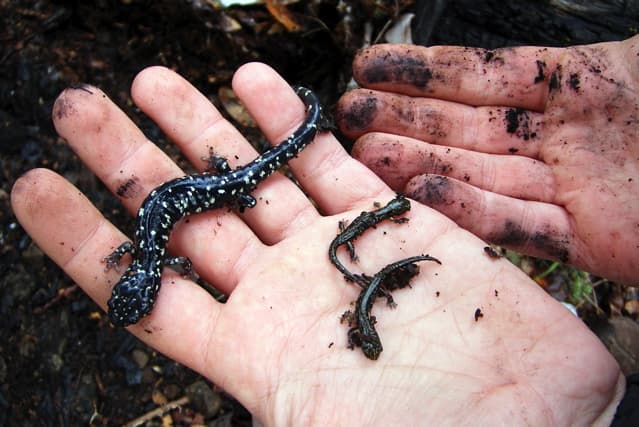
Aneides flavipunctatus
The speckled black salamander (Aneides flavipunctatus) is a species of salamander native to California, found in temperate forests and grasslands. It is distinguished by its variable coloration, ranging from black with white or yellow spots to a grayish or greenish sheen, and its prehensile tail. The species is primarily terrestrial and nocturnal, feeding on small invertebrates.