
Cascade Caverns salamander
The Cascade Caverns salamander is an aquatic salamander species found exclusively in Cascade Caverns in Kendall County, Texas. As a cave-dwelling species, they are neotenic, retaining juvenile characteristics like external gills into adulthood, and possess reduced eyes adapted to their subterranean, spring-fed habitat.
Key Facts
- ›Endemic to Cascade Caverns in Kendall County, Texas.
- ›Aquatic salamander species.
- ›Neotenic, retaining juvenile features like external gills into adulthood.
- ›Possesses reduced eyes covered by a layer of skin.
- ›Translucent with a faint brown, net-shaped pattern and potential white speckling.
- ›Threatened status with potential to become endangered.

Cascade Caverns Neotenic Salamander
Spring Waters, Subterranean Caverns, Limestone Rock Strata
Kendall County, Texas, Usa
Translucent Body, Faint Brown, Net-Shaped Pattern, Possible White Speckling, Neotenic, Stout Body, Short Legs, Reduced Eyes Covered By Skin
Small Insects, Spiders
- Aquatic
- Subterranean
- Retains Juvenile Characteristics Into Adulthood
About Cascade Caverns salamander
The Cascade Caverns salamander (Eurycea latitans) is a unique species of aquatic salamander found exclusively within the Cascade Caverns in Kendall County, Texas. This species is adapted to a life deep underground, inhabiting the spring waters that flow through the limestone rock strata of the caverns. Its subterranean existence presents challenges for researchers, making it difficult to determine precise population numbers or the full extent of its geographic range.
Description and Adaptations
One of the most striking features of the Cascade Caverns salamander is its neoteny, meaning it retains juvenile characteristics into adulthood. This includes the presence of external gills, which are essential for respiration in its aquatic environment. The salamanders are translucent, often exhibiting a faint, net-like brown pattern that may be accompanied by white speckling. Due to their rarity and elusive nature, the full spectrum of their coloration and any variations are not extensively documented. They possess stout bodies with short legs and have significantly reduced eyes, which are covered by a layer of skin, an adaptation to their lightless habitat.
Conservation and Ecology
The Cascade Caverns salamander faces conservation concerns, being classified as a threatened species with the potential to become endangered. Like other cave-dwelling salamanders, their diet consists of small invertebrates such as insects and spiders found within the cavern ecosystem. The limited and specific nature of their habitat makes them particularly vulnerable to environmental changes within Cascade Caverns.
Source: Wikipedia ↗
Frequently Asked Questions
Where does the Cascade Caverns salamander live?
The Cascade Caverns salamander is endemic to Cascade Caverns, located in Kendall County, Texas. They inhabit the spring waters found deep within the limestone rock strata of these subterranean caverns.
What are the defining physical characteristics of the Cascade Caverns salamander?
This species is neotenic, meaning they retain juvenile traits such as external gills into adulthood. They have stout bodies, short legs, and reduced eyes that are covered by a layer of skin. Their coloration is translucent with a faint brown, net-shaped pattern, sometimes with white speckling.
Why is it difficult to determine the population size of this salamander?
The Cascade Caverns salamander lives almost entirely underground in spring waters deep within limestone caverns. This subterranean and difficult-to-access habitat makes it challenging to accurately gauge their geographic range or population numbers.
What is the conservation status of the Cascade Caverns salamander?
The Cascade Caverns salamander is considered a threatened species. There is concern that it could become endangered due to its limited range and specific habitat requirements.
What do Cascade Caverns salamanders eat?
Like other cave salamanders, the Cascade Caverns salamander feeds on small invertebrates. Their diet includes small insects and spiders found within their cavernous environment.
Related Salamander and Newt species

Apalachicola dusky salamander
The Apalachicola dusky salamander is a species of salamander found in the Southeastern United States, specifically in Alabama, Florida, and Georgia. It inhabits temperate forests, intermittent rivers, and freshwater springs. This species is currently threatened by habitat loss.

Cheat Mountain salamander
The Cheat Mountain salamander is a small woodland salamander endemic to the high Allegheny Mountains of West Virginia. It is distinguished by its black or dark brown back marked with numerous brassy, silver, or white flecks and lacks a dorsal stripe. Its population has declined due to habitat destruction, pollution, and competition from other salamander species.
Blue Ridge spring salamander
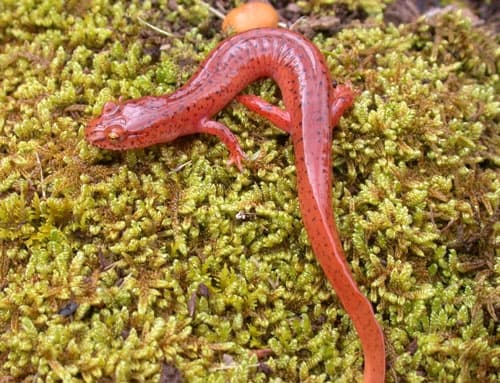
The Blue Ridge spring salamander, a subspecies of the spring salamander (Gyrinophilus porphyriticus), is found in the southern Appalachian Mountains and adjacent Piedmont regions of the United States. This species is distinguished by a distinctive white line from its eye to its nostril, bordered by a dark line, and its varied dorsal coloration ranging from reddish to orange-yellow with black or brown spots. They inhabit cool springs, mountain springs, and moist forest areas, and are notable for their diet which can include other salamanders.