
Apalachicola dusky salamander
Threatened
The Apalachicola dusky salamander is a species of salamander found in the Southeastern United States, specifically in Alabama, Florida, and Georgia. It inhabits temperate forests, intermittent rivers, and freshwater springs. This species is currently threatened by habitat loss.
Key Facts
- ›Endemic to Alabama, Florida, and Georgia in the Southeastern United States.
- ›Inhabits temperate forests, intermittent rivers, and freshwater springs.
- ›Belongs to the family Plethodontidae.
- ›Threatened by habitat loss.

Temperate Forests, Intermittent Rivers, Freshwater Springs
Alabama, Florida, Georgia, Southeastern United States
Habitat Loss
About Apalachicola dusky salamander
The Apalachicola dusky salamander, scientifically known as Desmognathus apalachicolae, is a species of salamander belonging to the family Plethodontidae. This species is endemic to the Southeastern United States, with its natural distribution encompassing parts of Alabama, Florida, and Georgia.
Habitat and Distribution
This salamander thrives in a variety of natural habitats. Its preferred environments include temperate forests, intermittent rivers, and freshwater springs. These specific ecological niches provide the necessary conditions for its survival and reproduction.
Conservation Status
The Apalachicola dusky salamander is currently designated as threatened. The primary factor contributing to its threatened status is widespread habitat loss, which significantly impacts its populations and their ability to persist in their native range.
Source: Wikipedia ↗
Frequently Asked Questions
Where can the Apalachicola dusky salamander be found?
The Apalachicola dusky salamander is endemic to the Southeastern United States, specifically found in the states of Alabama, Florida, and Georgia. Its natural range includes these three states.
What kind of habitats does the Apalachicola dusky salamander prefer?
This species prefers natural habitats such as temperate forests, intermittent rivers, and freshwater springs. These environments provide the conditions necessary for its survival.
What is the primary threat to the Apalachicola dusky salamander?
The main threat facing the Apalachicola dusky salamander is habitat loss. This loss of suitable living space is a significant factor in its conservation status.
What family does the Apalachicola dusky salamander belong to?
The Apalachicola dusky salamander belongs to the family Plethodontidae. This family is characterized by lungless salamanders.
Related Salamander and Newt species
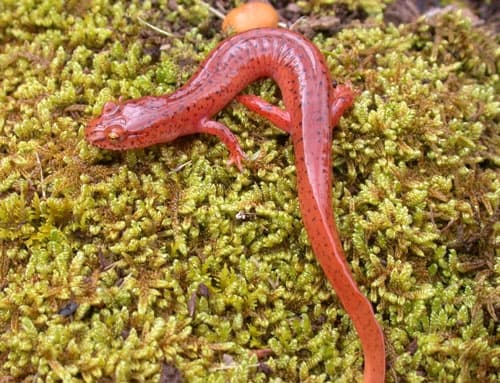
Blue Ridge spring salamander
The Blue Ridge spring salamander, a subspecies of the spring salamander (Gyrinophilus porphyriticus), is found in the southern Appalachian Mountains and adjacent Piedmont regions of the United States. This species is distinguished by a distinctive white line from its eye to its nostril, bordered by a dark line, and its varied dorsal coloration ranging from reddish to orange-yellow with black or brown spots. They inhabit cool springs, mountain springs, and moist forest areas, and are notable for their diet which can include other salamanders.

Austin blind salamander
The Austin blind salamander (Eurycea waterlooensis) is an endangered, fully aquatic salamander found only in Barton Springs in Austin, Texas. Its name originates from Waterloo, the former name of the city. This species is paedomorphic, meaning it retains juvenile characteristics throughout its adult life and does not metamorphose.

Barton Springs salamander
The Barton Springs salamander (Eurycea sosorum) is an endangered lungless salamander endemic to Texas, USA. It is found in Barton Springs and other nearby springs within the Edwards Aquifer, characterized by its clear, constant-temperature waters. This species is distinctive for its neotenic nature, retaining gills throughout its adult life, and its mottled coloration.