
Batrachoseps pacificus
The Channel Islands slender salamander (Batrachoseps pacificus) is a unique species of salamander found only on the northern California Channel Islands. It is distinguished by its year-round activity, a trait uncommon among other slender salamanders in California, due to the islands' cool and foggy climate. This salamander possesses a lean body, short limbs, and an elongated tail, with coloration ranging from brown to pinkish.
Key Facts
- ›Endemic to the northern California Channel Islands: San Miguel, Santa Rosa, Santa Cruz, and Anacapa Islands.
- ›Distinctive for being active year-round due to cool, foggy island conditions.
- ›Possesses short limbs, a narrow head, a lean body, and an elongated tail with four toes.
- ›Adults measure 4.2 to 7 centimeters from snout to vent.
- ›Can detach its tail to escape predators, which regenerates over time.
- ›Lays 13-20 eggs underground between late fall and winter.

Channel Islands Slender Salamander
Island Coastal Sage Scrub, Grasslands, Chaparral, Oak Woodlands, Pine Woodlands, Beaches Containing Driftwood
San Miguel Island, Santa Rosa Island, Santa Cruz Island, Anacapa Island
- Short Limbs
- Narrow Head
- Lean Body
- Elongated Tail
- Four Toes On Feet
- More Robust Appearance Than Other Slender Salamanders
- Adult Length: 4.2 - 7 Centimeters Snout To Vent
- Dorsal Coloration: Brown To Pinkish With A Prominent Dorsal Stripe of Light Speckles
- Throat and Underside of Tail Are Pale
- Abdomen: Whitish Or Slate With Light and Dark Speckling
- 18-20 Visible Costal Grooves
Small Invertebrates, Earthworms, Small Slugs, Terrestrial Arthropods, Insects, Insect Larvae
- Can Be Active Year-Round
- When Disturbed, May Coil Up and Remain Motionless
- Can Rapidly Uncoil and Bounce Away
- Detaches Tail To Divert Predators
- Tail Regenerates Over Time
About Batrachoseps pacificus
The Channel Islands Slender Salamander (Batrachoseps pacificus)
The Channel Islands slender salamander, scientifically known as Batrachoseps pacificus, is a distinctive amphibian species found exclusively on the northern California Channel Islands. It is the only amphibian endemic to this archipelago, inhabiting San Miguel Island, Santa Rosa Island, Santa Cruz Island, and Anacapa Island. A key characteristic that sets this salamander apart from many of its mainland relatives is its ability to remain active throughout the entire year. This year-round activity is facilitated by the islands' consistently cool and foggy climate, which provides a stable environment for the species.
Physical Description and Adaptations
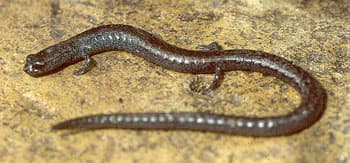
As a member of the slender salamander group, Batrachoseps pacificus exhibits typical traits such as short limbs, a narrow head, a lean body, and a notably elongated tail, complemented by four toes on each foot. However, it possesses a somewhat more robust build compared to other slender salamanders, owing to its comparatively longer legs. Adult individuals typically measure between 4.2 and 7 centimeters (1.67 to 2.75 inches) in snout-to-vent length. The dorsal coloration ranges from shades of brown to pinkish, often accented by a prominent dorsal stripe composed of light speckles. The throat and the underside of the tail are pale, while the abdomen presents as whitish or slate-colored, patterned with light and dark speckling. The salamander's structure is further defined by 18 to 20 clearly visible costal grooves along its body.
Behavior and Reproductive Cycle
When faced with a threat, the Channel Islands slender salamander employs a dual defense strategy. It may remain motionless, relying on its natural camouflage to avoid detection. Alternatively, it can execute a rapid escape by uncoiling and bouncing away, often shedding its tail to distract a predator. This detached tail has the capacity to regenerate over time. Reproduction involves the female laying clutches of 13 to 20 eggs underground, typically in burrows or man-made crevices, during the late fall and winter months, after moving down from the surface. The offspring hatch between winter and early spring. Following hatching, both adult and juvenile salamanders re-emerge to the surface, often coinciding with rainfall in the subsequent fall and winter. This life cycle can exhibit considerable variation in response to meteorological fluctuations.
Diet and Habitat
The diet of the Channel Islands slender salamander is believed to consist of a variety of small invertebrates. This includes earthworms, small slugs, terrestrial arthropods, and numerous insect species, along with their larval stages. It is probable that the salamander utilizes a projectile tongue to capture its prey, both above and below ground. The species occupies a diverse array of habitats across the islands, ranging from island coastal sage scrub, grasslands, and chaparral to oak woodlands and pine woodlands. Uniquely, it can also be found in beach environments that contain driftwood.
Source: Wikipedia ↗
Frequently Asked Questions
What makes the Channel Islands slender salamander unique among California salamanders?
The Channel Islands slender salamander is unique because it can remain active year-round. This is attributed to the cool and foggy climate prevalent on the islands where it resides, a condition that limits activity for many other slender salamanders in California.
Where is the Channel Islands slender salamander found?
This species is endemic to the northern California Channel Islands, specifically inhabiting San Miguel Island, Santa Rosa Island, Santa Cruz Island, and Anacapa Island. It is the sole amphibian species native to these islands off the coast of California.
What are the physical characteristics of the Channel Islands slender salamander?
Adults measure between 4.2 and 7 centimeters from snout to vent. They have short limbs, a narrow head, a lean body, and a notably elongated tail, with four toes on each foot. Their dorsal coloration varies from brown to pinkish, often featuring a prominent stripe of light speckles.
How does the Channel Islands slender salamander defend itself?
When threatened, this salamander may remain motionless to blend in with its surroundings. Alternatively, it can quickly move away and shed its tail to distract predators. The detached tail will regenerate over time.
What does the Channel Islands slender salamander eat?
Its diet likely consists of small invertebrates, including earthworms, small slugs, terrestrial arthropods, and various insects, such as their larvae. They are believed to use a projectile tongue to capture prey both above and below ground.
When and where does the Channel Islands slender salamander reproduce?
The female lays her eggs underground in burrows or crevices during late fall to winter, after moving down from the surface. The eggs hatch from winter to early spring, and both adult and young salamanders emerge to the surface with the return of rain in the following fall and winter.
Related Salamander and Newt species

Batrachoseps gregarius
The gregarious slender salamander (Batrachoseps gregarius) is a species of salamander native to California. It is characterized by its small, slender build, narrow head, short limbs, and a long, tapering tail. This species primarily inhabits chaparral, woodlands, and grasslands in the foothills of the Sierra Nevada and the eastern Central Valley.
Batrachoseps nigriventris
The black-bellied slender salamander (Batrachoseps nigriventris) is a small species of salamander found exclusively in California. It is characterized by its worm-like body, small limbs, and a long tail, and its distinctive purplish or black underside with fine light speckling.

Arboreal salamander
The arboreal salamander (Aneides lugubris) is a lungless salamander species native to California and Baja California, known for its climbing ability and distinctive prehensile tail. It inhabits oak and sycamore woodlands and chaparral, spending daylight hours in tree cavities and exhibiting unique gliding behaviors when falling.