
Chinese warty newt
Not Threatened
The Chinese warty newt is a species of salamander native to China, specifically found in provinces ranging from Chongqing to Guangxi. Its natural habitats include subtropical forests, rivers, and freshwater marshes. This species is distinguished by its moderate size and is not currently considered threatened by the IUCN.
Key Facts
- ›Native to China, with a distribution across several central provinces.
- ›Inhabits subtropical or tropical moist lowland forests, rivers, and freshwater marshes.
- ›Females typically reach a total length of 151 MM (5.9 in).
- ›Males are generally slightly shorter than females.
- ›Classified within the Salamandridae family.
- ›Currently listed as not threatened by the IUCN.
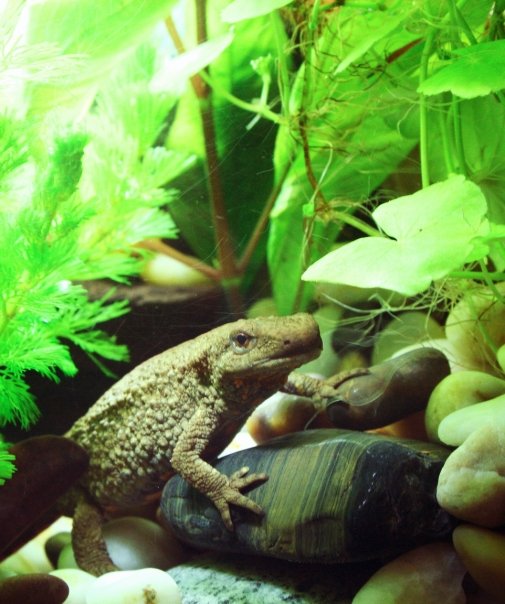
Chinese Warty Newt
Subtropical Or Tropical Moist Lowland Forests, Rivers, Freshwater Marshes
China
Females Reach A Total Length of 151 Mm ., Males Are Slightly Shorter Than Females.
About Chinese warty newt
The Chinese Warty Newt
The Chinese warty newt, scientifically known as Paramesotriton chinensis, is a species of salamander found exclusively within China. This amphibian belongs to the family Salamandridae, a group that includes many well-known newts and salamanders.
Habitat and Distribution
This species inhabits a range of environments across Central China, including provinces such as Chongqing, Hunan, Anhui, Zhejiang, Fujian, Guangdong, and Guangxi. Its natural habitats are subtropical or tropical moist lowland forests, as well as riverine and freshwater marsh ecosystems. These environments provide the necessary moisture and cover for the newt's survival.
Physical Characteristics and Conservation
Chinese warty newts are of moderate size. Females typically reach a total length of around 151 mm (5.9 inches), with males being slightly shorter. As of current assessments by the IUCN, the Chinese warty newt is not considered threatened, indicating a relatively stable population status.
Source: Wikipedia ↗
Frequently Asked Questions
Where can the Chinese warty newt be found?
The Chinese warty newt is found exclusively in China. Its known range extends across provinces such as Chongqing, Hunan, Anhui, Zhejiang, Fujian, Guangdong, and Guangxi in Central China.
What kind of environment does the Chinese warty newt prefer?
This species thrives in subtropical or tropical moist lowland forests. It also inhabits rivers and freshwater marshes, indicating a preference for humid, aquatic, or semi-aquatic environments.
How large does the Chinese warty newt get?
Female Chinese warty newts typically reach a total length of about 151 mm (5.9 inches). Males of the species are usually a bit shorter than the females.
Is the Chinese warty newt endangered?
According to the IUCN, the Chinese warty newt is not considered threatened. This means its population is stable enough not to warrant concern for its immediate survival.
Related Salamander and Newt species
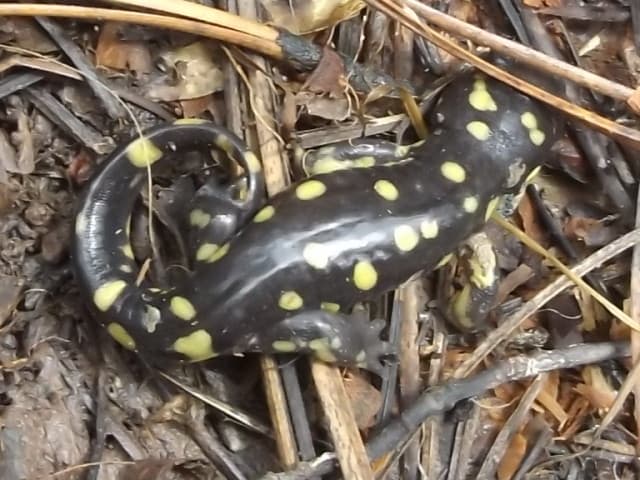
Ambystoma rosaceum
The Tarahumara salamander (Ambystoma rosaceum) is a freshwater mole salamander species endemic to Mexico, found in temperate and montane forests, grasslands, and various aquatic habitats. It is distinguished by its medium size, variable coloration of yellow spots or streaks on a dark background in adults, and the potential for paedomorphosis, where individuals retain larval features. While generally considered Least Concern, it faces threats from habitat loss and introduced species.
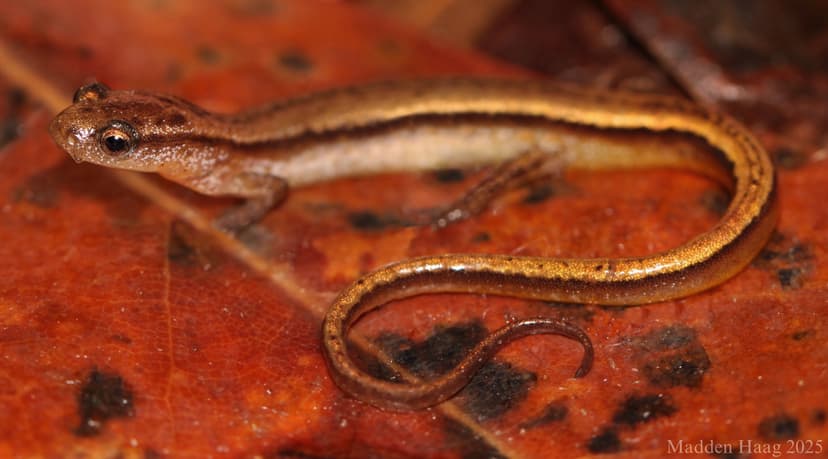
Chamberlain's dwarf salamander
Chamberlain's dwarf salamander (Eurycea chamberlaini) is a small salamander species found exclusively in North Carolina and South Carolina in the United States. Distinct from the southeastern dwarf salamander, it was recognized as a separate species in 2003 due to unique morphological and behavioral traits. This species is notable for its small size, lighter coloration compared to related species, and a distinctive yellowish underside.

Carolina mountain dusky salamander
The Carolina mountain dusky salamander is a species of salamander found exclusively in the Appalachian Mountains of North Carolina. It inhabits temperate forests, rivers, springs, and rocky areas, and is notably threatened by habitat loss.