
Chamberlain's dwarf salamander
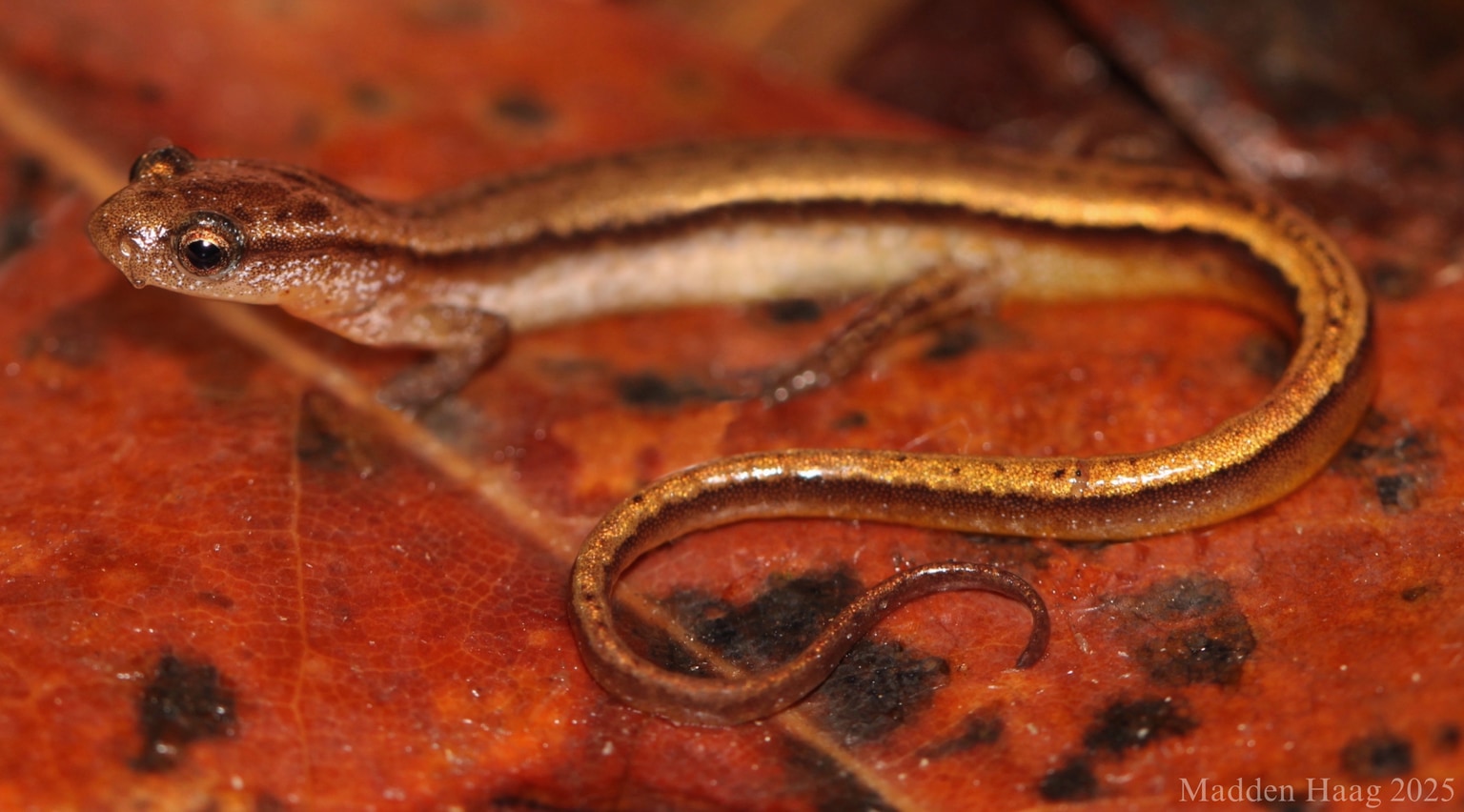
Chamberlain's dwarf salamander (Eurycea chamberlaini) is a small salamander species found exclusively in North Carolina and South Carolina in the United States. Distinct from the southeastern dwarf salamander, it was recognized as a separate species in 2003 due to unique morphological and behavioral traits. This species is notable for its small size, lighter coloration compared to related species, and a distinctive yellowish underside.
Key Facts
- ›Endemic to North Carolina and South Carolina, USA.
- ›Distinguished from Eurycea quadridigitata by lighter brown coloration, yellowish underbelly, and 16 coastal grooves.
- ›Average total length is approximately 2.5 CM (1.0 in).
- ›Found in temperate forests, rivers, freshwater marshes, and lotic environments near streams or springs.
- ›Reproductive season occurs from October to April, with eggs laid in winter and hatching in spring.
- ›Males possess lateral head courtship glands used to coerce females into mating.
Chamberlain's Dwarf Salamander
Temperate Forests, Rivers, Freshwater Marshes, Lotic Environments, Streams, Seepage From Springs, Ponds, Floodplains, Bottomland Swamps, Marshy Areas
United States, North Carolina, South Carolina
- Very Small Species, Averaging 2.5 Cm In Total Length.
- Lighter Brown Color Than Eurycea Quadridigitata.
- Yellowish Underbelly With No Spots.
- Four Toes On Each Hind Leg.
- Yellowish Brown Stripe Down the Dorsum , Bordered By A Black Or Brown Stripe On Either Side.
- Tail Is Typically 50-60% of the Adult's Total Length.
- Has 16 Coastal Grooves.
- Females Are Typically Larger Than Males.
- Hatchlings Are Light-Grayish Brown With Well-Developed Dorsal Fins.
- Larval Salamanders Have Few Spots That Fade With Age.
Small Invertebrates
- Males Are 'Searching Morphs' That Coerce Females To Mate Using Pheromones.
- Males Possess Lateral Head Courtship Glands During the Mating Season.
- Males Have Enlarged Nasal Glands Which Are Responsible For Pheromone Production.
- Larval Salamanders Are Fully Aquatic Prior To Metamorphosing.
Habitat Loss/Encroachment, Climate Change
About Chamberlain's dwarf salamander
Chamberlain's dwarf salamander, scientifically known as Eurycea chamberlaini, is a small amphibian species belonging to the Plethodontidae family, found exclusively in the United States. Its natural range is limited to the states of North Carolina and South Carolina, where it inhabits a variety of environments including temperate forests, rivers, freshwater marshes, and areas adjacent to streams and springs.
Description and Identification
This species is characterized by its diminutive size, averaging only about 2.5 centimeters (1.0 inch) in total length. It is distinguished from closely related species, such as the southeastern dwarf salamander (Eurycea quadridigitata), by its lighter brown coloration, a plain yellowish underbelly, and the presence of only four toes on each hind leg. A prominent feature is a yellowish-brown stripe running down its back, bordered by darker stripes. Females tend to be larger than males.
Habitat and Ecology
Chamberlain's dwarf salamander is found in the Piedmont regions of North and South Carolina, as well as the Upper and Central Coastal Plains of South Carolina and North Carolina, respectively. They prefer lotic (flowing water) environments but can also be found in floodplains and marshy areas, often concealed within leaf litter or moss. Due to its limited range and specific habitat requirements, the species is considered susceptible to human impacts such as habitat loss and climate change.
Diet and Reproduction
The diet of Chamberlain's dwarf salamander consists of small invertebrates. The reproductive cycle occurs from October to April, with eggs laid in winter and hatching in spring. Males exhibit unique courtship behaviors, using pheromones and specialized glands to attract females. The larval stage is relatively brief, lasting between three to six months, with some individuals undergoing metamorphosis in as little as two months.
Conservation Status
While previously thought to be a morph of another species, E. chamberlaini was formally described in 2003 and reaffirmed as distinct in 2017. It is currently listed as a "State Species of Special Concern" in North Carolina. An IUCN study in 2021 classified the species as "Least Concern," though research on its population and reproductive cycles is ongoing due to challenges posed by its small size and restricted habitat.
Source: Wikipedia ↗
Frequently Asked Questions
What makes Chamberlain's dwarf salamander distinct from other species?
Chamberlain's dwarf salamander is distinguished from the southeastern dwarf salamander (Eurycea quadridigitata) by its lighter brown coloration, a plain yellowish underbelly without spots, and having only 16 coastal grooves. It also averages a smaller size than E. quadridigitata and is the only Eurycea species in North Carolina with four toes on each hind leg.
Where can Chamberlain's dwarf salamander be found?
This species is endemic to the United States, specifically found in the states of North Carolina and South Carolina. Its distribution includes the Piedmonts of South Carolina and North Carolina, as well as the Upper Coastal Plain of South Carolina and the Central Coastal Plain of North Carolina.
What are the preferred habitats of Chamberlain's dwarf salamander?
Chamberlain's dwarf salamander inhabits temperate forests, rivers, and freshwater marshes. They are typically found in lotic environments, preferring areas around streams or seepage from springs and ponds. Some populations may also be found in lentic areas like floodplains, and in North Carolina, they inhabit bottomland swamps and marshy areas among leaf litter or moss.
What does Chamberlain's dwarf salamander eat?
The diet of Chamberlain's dwarf salamander consists of other small invertebrates. Specific prey items are not detailed, but it is known to consume small invertebrates found within its habitat.
When does Chamberlain's dwarf salamander breed and how long is its larval period?
The reproductive season spans from October through April, with eggs laid around winter and hatching in the spring. The larval period is relatively short, lasting anywhere from 3 to 6 months, with some individuals metamorphosing in as little as two months.
How do males court females in Chamberlain's dwarf salamander?
Males of Chamberlain's dwarf salamander are described as 'searching morphs' and use pheromones to coerce females into mating. During the mating season, males develop lateral head courtship glands, elongated cirri, and enlarged mental glands to facilitate this process.
Related Salamander and Newt species
Ambystoma rosaceum
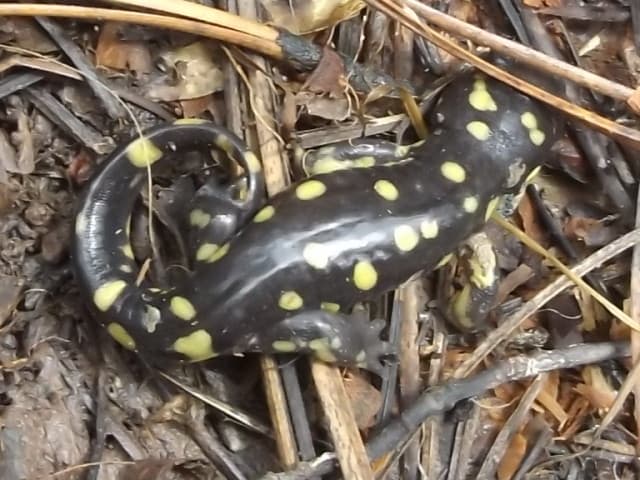
The Tarahumara salamander (Ambystoma rosaceum) is a freshwater mole salamander species endemic to Mexico, found in temperate and montane forests, grasslands, and various aquatic habitats. It is distinguished by its medium size, variable coloration of yellow spots or streaks on a dark background in adults, and the potential for paedomorphosis, where individuals retain larval features. While generally considered Least Concern, it faces threats from habitat loss and introduced species.

Black-bellied salamander
The Black-bellied salamander is a species of salamander found in the Appalachian Mountains of the southeastern United States. It is a medium-sized, sturdily built salamander known for its dark coloration and its largely aquatic lifestyle, spending significant time in cold mountain streams. Historically considered Desmognathus quadramaculatus, recent studies indicate this name is a synonym, and the group has been divided into multiple distinct species.
Chinese warty newt
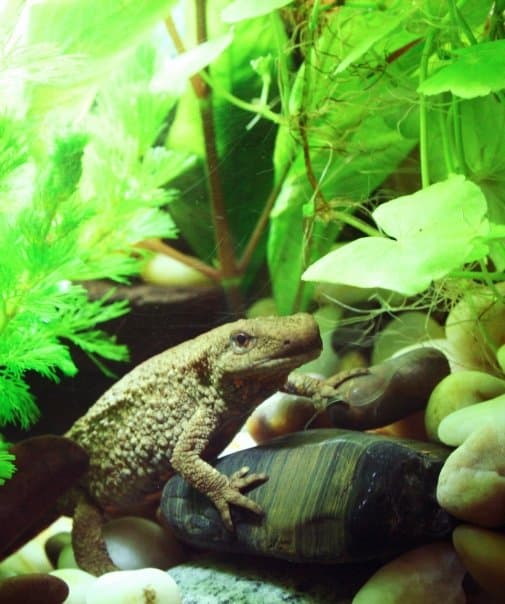
The Chinese warty newt is a species of salamander native to China, specifically found in provinces ranging from Chongqing to Guangxi. Its natural habitats include subtropical forests, rivers, and freshwater marshes. This species is distinguished by its moderate size and is not currently considered threatened by the IUCN.