
Chiropterotriton chiropterus
Chiropterotriton chiropterus·Plethodontidae
The common splayfoot salamander (Chiropterotriton chiropterus) is a species of salamander found in the cloud forests of Veracruz, Mexico. This species is notable for its habitat within bromeliads and moss, and it faces significant threats from deforestation.
Key Facts
- ›Endemic to the Huatusco–Xalapa region of Veracruz, Mexico.
- ›Found in cloud forest habitats.
- ›Inhabits bromeliads and moss.
- ›Threatened by habitat loss due to deforestation.
- ›Belongs to the family Plethodontidae.
- ›May encompass several unnamed species.

Common Splayfoot Salamander, Common Flat-Footed Salamander
Cloud Forest, Bromeliads, Moss
Veracruz, Mexico
Habitat Loss, Deforestation
About Chiropterotriton chiropterus
The common splayfoot salamander, scientifically known as Chiropterotriton chiropterus, is a species of salamander native to Mexico. It is found exclusively in the Huatusco–Xalapa region of Veracruz, inhabiting the unique environment of cloud forests.
Habitat and Ecology
This species is closely associated with its cloud forest habitat, where it has been observed living within bromeliads and mosses. These arboreal microhabitats likely provide essential moisture and shelter for the salamanders.
Conservation Concerns
The common splayfoot salamander faces significant threats, primarily due to habitat loss. Deforestation in its native range is the leading cause of this decline, jeopardizing the future of this specialized species. There is also an acknowledgment that the current classification might encompass several distinct, yet unnamed, species, highlighting the need for further research and conservation efforts to understand and protect the full diversity within this group.
Source: Wikipedia ↗
Frequently Asked Questions
Where is the common splayfoot salamander found?
The common splayfoot salamander is endemic to the Huatusco–Xalapa region of Veracruz, Mexico. Its natural habitat is specifically cloud forests within this area.
What kind of habitat does Chiropterotriton chiropterus prefer?
This salamander species prefers cloud forest environments. It is often found living within bromeliads and mosses in these forests.
What are the main threats to the common splayfoot salamander?
The primary threat to the common splayfoot salamander is habitat loss. This loss is caused by deforestation in its native cloud forest regions.
What family does Chiropterotriton chiropterus belong to?
Chiropterotriton chiropterus is a species of salamander belonging to the family Plethodontidae.
Could there be other species of splayfoot salamander?
Yes, it is noted that several unnamed species might exist under the current name of the common splayfoot salamander, suggesting potential further diversity within this group.
Related Salamander and Newt species

Chiropterotriton priscus
The primeval splayfoot salamander (Chiropterotriton priscus) is a species of salamander native to Mexico, found in high-elevation pine and pine-fir forests. It is distinguished by its terrestrial habits, living under fallen logs and bark, and its endemic range on Cerro Potosí and nearby areas.
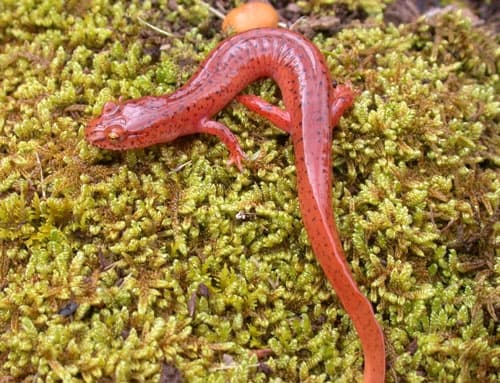
Blue Ridge spring salamander
The Blue Ridge spring salamander, a subspecies of the spring salamander (Gyrinophilus porphyriticus), is found in the southern Appalachian Mountains and adjacent Piedmont regions of the United States. This species is distinguished by a distinctive white line from its eye to its nostril, bordered by a dark line, and its varied dorsal coloration ranging from reddish to orange-yellow with black or brown spots. They inhabit cool springs, mountain springs, and moist forest areas, and are notable for their diet which can include other salamanders.
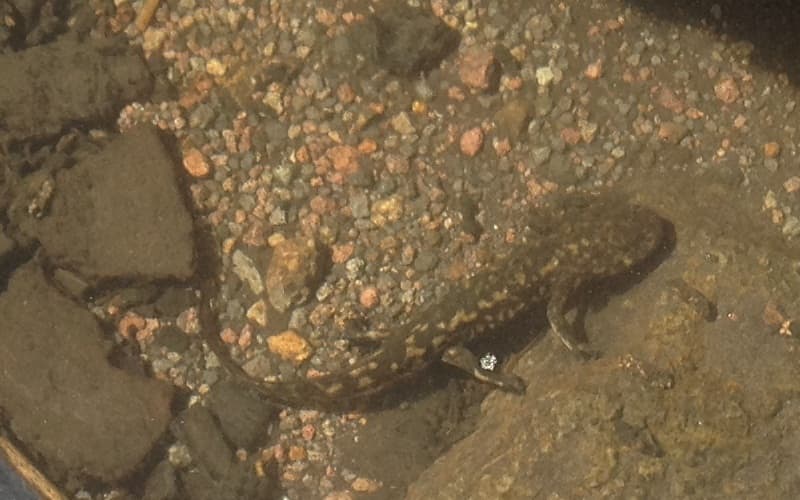
Ambystoma leorae
The Leora's stream salamander (Ambystoma leorae) is a critically endangered mole salamander endemic to a very small region within Mexico's Iztaccihuatl-Popocatepetl National Park. Its survival is threatened by its specific water quality requirements and human activities such as water extraction, cattle grazing, and direct consumption, leading to a single known population persisting on Mount Tlaloc.