
Cow Knob salamander
Near Threatened·Oviparous (implied by egg-laying)
The Cow Knob salamander, also known as the white-spotted salamander, is a species of salamander found in high mountain forests along the Virginia and West Virginia border. It is recognized by its dark coloration with white or cream spots on its sides and legs, and it is distinguished from similar species by its slender build and protuberant eyes. This species is considered near threatened due to habitat loss and climate change.
Key Facts
- ›Endemic to high mountain forests in Virginia and West Virginia, primarily on Shenandoah, Nathaniel, and Great North Mountains.
- ›Characterized by dark brown or greyish-black coloration with distinct white or cream spots on its sides and legs.
- ›Prefers old-growth forests and hemlock stands, typically at elevations between 900-1,200 meters.
- ›Its primary threats include habitat loss from logging and the impacts of climate change.
- ›Listed as near Threatened by the IUCN since 2004.
- ›Plays a role as a Management Indicator Species for ecosystem conservation in George Washington National Forest.

Cow Knob Salamander, White-Spotted Salamander
High Mountain Forests, Old-Growth Forests, Hemlock Stands, Rocky Areas, Talus Slopes
United States
- Moderately Large Plethodontid Salamander.
- Largest Recorded Length Is 17.1 Cm; Adults Typically Smaller Than 15.7 Cm.
- Base Coloration Is Dark Brown Or Greyish-Black.
- Sides and Legs Have Large White Or Cream Spots.
- Back Is Speckled With Smaller, Scattered Spots.
- Throat Is Light Pink Or Pale, Transitioning To A Grey Belly.
- More Slender Build Than White-Spotted Slimy Salamander.
- Slightly Webbed Toes.
- Protuberant Eyes.
- Usually 17-18 Costal Grooves.
Small Invertebrates
- Most Active In Spring and Fall .
- Shelters During Summer and Winter.
- Forages On Cool, Wet Nights On the Forest Floor, Trees, Or Rocks.
- Mating Occurs Via Spermatophore In Late Winter Or Early Spring.
- Direct Developers.
- Females Lay Clutches of 7-16 Eggs Every Other Year.
- Juveniles Hatch In the Fall and Reach Sexual Maturity In 3-4 Years.
- Not Migratory; Adults Have A Small Home Range.
- May Be Active At Different Times Than Shenandoah Mountain Salamanders To Reduce Competition.
Habitat Loss, Logging, Climate Change, Invasive Insects
About Cow Knob salamander
Cow Knob Salamander (Plethodon punctatus)
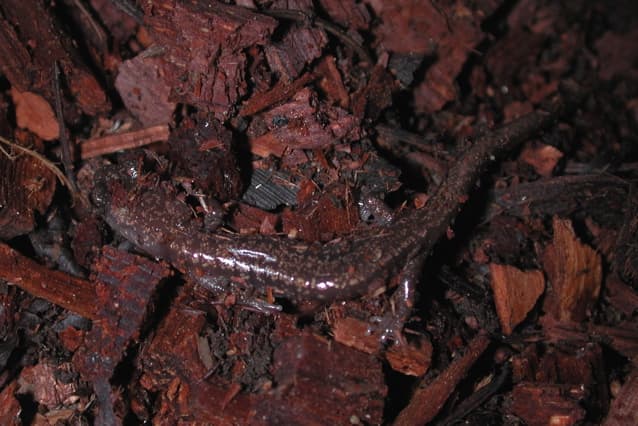
The Cow Knob salamander, scientifically known as Plethodon punctatus and sometimes called the white-spotted salamander, is a species of woodland salamander native to the high mountain forests of the Appalachian Mountains. Its range is restricted to the borders of Virginia and West Virginia in the United States, with nearly all known occurrences found on Shenandoah Mountain, Nathaniel Mountain, and Great North Mountain within the George Washington National Forest. This species is distinguished by its moderately large size, dark brown or greyish-black coloration, and prominent white or cream spots adorning its sides and legs, with smaller speckles on its back. Its specific epithet, 'punctatus,' refers to these dorsal spots.
Habitat and Ecology
Cow Knob salamanders are adapted to high-elevation environments, typically residing in hardwood forests characterized by dense canopy cover and the presence of talus. They show a strong preference for old-growth forests and hemlock stands, often at elevations between 900 and 1,200 meters, and tend to avoid younger pine forests and clearings. Their habitat is further defined by an abundance of rocks, particularly those with large gaps underneath, which serve as preferred refuges, followed by fallen logs. These salamanders are most active during the cooler, wetter periods of spring and fall, foraging on small invertebrates on the forest floor, trees, or rocks. They are direct developers, mating in late winter or early spring, and females lay a clutch of eggs every other year, with juveniles hatching in the fall.
Conservation Concerns
The Cow Knob salamander faces significant threats, primarily habitat loss due to logging and the overarching impacts of climate change. Its specialized montane habitat and limited dispersal routes make it particularly vulnerable to rising temperatures. Invasive insects such as the woolly adelgid and spongy moth also pose a threat to the forest ecosystems upon which this species depends. As a result, Plethodon punctatus is listed as Near Threatened by the International Union for Conservation of Nature (IUCN). Despite not being federally protected under the Endangered Species Act, conservation efforts, including a 1994 agreement between the U.S. Forest Service and U.S. Fish and Wildlife Service, have helped secure habitat protections and influence development projects, such as the rerouting of the Atlantic Coast Pipeline, to safeguard its existence.
Source: Wikipedia ↗
Frequently Asked Questions
What is the scientific name of the Cow Knob salamander?
The scientific name of the Cow Knob salamander is Plethodon punctatus. It was given this name by Richard Highton in 1972, with the specific epithet 'punctatus' referring to the dorsal spots.
Where is the Cow Knob salamander found?
The Cow Knob salamander is endemic to high mountain forests on the border of Virginia and West Virginia in the United States. It is found primarily on Shenandoah Mountain, Nathaniel Mountain, and Great North Mountain within the George Washington National Forest.
What does the Cow Knob salamander look like?
This salamander is moderately large, with adults typically under 15.7 cm in total length. It has a dark brown or greyish-black base color, with prominent white or cream spots on its sides and legs, and smaller spots speckled on its back. Its throat is light pink or pale, transitioning to a grey belly.
What are the main threats to the Cow Knob salamander?
The primary threats to Plethodon punctatus are habitat loss, particularly from logging in its forest habitat, and the impacts of climate change. Invasive insects like the woolly adelgid and spongy moth also pose a concern.
What is the conservation status of the Cow Knob salamander?
The Cow Knob salamander is listed as Near Threatened by the IUCN. NatureServe classifies it as vulnerable nationally and imperiled in both Virginia and West Virginia. It is considered a Species of Greatest Conservation Need by Virginia.
What kind of habitat does the Cow Knob salamander prefer?
It prefers high-elevation hardwood forests with dense canopy cover and talus. Old-growth forests and hemlock stands are greatly favored, and they are often found at elevations between 900-1,200 meters, particularly on north-facing slopes with ample rocks for shelter.
Related Salamander and Newt species
Aneides hardii
The Sacramento Mountain salamander is a species of salamander found exclusively in the mountainous regions of New Mexico, United States. It inhabits temperate forests and is distinguished by its direct development, hatching from eggs as miniature salamanders.

Bolitoglossa lincolni
Bolitoglossa lincolni, also known as Lincoln's mushroomtongue salamander, is a species of salamander found in the high-elevation forests of Guatemala and Mexico. It inhabits mountain ranges and plateaus, typically between 1,700 and 3,000 meters. This species is classified as Near Threatened due to its fragmented distribution and ongoing habitat degradation.

Desmognathus aeneus
The seepage salamander (Desmognathus aeneus) is a small, terrestrial salamander found in limited areas of the southeastern United States. It is distinguished by its small size, direct development (skipping the larval stage), and unique courtship behavior involving biting. The species is currently listed as Near Threatened due to declining populations and habitat loss, primarily from logging.