
Cynops wolterstorffi
The Yunnan lake newt (Cynops wolterstorffi) was a species of newt native to shallow lake waters and adjacent freshwater habitats near Kunming Lake in Yunnan, China. It is now considered extinct, with its last confirmed sighting in 1979. Its extinction is attributed to habitat loss, pollution, and the introduction of non-native species.
Key Facts
- ›Native to the Kunming Lake region of Yunnan, China.
- ›Belonged to the Salamandridae family.
- ›Last seen in 1979 and declared extinct by the IUCN in 2005.
- ›Extinction attributed to habitat loss, pollution, and introduced species.
- ›Also known as Wolterstorff's newt.
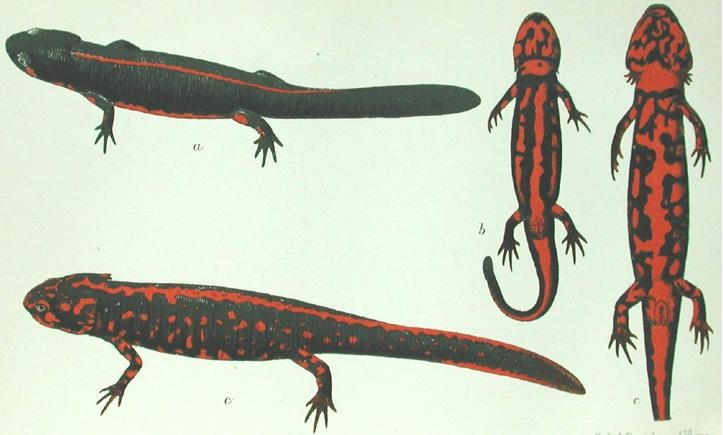
Yunnan Lake Newt, Wolterstorff's Newt
Shallow Lake Waters, Freshwater Habitats
China
Habitat Loss, Pollution, Introduced Species
About Cynops wolterstorffi
Yunnan Lake Newt
The Yunnan lake newt, scientifically known as Cynops wolterstorffi, was a species of newt that inhabited the region around Kunming Lake in Yunnan, China. This amphibian was found in shallow lake waters and the adjacent freshwater environments.
Historical Context and Extinction
Despite its specific and relatively limited geographic range, Cynops wolterstorffi has not been observed since 1979. Extensive surveys conducted in its known habitat failed to locate any individuals, leading the International Union for Conservation of Nature (IUCN) to officially declare the species extinct in 2005. The primary factors believed to have contributed to its disappearance are habitat degradation due to loss, contamination from pollution, and the negative impacts of introduced species disrupting the native ecosystem.
Naming
The specific epithet, wolterstorffi, was chosen to honor Willy Wolterstorff, a notable German geologist and herpetologist.
Source: Wikipedia ↗
Frequently Asked Questions
What is the scientific name of the Yunnan lake newt?
The scientific name of the Yunnan lake newt is Cynops wolterstorffi.
Where was the Yunnan lake newt found?
The Yunnan lake newt was found near Kunming Lake in Yunnan, China, specifically in shallow lake waters and adjacent freshwater habitats.
When was the Yunnan lake newt last seen?
The Yunnan lake newt was last seen in 1979. Despite numerous surveys, it has not been observed since then.
Why is the Yunnan lake newt considered extinct?
The Yunnan lake newt was officially declared extinct by the IUCN in 2005 due to a lack of sightings since 1979. The believed reasons for its extinction include habitat loss, pollution, and the presence of introduced species.
What does the name 'wolterstorffi' refer to?
The specific name 'wolterstorffi' honors Willy Wolterstorff, a German geologist and herpetologist.
Related Salamander and Newt species

Ambystoma dumerilii
The Lake Patzcuaro salamander, also known as achoque (Ambystoma dumerilii), is a paedomorphic salamander endemic to Lake Patzcuaro in Michoacán, Mexico. It is distinguished by retaining larval characteristics, such as prominent external gills, throughout its adult life. Historically used for food and traditional medicine by the Purépecha people, the species is now critically endangered due to severe habitat degradation and pollution.

Ambystoma andersoni
Anderson's salamander (Ambystoma andersoni) is a neotenic salamander native to Zacapu Lagoon in Michoacán, Mexico. Distinctive for retaining larval features into adulthood, it possesses external gills with red filaments and a prominent caudal fin, with a unique pattern of black blotches on a red-brown base.
Ambystoma taylori
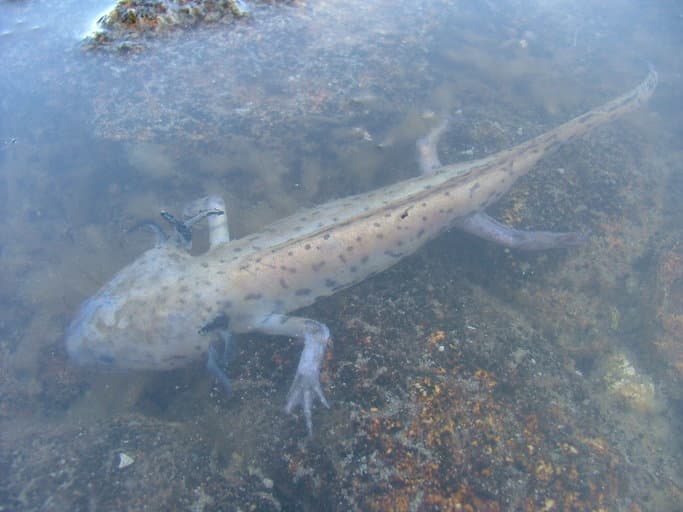
Taylor's salamander (Ambystoma taylori) is a critically endangered neotenic salamander endemic to Laguna Alchichica, a high-altitude crater lake in Mexico. It retains larval features like external gills into adulthood and breeds while still in its larval state. The species is facing a severe decline due to increasing salinity and decreasing water levels in its unique habitat.