
Dwarf siren
Pseudobranchus·Sirenidae
Dwarf sirens are eel-like salamanders belonging to the genus Pseudobranchus, characterized by external gills throughout adulthood and the absence of hind legs. They are distinguished from their close relatives, the sirens, by having only three toes per foot and a single gill slit instead of three. These unique amphibians are exclusively found in the Southeastern United States.
Key Facts
- ›Dwarf sirens are eel-like salamanders in the genus Pseudobranchus.
- ›They possess external gills throughout their adult lives.
- ›Dwarf sirens lack hind legs and have three toes on each foot, distinguishing them from the genus Siren.
- ›They have a single gill slit, unlike sirens which have three.
- ›These amphibians are native to the Southeastern United States.
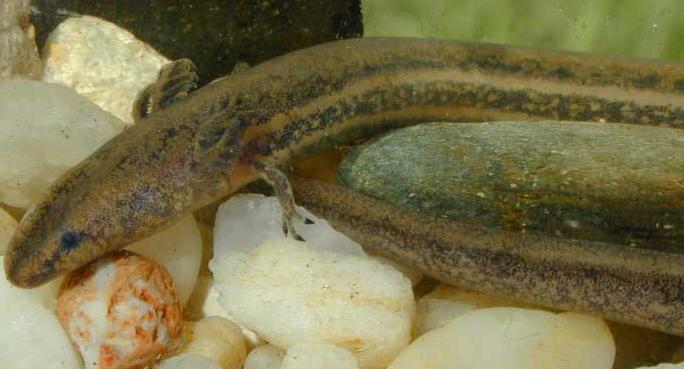
Dwarf Siren
- Aquatic Environments In the Southeastern United States
Southeastern United States
Eel-Like Body Shape, Possess External Gills Throughout Adulthood, Lack Hind Legs, Have Three Toes On Each Foot, Have A Single Gill Slit
About Dwarf siren
Dwarf Sirens
Dwarf sirens are a fascinating group of eel-like salamanders belonging to the genus Pseudobranchus. These amphibians share a distinct set of characteristics that set them apart within the amphibian world. Most notably, dwarf sirens retain their feathery external gills throughout their entire adult lives, a trait not common among all salamander species. They also lack hind legs entirely, contributing to their serpentine appearance.
Key features distinguish dwarf sirens from their close relatives, the sirens. While both are eel-shaped and possess gills, dwarf sirens have only three toes on each of their front feet, whereas sirens have four. Furthermore, dwarf sirens possess a single gill slit, a significant difference from the three gill slits found in sirens. These unique physical traits are adaptations to their specific ecological niche.
The geographic range of dwarf sirens is quite specific, being restricted to the Southeastern United States. Within this region, several species and subspecies of dwarf sirens have been identified, including the Southern dwarf siren (P. axanthus) and the Northern dwarf siren (P. striatus), each with further subdivisions based on striping patterns. Fossil evidence also indicates the presence of extinct dwarf siren species in Florida during the Miocene to Pleistocene epochs, underscoring a long evolutionary history in the region.
Source: Wikipedia ↗
Frequently Asked Questions
What are dwarf sirens?
Dwarf sirens are a type of eel-like salamander belonging to the genus Pseudobranchus. They are notable for retaining external gills into adulthood and lacking hind limbs.
How can dwarf sirens be distinguished from sirens?
Dwarf sirens can be identified by their three toes on each foot, compared to the four toes found on sirens. Additionally, dwarf sirens have only a single gill slit, whereas sirens possess three.
Where are dwarf sirens found?
The natural distribution of dwarf sirens is restricted to the Southeastern United States. Several species and subspecies exist within this region.
Related Salamander and Newt species

Alpine newt
The alpine newt is a species of newt native to continental Europe, with introduced populations in Great Britain and New Zealand. Adults are typically dark grey to blue on their back and sides, with a vibrant orange belly and throat, with males displaying more striking coloration, especially during the breeding season. They are adaptable, inhabiting both lowlands and high altitudes, and are primarily nocturnal during their terrestrial phase.
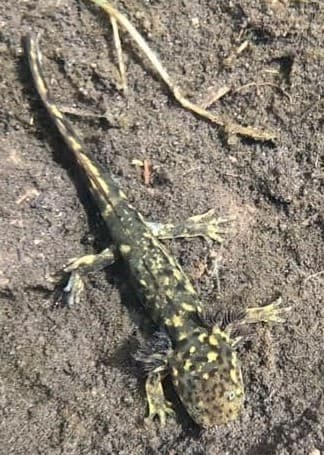
Ambystoma altamirani
The mountain stream salamander (Ambystoma altamirani) is a species of mole salamander native to central Mexico. It is distinguished by its purplish-black dorsal coloration, purplish-lavender belly, and cream-colored accents on its lips, digit tips, and tail fin. This species inhabits high-elevation pine and pine-oak woodlands, breeding in small streams where both larvae and some adults reside, while other adults venture onto land.

Ambystoma amblycephalum
The blunt-headed salamander (Ambystoma amblycephalum) is a mole salamander endemic to Mexico, specifically found near Morelia in Michoacán state. It inhabits a mixed landscape of grasslands and pine-oak forests at high elevations and requires ponds for breeding. This species is distinctive for having both neotenic (aquatic) and terrestrial adult populations.