
Bottomless Lakes State Park
cenote·United States·Gypsum-rich Seven Rivers Formation
Bottomless Lakes State Park in New Mexico is the state's first state park, established in 1933. It features nine small, deep lakes formed by sinkholes or cenotes, created by groundwater dissolving gypsum-rich rock. These lakes are geologically significant for their formation process and are home to several endangered species.
Key Facts
- ›Established in 1933, it was the first state park in New Mexico.
- ›The park is named after nine small, deep lakes formed by sinkholes.
- ›The lakes are fed by groundwater percolating through gypsum-rich rock, creating brackish water due to high evaporation.
- ›Lazy Lagoon, the largest lake, is made up of three separate sinkholes, with the deepest reaching 90 feet (27 M).
- ›Devil's Inkwell is the smallest lake, named for its dark color caused by steep sides and algae.
- ›Four endangered species, including the Pecos pupfish, inhabit the park's ecosystem.
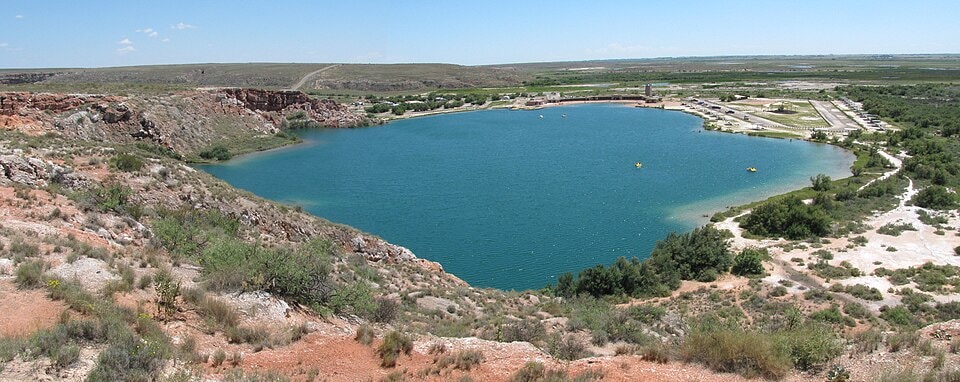
- Nine Small, Deep Lakes Formed By Sinkholes
- Brackish Water Due To High Evaporation
- Habitat For Endangered Pecos Pupfish and Rainwater Killifish
Brackish Water
Pecos Pupfish, Rainwater Killifish, Cricket Frog, Eastern Barking Frog, Rainbow Trout, Cougar, Gray Fox, Coyote, Striped Skunk, Collared Peccary, North American Porcupine, Desert Cottontail, Black-Tailed Jackrabbit, Bobcat, Mule Deer, Badger, Raccoon, Rattlesnake, Teiidae, Pronghorn, Roadrunner, Common Raven, Chihuahuan Raven, Swainson's Hawk, Northern Harrier, Great Horned Owl, American White Pelican, Mallard, Mexican Duck, Teal, Ash-Throated Flycatcher, Vermilion Flycatcher, Great Blue Heron, Black-Crowned Night Heron, Plover, Sandhill Crane, Wilson's Phalarope
About Bottomless Lakes State Park
Bottomless Lakes State Park, located in New Mexico, is distinguished as the state's first state park, established in 1933. Its name derives from a series of nine small, deep lakes that punctuate the eastern escarpment of the Pecos River valley. These distinctive bodies of water are not fed by surface streams; instead, they are replenished by underground water that percolates through the surrounding rock formations. The park's arid desert climate leads to high evaporation rates, which contribute to the brackish nature of the lake waters.
Geological Formation
The geological origins of the Bottomless Lakes are rooted in the dissolution of gypsum-rich rock. The lakes occur at the base of an escarpment formed by the Seven Rivers Formation, which is abundant in gypsum. Groundwater from the underlying San Andres artesian aquifer rises along faults in this escarpment. As this groundwater interacts with the gypsum, it dissolves the rock, creating sinkholes, also referred to as cenotes. This process is the primary mechanism responsible for the formation and unique characteristics of the lakes.
Notable Lakes and Features
Among the nine lakes, Lazy Lagoon stands out as the largest, with a surface area of approximately 26.1 acres. This seemingly single lake is, in fact, composed of three distinct sinkholes, the deepest of which plunges to 90 feet. Devil's Inkwell, the smallest lake at 0.36 acres, earns its name from the dark hue of its water, a result of the cenote's steep sides and the presence of algae. Figure Eight Lake presents a unique feature where two nearly circular lakes are separated by a narrow strip of land that can be submerged during periods of high water, causing the two lakes to merge and form a figure-eight shape. However, reduced water tables due to irrigation in the Pecos valley mean these lakes rarely merge anymore.
Lea Lake is notable as the only lake within the park where swimming is permitted. It features a sandy shoreline on its western side and cliffs to the east, along with a concession area that draws visitors in the summer. While seven of the nine lakes are protected within the state park, the southernmost lake, Dimmitt Lake, is privately owned by the Fin and Feather Club.
Wildlife and Conservation
Bottomless Lakes State Park is a vital habitat for several endangered species. These include the Pecos pupfish and the Rainwater killifish, which are uniquely adapted to the park's aquatic environments. Other protected species found here are the cricket frog and the Eastern Barking Frog. The park also supports a diverse array of other wildlife, including various mammals, reptiles, and numerous bird species, making it an important area for biodiversity and conservation efforts in New Mexico.
Source: Wikipedia ↗
Frequently Asked Questions
What are the Bottomless Lakes?
The Bottomless Lakes are a series of nine small, deep lakes located in Bottomless Lakes State Park, New Mexico. They are not fed by streams but by underground water that dissolves gypsum, forming sinkholes or cenotes.
How were the Bottomless Lakes formed?
The lakes were formed when groundwater rose along faults and dissolved the gypsum-rich Seven Rivers Formation rock. This process created sinkholes, also known as cenotes, which then filled with water.
Why do the lakes have brackish water?
The lakes are located in a hot desert climate with a high evaporation rate. This rate exceeds the rate at which rainwater refills the lakes, leading to the concentration of dissolved minerals and resulting in brackish water.
Which lake is the largest and deepest?
Lazy Lagoon is the largest of the lakes, with a surface area of approximately 26.1 acres. It is comprised of three separate sinkholes, the deepest of which measures 90 feet (27 m) in depth.
Can you swim in the Bottomless Lakes?
Swimming is permitted only in Lea Lake, which has a sandy shoreline and concession area popular during the summer. Other lakes may be contaminated with trash or have unsuitable conditions for swimming.
What kind of wildlife can be found in Bottomless Lakes State Park?
The park is a habitat for several endangered species, including the Pecos pupfish and Rainwater killifish. Various other mammals, reptiles, and numerous bird species also inhabit the park.
Is Bottomless Lakes State Park a popular tourist destination?
Yes, Lea Lake is a popular spot for swimming and recreation, especially in the summer. The park offers a unique geological landscape and opportunities for wildlife viewing.
Related Sinkholes

Blue Hole (Castalia)
The Blue Hole in Castalia, Ohio, is a natural cenote renowned for its striking blue hue, clarity, and perceived bottomless depth, which historically drew significant tourism. Fed by an underground stream, its anoxic waters and unique geological formation on limestone bedrock make it a notable example of karst topography, though it is no longer publicly accessible.
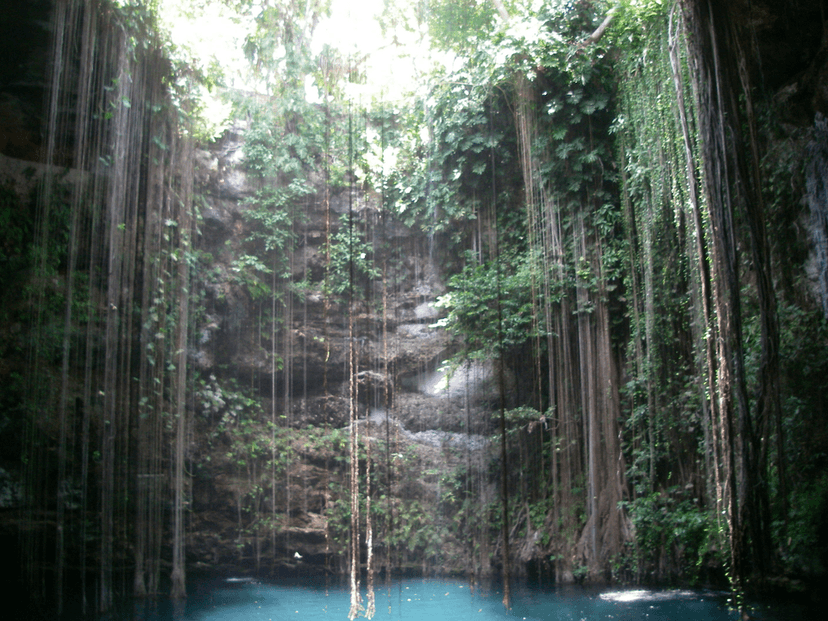
Ik Kil
Ik Kil is a large, open-air cenote located near the ancient Maya ruins of Chichen Itza in Yucatán, Mexico. It is renowned for its natural beauty, significant historical use by the Maya for ritualistic sacrifices, and its popularity as a tourist destination and swimming site.

Big Basin Prairie Preserve
The Big Basin Prairie Preserve in Kansas encompasses a significant sinkhole system, most notably the mile-wide Big Basin and the water-filled St. Jacob's Well. These geological features, formed by sinkhole activity, are historically notable as resting places for the Northern Cheyenne and landmarks for cattle drives. The preserve is a designated National Natural Landmark, managed to protect its unique landscape and wildlife.