
Great Blue Hole
marine sinkhole·Belize·karst limestone
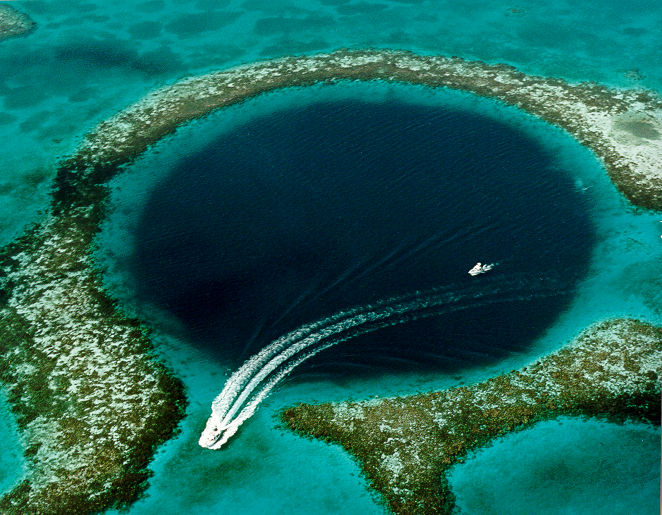
The Great Blue Hole is a large, circular marine sinkhole located off the coast of Belize, near the center of Lighthouse Reef. It is renowned as a world-class scuba diving destination, famous for its dramatic geological formation and vibrant marine ecosystem. Its geological history, involving multiple phases of glaciation and sea-level changes, has left behind distinct ledges and stalactites, providing insights into past geological shifts.
Key Facts
- ›Circular shape with a diameter of approximately 318 meters (1,043 ft).
- ›Maximum depth of about 124 meters (407 ft).
- ›Formed during several phases of Quaternary glaciation when sea levels were lower.
- ›Stalactites found within the sinkhole indicate formation phases dating back as far as 153,000 years ago.
- ›Part of the larger Belize Barrier Reef Reserve System, a UNESCO World Heritage Site.
- ›Made famous by Jacques Cousteau, who declared it a top scuba diving site.
Submerged Caves, Stalactites, Ledges At Various Depths, Anoxic Layer With Hydrogen Sulfide
Saltwater, Hydrogen Sulfide
Groupers, Squirrelfish, Angelfish, Butterflyfish, Midnight Parrotfish, Nurse Sharks, Caribbean Reef Shark, Blacktip Shark, Sea Anemones, Pederson's Cleaner Shrimp, Neon Gobies
About Great Blue Hole
The Great Blue Hole
The Great Blue Hole is a remarkable marine sinkhole situated off the coast of Belize, near the center of Lighthouse Reef. This iconic geological formation is celebrated globally as a premier scuba diving destination, drawing enthusiasts with its striking dimensions and unique underwater landscape. Its origins are deeply rooted in the Quaternary glaciation periods, formed by the dissolution of karst limestone during times of significantly lower sea levels, and subsequently flooded as the oceans rose.
Geological Significance and Exploration
The sinkhole's formation occurred in several phases, with evidence from stalactites suggesting periods of activity as far back as 153,000 years ago. These stalactites, found within submerged caves, confirm that the formations were once above sea level. Expeditions, notably by Jacques Cousteau in 1971 aboard the Calypso, charted its depths and confirmed its karst origin. These explorations revealed distinct ledges at depths of 21 m, 49 m, and 91 m, and also noted that some stalactites were off-vertical, indicating geological shifts and tilting of the underlying plateau rather than just sea-level rise. Later expeditions, including a 1997 mission requiring cave diving and mixed gas certification, collected core samples, and a 2018 submarine expedition mapped the interior, discovering an anoxic layer of hydrogen sulfide at approximately 91 meters (300 ft) deep, below which life is absent.
Ecological Features and Tourism
The rim of the Great Blue Hole provides a vibrant habitat for a diverse array of marine life. Coral formations and tropical fish such as groupers, angelfish, and parrotfish thrive in the shallower reef edges, which gradually slope from about 5 meters to a near-vertical drop. The waters are also home to various reef sharks, including nurse sharks, Caribbean reef sharks, and blacktip sharks, as well as smaller marine creatures like sea anemones and neon gobies. Recognized for its natural beauty and ecological importance, the Great Blue Hole is part of the larger Belize Barrier Reef Reserve System, a UNESCO World Heritage Site. Its allure has been amplified by media features, including a Discovery Channel ranking in 2012 naming it one of the "10 Most Amazing Places on Earth."
Source: Wikipedia ↗
Frequently Asked Questions
What is the Great Blue Hole?
The Great Blue Hole is a massive marine sinkhole located off the coast of Belize. It is a notable geological formation characterized by its deep, circular shape and is a popular destination for scuba divers.
Where is the Great Blue Hole located?
It is situated near the center of Lighthouse Reef, a small atoll approximately 70 kilometers (43 miles) from the mainland and Belize City, in Belize.
How was the Great Blue Hole formed?
The sinkhole was formed during multiple phases of the Quaternary glaciation when sea levels were significantly lower. It began as a cave system in karst limestone, which was later flooded as ocean levels rose.
What are the dimensions of the Great Blue Hole?
The Great Blue Hole is about 318 meters (1,043 ft) across and has a maximum depth of approximately 124 meters (407 ft). Its surface area is around 70,650 square meters (760,500 sq ft).
Is the Great Blue Hole a good diving spot?
Yes, the Great Blue Hole is famous as one of the top scuba diving sites in the world. Jacques Cousteau explored it in 1971 and declared its diving quality.
What marine life can be found in the Great Blue Hole?
The rim of the Great Blue Hole supports coral and tropical fish like groupers, angelfish, and parrotfish. Various reef sharks, including nurse sharks and Caribbean reef sharks, also inhabit the area.
What is the significance of the stalactites found in the Great Blue Hole?
The stalactites, found in submerged caves within the sinkhole, provide evidence of its formation above sea level during glacial periods. Their orientation also suggests past geological shifts and tilting of the land.
Has the Great Blue Hole been explored by submarines?
Yes, in December 2018, two submarines descended into the Great Blue Hole to map its interior using sonar scanning. They discovered a layer of hydrogen sulfide at about 91 meters (300 ft) deep, below which the water is anoxic.
Related Sinkholes

Blue Hole (Red Sea)
The Blue Hole is a renowned diving site located on the coast of the Gulf of Aqaba in Egypt's Red Sea. It is a deep marine sinkhole, famous for its challenging "Arch" tunnel and notorious for being the site of numerous diver fatalities, earning it the grim distinction of having the highest number of diver deaths globally. Despite its dangers, the Blue Hole remains a popular destination for experienced divers and freedivers due to its direct shore access to significant depths and abundant marine life.

Dean's Blue Hole
Dean's Blue Hole is a renowned blue hole in the Bahamas, recognized as the world's third deepest after recent discoveries. Its impressive depth and size make it a premier location for freediving competitions and the setting of numerous world records.

Taam Ja' Blue Hole
Taam Ja' Blue Hole is an underwater sinkhole located in Chetumal Bay, Mexico, holding the distinction of being the deepest known blue hole globally. Its name translates to "deep water" in the Mayan language, reflecting its profound depth which has yet to be fully explored.