
Haitón del Guarataro
solutional cave·Venezuela·limestone
The Haitón del Guarataro is a significant solutional cave system located in Venezuela's Falcón State, notable for being the deepest limestone cave in the country. Discovered and first surveyed in 1973, it serves as a tourist attraction within the Juan Crisóstomo Falcón National Park and is formed in Oligocene reefal limestone.
Key Facts
- ›It is the deepest limestone cave in Venezuela.
- ›The entrance is a tourist attraction within Juan Crisóstomo Falcón National Park.
- ›The cave has a total depth of 305 meters.
- ›Its total passage length is 640 meters.
- ›It was first explored and surveyed in April 1973 by the Venezuela '73 British Karst Research Expedition.
- ›It is formed in Oligocene reefal limestone.

Deepest Limestone Cave In Venezuela, Large Entrance Shaft
Cave Crickets, Phalangodid Harvestmen, Hyalella Meinerti, Troglobitic Trichopolydesmid Millipede
About Haitón del Guarataro
The Haitón del Guarataro is a significant solutional cave system located in the Sierra de San Luis, within Venezuela's Falcón State. It holds the distinction of being the deepest limestone cave in Venezuela, a geological feature that draws interest from both speleologists and tourists.
Geological Significance and Formation
This extensive cave system was formed through dissolution processes in Oligocene reefal limestone. The cave's entrance is a large shaft, approximately 12 meters in diameter, which descends through a series of drops totaling over 200 meters. The main passages extend for considerable distances, with a total surveyed length of 640 meters and a depth of 305 meters.
Exploration and Tourism
The Haitón del Guarataro was first thoroughly explored and surveyed in April 1973 by members of the Venezuela '73 British Karst Research Expedition. Today, its entrance serves as a tourist attraction within the Juan Crisóstomo Falcón National Park, offering visitors a glimpse into the subterranean world of Venezuela.
Flora and Fauna
Faunal surveys conducted during the cave's exploration revealed a limited number of cave-dwelling organisms. These included common cave inhabitants such as cave crickets and harvestmen, alongside more specialized species like a depigmented troglophile shrimp (Hyalella meinerti) found in a large pool, and a troglobitic millipede discovered on the roof of the cave's terminal chamber.
Source: Wikipedia ↗
Frequently Asked Questions
What is the Haitón del Guarataro?
The Haitón del Guarataro is a solutional cave system located in the Sierra de San Luis, Falcón State, Venezuela. It is recognized as the deepest limestone cave in Venezuela and is a popular tourist attraction.
Where is the Haitón del Guarataro located?
The Haitón del Guarataro is situated in the Sierra de San Luis in Falcón State, Venezuela, approximately 2.5 kilometers south-east of Curimagua. It is part of the Juan Crisóstomo Falcón National Park.
How deep is the Haitón del Guarataro?
The Haitón del Guarataro has a measured depth of 305 meters. The entrance shaft alone is 12 meters in diameter, leading to further drops within the cave system.
When was the Haitón del Guarataro discovered or first explored?
The cave was first explored and surveyed in April 1973 by members of the Venezuela '73 British Karst Research Expedition.
What kind of rock is the Haitón del Guarataro formed in?
The Haitón del Guarataro is formed in Oligocene reefal limestone. This type of geological formation is characteristic of solutional caves.
What wildlife has been found in the Haitón del Guarataro?
A faunal survey recorded a few cave-dwelling species, including cave crickets, harvestmen, a depigmented troglophile shrimp (Hyalella meinerti) found in a pool, and a troglobitic millipede discovered on the ceiling of the terminal chamber.
Related Sinkholes

Big Basin Prairie Preserve
The Big Basin Prairie Preserve in Kansas encompasses a significant sinkhole system, most notably the mile-wide Big Basin and the water-filled St. Jacob's Well. These geological features, formed by sinkhole activity, are historically notable as resting places for the Northern Cheyenne and landmarks for cattle drives. The preserve is a designated National Natural Landmark, managed to protect its unique landscape and wildlife.

Blue Hole (Red Sea)
The Blue Hole is a renowned diving site located on the coast of the Gulf of Aqaba in Egypt's Red Sea. It is a deep marine sinkhole, famous for its challenging "Arch" tunnel and notorious for being the site of numerous diver fatalities, earning it the grim distinction of having the highest number of diver deaths globally. Despite its dangers, the Blue Hole remains a popular destination for experienced divers and freedivers due to its direct shore access to significant depths and abundant marine life.
Cave of Swallows
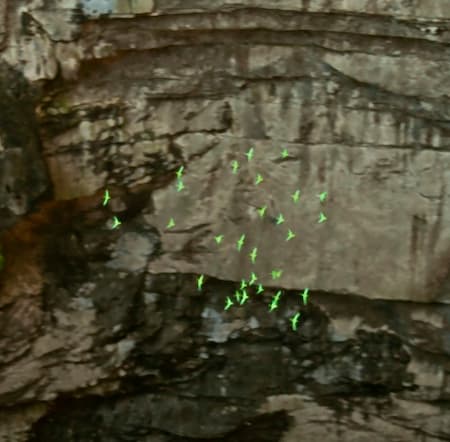
The Cave of Swallows, known locally as Sótano de las Golondrinas, is a massive open-air pit cave in San Luis Potosí, Mexico. It is geologically significant as the largest known cave shaft in the world, renowned for its immense vertical drop and the daily spectacle of thousands of birds exiting and entering its depths. The cave's unique formation and the presence of diverse wildlife make it a notable natural wonder and a destination for extreme sports.